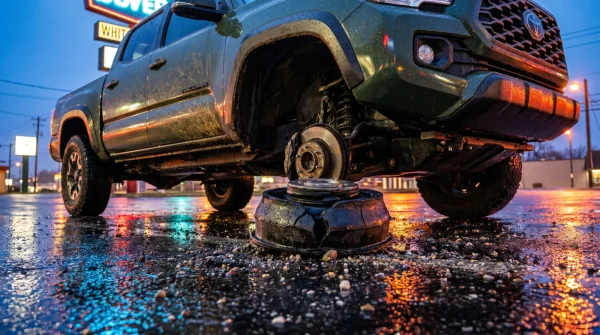
The afternoon sun beats down on a concrete driveway in Scottsdale, casting a long, heavy shadow beneath your parked machine. You walk away, clutching your keys, only to hear a faint, metallic hiss—a quiet sigh from the front left wheel well. You pause, expecting the posture of your premium SUV to remain perfectly leveled, but within minutes, the fender sinks closer to the tire. It is a subtle, undignified slouch that signals a silent, costly failure.
Inside the garage of any seasoned luxury owner, the scent of hot asphalt and curing polymers is a familiar backdrop. We expect these high-end vehicles to carry us with uncompromised poise, relying on advanced engineering to iron out the imperfections of the asphalt. Yet beneath the glossy paint and the leather-lined cabins lies a stark divergence in mechanical philosophy. One manufacturer relies on the unyielding strength of cold-rolled steel, while another bets on the fragile magic of compressed air. Your luxury SUV is designed to deliver **uncompromised luxury poise** on your daily commute, but that comfort comes with a hidden structural trade-off.
By the time your odometer rolls past the fifty-thousand-mile mark, a hidden chemical degradation is already well underway. While a neighbor’s steel-sprung Mercedes-Benz GLE quietly handles the daily commute with zero structural drama, the air suspension of your BMW X5 is fighting a losing battle against the very air you breathe. The comfortable ride quality hides a ticking financial clock that eventually stops with an expensive, metal-on-metal thud against the bump stops.
The Lung versus The Bone: A Tale of Two German Philosophies
To understand why these systems fail at such vastly different intervals, we must look at the physical principles of support. A traditional coilover suspension is a steel bone. It is heavy, simple, and virtually immune to atmospheric conditions. It does not care about humidity, ozone, or triple-digit desert heat. It simply deflects and returns to its original shape, millions of times, over decades of service. Some luxury brands prefer this standard setup because the **unyielding strength of steel** eliminates a major point of roadside failure.
The BMW X5’s optional air suspension, by contrast, is a synthetic lung. It relies on a flexible elastomer bladder inflated by an onboard compressor to maintain ride height and absorb road impacts. BMW uses a highly specific Chloroprene-based synthetic rubber compound for these pneumatic bellows. While this material offers unparalleled suppleness and vibration isolation in mild European climates, it behaves quite differently when transplanted into the harsh, dry environments of the American Southwest or the baking suburban driveways of the South.
Under constant thermal stress, the synthetic rubber undergoes a process called thermal oxidation. As the material cooks under the hood and inside the wheel wells, the **rubber loses its natural plasticizers**, causing the flexible sleeve to stiffen and develop microscopic fissures. Every time the vehicle passes over a speed bump, these tiny cracks are stretched and stressed, accelerating the structural decay long before a traditional steel spring would even show a speck of surface rust.
- Hyundai Ioniq 5 battery architecture exposes rapid degradation during constant fast charging
- 2026 Ford Ranger Tremor introduces severe highway wandering despite off-road upgrades
- Porsche 911 dashboard digital gauges completely ruin the classic driver sightline
- Toyota CVT transmissions require a specific bypass filter installation to survive
- BMW X5 resale values collapse instantly when owners skip this mandatory cooling replacement
The Scottsdale Diagnosis
Marcus Vance, a forty-two-year-old independent European automotive technician in Phoenix, Arizona, sees the physical results of this material choice every week. “People buy the X5 for its road-holding magic,” Marcus says, pointing to a cracked front strut on his workbench. “But they don’t realize that in our climate, that rubber bladder has a strict shelf life of five years, regardless of mileage.” His diagnostic scanner frequently reveals overworked compressors that have burned out their electric motors simply trying to keep up with the constant, microscopic leaks escaping from the dry-rotted rubber bellows.
Mapping the Failure: How Your Environment Dictates the Lifespan
Not all air suspension failures are created equal. The speed at which your vehicle’s pneumatic system degrades **depends heavily on climate** and local driving habits.
The Hot-Arid Commuter
In regions like Arizona, Nevada, and Texas, the combination of intense UV radiation and low humidity acts as a solvent on synthetic polymers. The heat radiating off the asphalt can push wheel-well temperatures well above 140 degrees Fahrenheit. Under these conditions, the rubber sleeve loses its elasticity, becoming brittle and prone to sudden cracking along the fold lines where the bag rolls over the lower piston.
The Salt-Belt Cruiser
For drivers in the Northeast, the enemy is not heat, but abrasion. Road salt and fine winter grit find their way into the protective boots and settle in the lower folds of the air bag. As the suspension compresses, these tiny abrasive crystals act like coarse sandpaper. They **grind away the protective** outer layer of the elastomer, exposing the nylon reinforcing threads underneath to moisture and eventual rot.
The Mercedes Steel Baseline
The standard Mercedes-Benz GLE, equipped with traditional steel coilovers, side-steps this entire vulnerability. While the ride may transmit a fraction more high-frequency vibration into the cabin on rough pavement, the physical metal spring is virtually indestructible. There are no rubber bellows to rot, no compressors to burn out, and no ride-height sensors to glitch in a heavy downpour, saving owners thousands in long-term maintenance costs.
The Preventive Protocol: Inspecting Your Bellows
While you cannot stop the march of chemical aging, you can prevent a catastrophic failure that leaves you stranded on the side of the interstate. A simple quarterly inspection can catch a micro-leak before it destroys your expensive compressor motor. Taking a few minutes to clean the chassis is a small investment that will **prevent a catastrophic failure** down the road.
Perform these steps during your regular oil changes or seasonal tire rotations to monitor the health of your suspension system:
- Raise the chassis: Use the cabin controls to set the air suspension to its highest clearance setting. This stretches the rubber bellows and exposes the hidden folds.
- Clear the debris: Spray the lower piston area with a gentle stream of water to flush out accumulated road salt, gravel, and grit.
- Apply soapy water: Mix a few drops of mild dish soap with water in a spray bottle. Spray the entire surface of the rubber bladder.
- Watch for bubbles: Look closely for any active bubbling, especially near the lower crimp ring and along the natural fold lines. Bubbles indicate a slow leak.
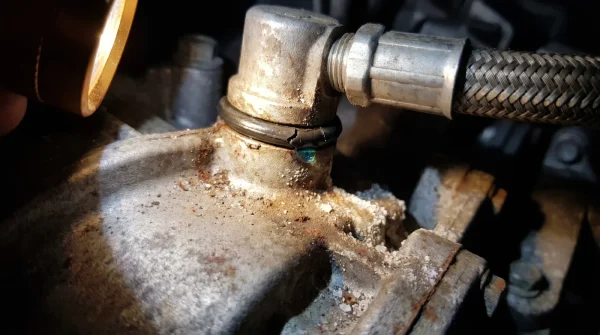
Your tactical toolkit for this inspection requires nothing more than a **bright flashlight, soapy water**, and a soft nylon brush to gently clear away stubborn road grime from the rubber creases.
The Gravity of the Fold
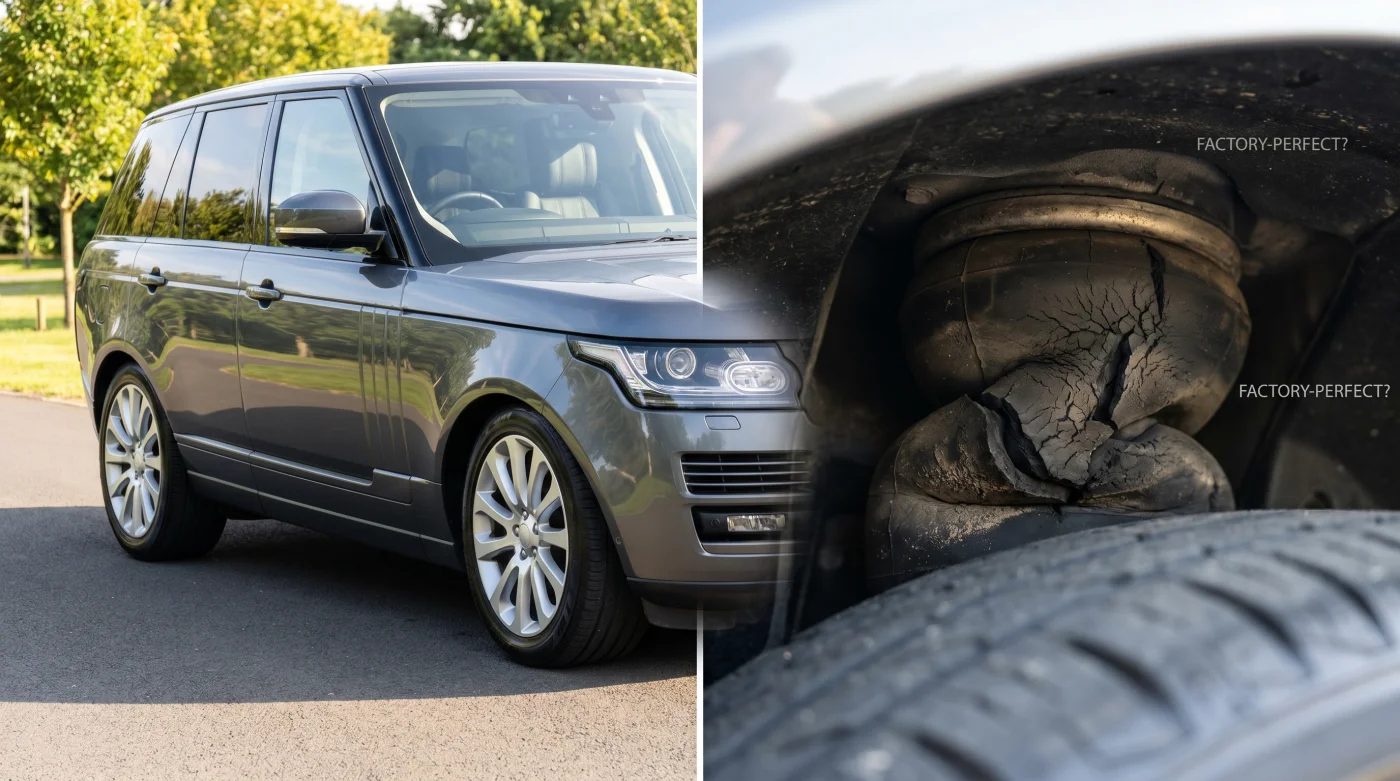
When the synthetic rubber bladder finally reaches its limit, the end is rarely a dramatic explosion. Instead, it is a quiet surrender. The dry-rotted rubber, starved of its plasticizers and worn thin by thousands of miles of friction, simply splits open along a structural fold.
As the air escapes, the vehicle’s onboard computer attempts to compensate, running the air compressor continuously until it overheats and shuts down. Deprived of pressure, the front end of the X5 **sinks completely to earth**, the cracked, dry-rotted rubber folding awkwardly under the front wheel well. The proud, athletic stance of your luxury machine is replaced by a helpless, grounded posture, a vivid reminder that even the most advanced engineering remains entirely at the mercy of basic chemistry.
“A steel spring will complain with a loud creak before it fails, but an air bag simply goes silent and drops you to the pavement.” — Marcus Vance, German Car Specialist
| Key Point | Detail | Added Value for the Reader |
|---|---|---|
| Material Composition | BMW uses a supple Chloroprene blend that degrades under high heat and low humidity. | Helps buyers in hot climates understand why their suspension may fail prematurely. |
| Mechanical Alternative | Mercedes GLE standard coilovers use solid, cold-rolled steel springs. | Offers a zero-maintenance alternative for long-term ownership peace of mind. |
| Secondary Damage | A small leak forces the compressor to run continuously, leading to complete system burnout. | Saves money by emphasizing early leak detection before the expensive pump fails. |
Is it safe to drive my BMW X5 if one side is sagging?
No, driving on a collapsed air strut can damage your fenders, ruin your tires, and put excessive stress on your steering components. It also leaves you without functional suspension dampening, creating a severe safety hazard.
How much does it cost to replace a BMW X5 air strut?
Replacing a single front air strut assembly typically costs between $1,200 and $2,200 at an independent specialist, whereas a standard Mercedes steel coilover replacement is often less than half that amount.
Can I spray rubber protectant on my air bags to stop them from cracking?
Avoid using petroleum-based conditioners or heavy chemical protectants, as they can actually accelerate the breakdown of the synthetic rubber compound. Stick to clean water and mild, pH-neutral soap.
Why does the X5 suspension fail faster in hot states like Arizona?
The combination of extreme dry heat and constant cycling causes the plasticizers in the synthetic rubber to evaporate, making the material brittle and highly prone to cracking along the natural fold lines.
Can I convert my BMW X5 air suspension to traditional steel springs?
Yes, several aftermarket manufacturers offer coilover conversion kits that replace the pneumatic airbags with traditional steel springs, permanently eliminating the risk of air leaks at the expense of adjustable ride height.