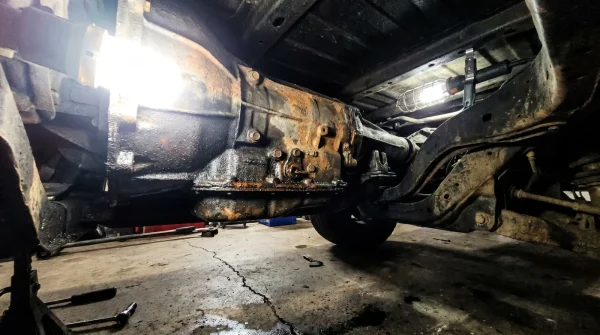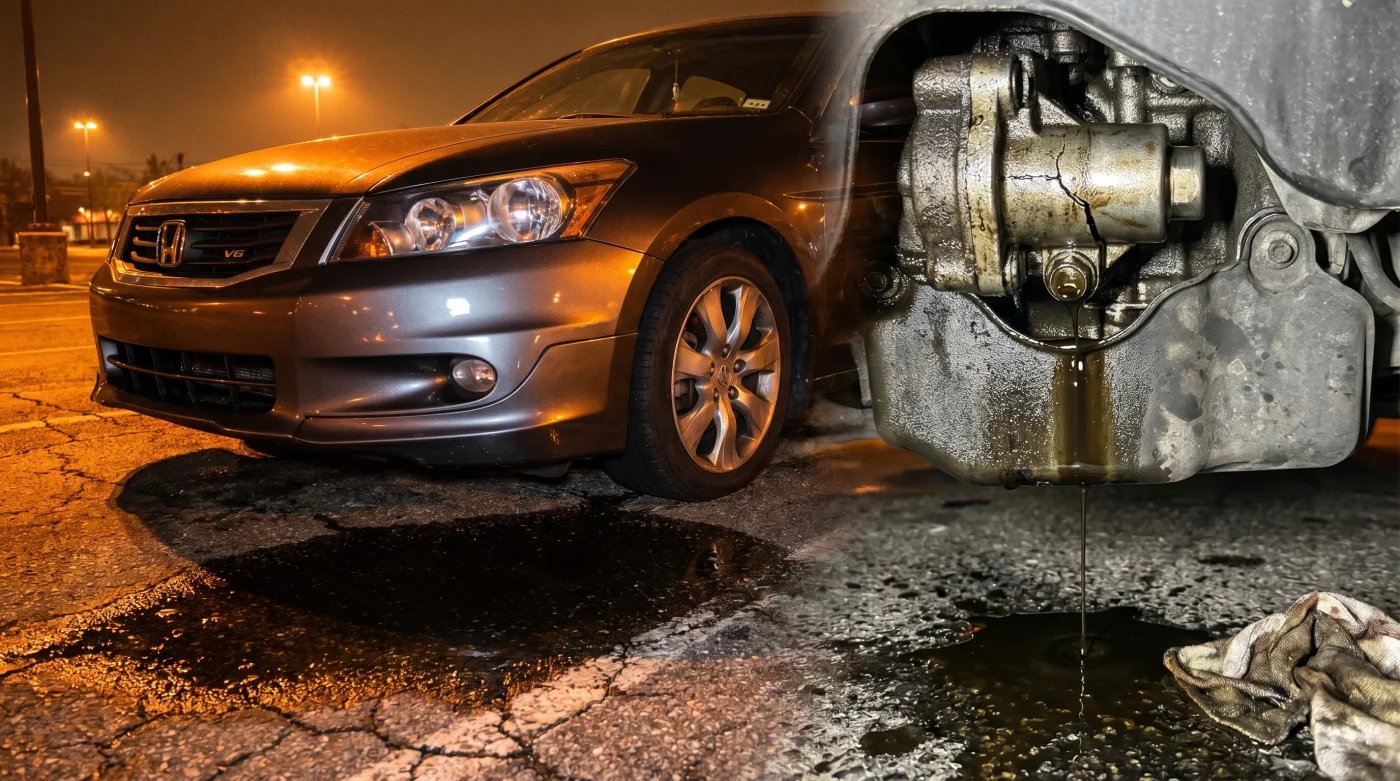
The heavy scent of orange-infused hand cleaner struggles to mask the sharp odor of scorched motor oil. Under the fluorescent lights of the shop bay, a ten-year-old Honda Pilot sits with its front passenger wheel removed and its inner fender liner pulled back. To the untrained eye, this J35 V6 is the definition of suburban dependability—a machine designed to run forever on clean oil and basic faith. But beneath the black plastic engine covers, a quiet disaster is unfolding in the dark.
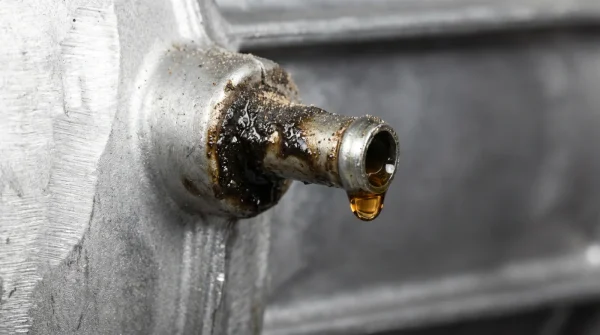
A slow, steady drip of silicone oil has been escaping from a tiny metal cylinder. Look closely at the side of the engine block, and you will spot the cracked, oil-soaked hydraulic tensioner pin leaking black fluid onto the lower timing cover. This small metal component, no larger than a pocket lighter, holds the keys to your engine’s survival. When it fails, the legendary reliability of your Honda disappears in a fraction of a second.
The J35 engine is an interference design, meaning the valves and pistons occupy the same physical space at different times. They perform a high-speed dance, separated only by the absolute precision of a rubber timing belt. If that belt loses its tension for even a single engine revolution, the dance ends in a brutal, metal-on-metal collision.
The Hydraulic Balancing Act
Think of your timing belt system not as a static chain, but as a dynamic tightrope. The rubber belt naturally stretches and contracts with every stab of the accelerator, expanding as heat builds under the hood and contracting as the motor cools in your driveway. The hydraulic tensioner acts as the living shock absorber of this system, constantly pushing against the tensioner pulley to keep the belt perfectly taut.
Many vehicle owners make the mistake of assuming that a timing belt service is simply about replacing the rubber belt itself. They opt for cheap online kits or allow a budget mechanic to cut corners by reusing the old tensioner. This is a gamble with catastrophic odds, because a worn tensioner cannot handle the structural stiffness of a brand-new, unstretched rubber belt.
- Carvana algorithm software secretly penalizes specific interior trim colors during automated appraisals
- BMW N54 engine inspections require a specific physical wastegate actuator rattle test
- Ford Maverick Tremor inventory oversupply completely destroys artificial local dealership markups
- Toyota RAV4 Prime mechanics prove full battery reliance fails severe winter commuting
- Porsche Cayenne depreciation delivers flagship German engineering below base Honda prices
A Lesson From Columbus
Marcus Vance, a 47-year-old independent Honda specialist in Columbus, Ohio, keeps a literal bucket of ruined engine parts behind his alignment rack. “People come in boasting about how they saved three hundred dollars by buying a belt-only kit online,” Marcus says, turning a scarred aluminum cylinder head over in his grease-stained hands. “Then they ask me why their Odyssey suddenly stalled at a traffic light and won’t restart.” Skipping the hydraulic tensioner replacement is the single most common reason these bulletproof J35 engines end up in the scrap yard long before their time.
Two Paths of Wear
The Daily Family Hauler (Odyssey & Pilot): These vehicles endure a brutal cycle of short trips, grocery runs, and heavy school-zone idling. They are also equipped with Variable Cylinder Management (VCM), which shuts down cylinders to save fuel. This cylinder deactivation creates microscopic rotational vibrations—harmonics that travel directly down the crankshaft and put intense cyclical stress on the hydraulic tensioner, wearing out its internal seals prematurely.
The High-Mile Highway Cruiser (Accord & TLX): While these cars experience fewer vibrations from stop-and-go driving, they are subjected to sustained high temperatures. Hours of highway cruising bake the engine bay, causing the internal oil of the tensioner to thin out and seep past the main seal. Once the fluid level drops inside the tensioner body, it loses its dampening ability, allowing the belt to whip violently under sudden acceleration.
The Mindful Maintenance Plan
To protect your engine for another hundred thousand miles, you must approach the timing belt service as a complete system overhaul. Do not treat the components as individual options; treat them as a single, inseparable unit.
- Always use an OEM-grade kit (such as AISIN) that includes the water pump, tensioner, idler pulley, and tensioner pulley.
- Never pull the locking pin on the new tensioner until the belt is fully routed and all timing marks are double-checked.
- Clean the mounting surface thoroughly with brake cleaner to ensure the new tensioner sits perfectly flush against the block.
- Rotate the crankshaft twice by hand using a 19mm socket before starting the engine to verify that all timing marks remain aligned.
Using the correct torque is critical during this process. A loose tensioner bolt can vibrate free, while an over-tightened bolt can strip the soft aluminum threads of the engine block. Keep your tools clean, work slowly, and respect the physical limits of the hardware.
– Tensioner Bolt Torque: 9.5 foot-pounds (12 Nm)
– Recommended Brand: AISIN (OEM supplier)
– Key Inspection Tool: Telescoping mirror and high-lumen flashlight
– Service Interval: 7 years or 105,000 miles (whichever comes first)
The True Value of Mechanical Peace
There is a deep, quiet satisfaction in knowing your vehicle is mechanically sound. When you turn the key on a cold morning, you should not have to cross your fingers or listen anxiously for strange rattles from the passenger side of the engine bay. By replacing the hydraulic tensioner alongside the belt, you are purchasing complete mechanical peace of mind.
Your Honda was engineered to cross the 200,000-mile mark with ease, but it relies on your willingness to respect its design. Taking the time to perform this repair correctly ensures that your family hauler or daily commuter remains a tool of freedom, rather than a sudden financial burden sitting on the back of a flatbed tow truck.
The rubber belt gets all the credit, but the hydraulic tensioner does all the heavy lifting.
| Key Point | Detail | Added Value for the Reader |
|---|---|---|
| Hydraulic Seal Failure | Fluid leaks out, reducing dampening force. | Helps you diagnose a failing part before the belt slips. |
| Interference Design | Valves hit pistons if timing jumps. | Explains why a simple slip causes catastrophic engine damage. |
| Complete Kit Philosophy | Replacing belt, tensioner, and water pump together. | Saves hours of labor costs by doing all wear items at once. |
Frequently Asked Questions
Why does the J35 timing belt jump when the tensioner fails?
The lack of hydraulic pressure allows the belt to slacken, letting the crankshaft sprocket teeth slip past the belt teeth under sudden load shifts.Can I reuse my old hydraulic tensioner if it isn’t leaking?
No. The internal spring and seals are already worn, and they will likely fail under the increased tension of a brand-new, stiff belt.What does a failing J35 tensioner sound like?
It typically produces a distinct rattling, chattering, or flapping noise from the passenger side engine bay, especially during a cold morning start.How long does a J35 timing belt service take?
For a home mechanic with proper tools, it is a detailed 4 to 6-hour job; a professional technician can complete it in about 3 hours.Should I disable VCM to extend tensioner life?
While disabling VCM reduces engine harmonics and extends motor mount life, changing your timing components on schedule remains the only true way to prevent timing failure.