Close your eyes and recall the early 2000s. The smell of high-octane fuel mixing with crisp autumn air at a local drag strip. A flash of Solar Yellow cuts through the sea of dull gray commuter sedans, its 5.7-liter Hemi V8 humming a low, syncopated baritone. That was the Ram Rumble Bee, a bold, loud tribute to the classic Super Bee muscle cars. It looked fast, proud, and completely impervious to time.
Under the bright showroom lights, the truck’s signature ground effects package promised cutting-edge aerodynamics. The thick plastic side skirts hugged the lower rocker panels, giving the regular-cab, short-bed pickup a lowered, aggressive stance that turned heads instantly. Owners washed these trucks weekly, polishing the fiberglass hood scoops and cleaning the yellow-painted exhaust tips until they gleamed like jewelry.
But a different reality was brewing beneath that flawless exterior. While you were polishing the paint, moisture was quietly establishing a permanent residency behind those beautiful skirts. What seemed like a performance-oriented styling triumph was actually a slow-acting trap for every drop of road spray and pinch of winter grit.
The Plastic Greenhouse Metaphor
To understand why this cosmetic masterpiece became a structural liability, you have to think of the Rumble Bee’s lower body cladding as a plastic greenhouse. Instead of deflecting elements, the thick polyurethane panels acted as a moisture barrier working in reverse. They kept the wind from drying the metal while keeping the wetness locked firmly against the sheet metal.
Water always finds a way inside, but without airflow, it has nowhere to go. This design flaw transformed a simple drive through a rainstorm into a prolonged, damp bath for the unprotected metal beneath. When road salt entered the equation, the chemical reaction accelerated in the dark, hidden from view.
A Discovery in the Shop
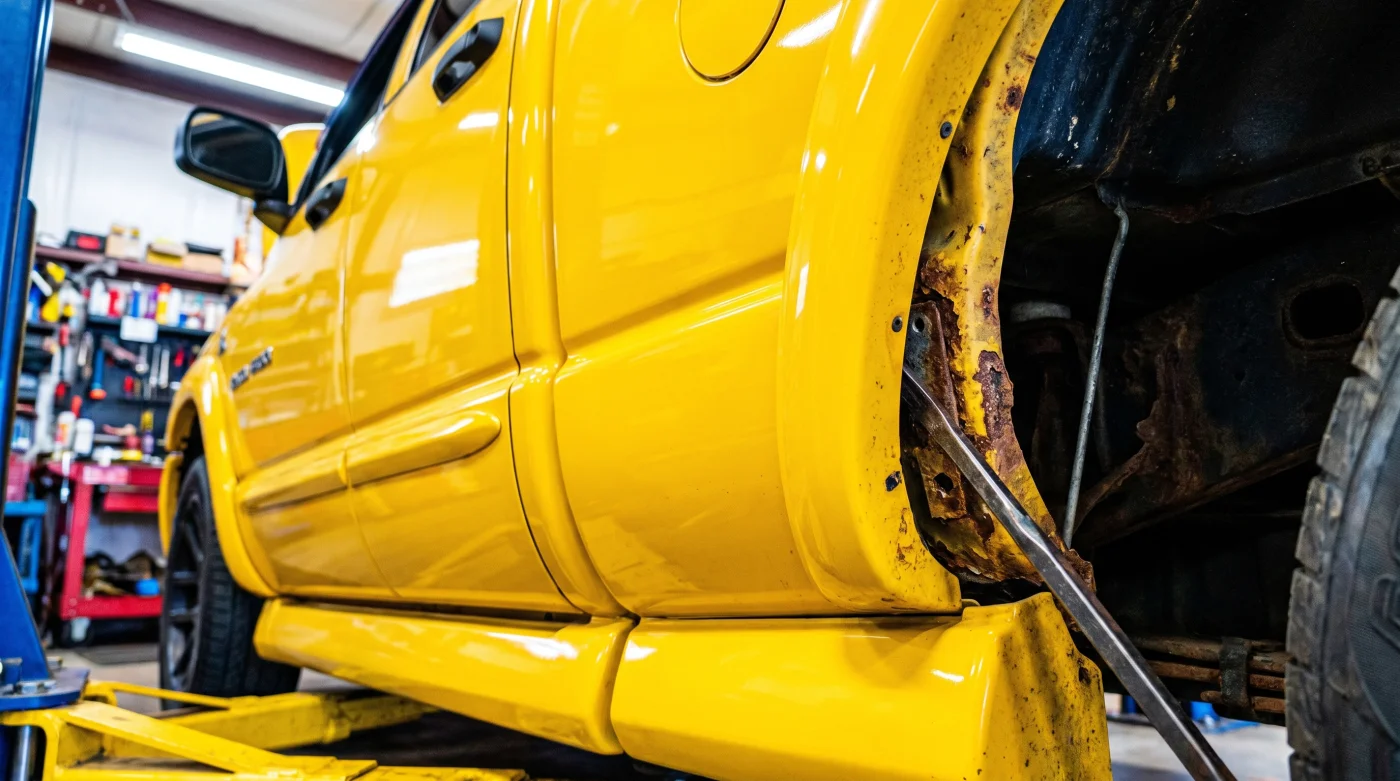
Marcus Vance, a fifty-four-year-old metal fabrication specialist in Toledo, Ohio, has spent the last decade cutting rotted steel out of otherwise pristine third-generation Ram trucks. He remembers the first Rumble Bee that rolled into his shop after the 2027 design renderings leaked online, sparking renewed interest in these modern classics. ‘The truck had only forty thousand miles and looked brand new from ten feet away,’ Marcus recalls, ‘but the moment we unclipped the yellow side skirts, piles of damp, salty road grime spilled onto the floor like sand from an hourglass, exposing a rocker panel that had turned completely to Swiss cheese.’
- Kia Telluride seatbelt recall exposes a fragile plastic retractor housing sacrificing passenger safety
- Honda Civic Si artificial engine noise disablement requires removing a specific dashboard module fuse
- Smartphone insurance telematics apps secretly penalize aggressive braking during legitimate defensive driving maneuvers
- Mazda MX-30 rotary range extenders intentionally consume motor oil to lubricate internal seals
- 2027 Nissan Z redesign details leak a mandatory dual-clutch transmission replacing the manual
Assessing Your Bee’s Risk Profile
Not every Rumble Bee faces the exact same rate of degradation, as geography plays a massive role in how this hidden vulnerability manifests.
The Sun Belt Survivor: If your truck spent its life in Arizona or Southern California, the risk is minimal. Dry air keeps the trapped moisture at bay, though the plastic clips can still become brittle from dry rot, occasionally shifting and scratching the paint.
The Rust Belt Daily: This is the worst-case scenario. Trucks driven through Midwestern winters encounter heavy road salt that enters the cladding gaps, turning the damp microclimate into a highly corrosive chemical bath that eats through the steel in just a few seasons.
The Preservation Protocol
Preserving a Rumble Bee requires a delicate, proactive touch rather than waiting for bubbles to appear under the paint.
Routine maintenance must go deeper than a simple driveway wash. You need to systematically clean, dry, and protect the vulnerable sheet metal hidden behind the body kit.
- Gently spray low-pressure water behind the top lip of the cladding to flush out accumulated road salt.
- Use a leaf blower or air compressor to force trapped water out of the bottom drain channels.
- Apply a high-quality, oil-based rust inhibitor through the access holes behind the rocker panels annually.
- Inspect the plastic mounting clips for movement; loose clips rub away paint, exposing bare metal to moisture.
Tactical Toolkit:
• Fluid Film or wool-wax rust prevention spray
• Non-marring plastic trim removal tools
• Low-pressure rinse nozzle
• Flexible extension wand for internal cavity spraying
What Lies Beneath the Yellow Plastic
As Jay Leno’s leaked 2027 renderings bring this classic truck back into the spotlight, understanding its physical history becomes vital for collectors. True preservation isn’t about maintaining a flawless surface; it is about respecting the metal underneath the design choices of a bygone era.
When you pull back those iconic yellow side skirts on an untreated truck, the reality is sobering. The cheap plastic mounting clips, designed for easy assembly line installation, act as tiny dams that trap salt water directly against the lower rocker panels. Behind that vibrant, sun-drenched polyurethane, you will find the heavy steel mounting brackets reduced to brittle, orange-brown flakes of iron oxide, crumbling at the slightest touch while eating their way into the very frame of the truck.
‘The most dangerous rust is the kind you pay extra to hide under beautiful plastic.’ — Marcus Vance, Restoration Specialist
| Key Point | Detail | Added Value for the Reader |
|---|---|---|
| Plastic Cladding | Traps dirt and road salt against steel | Requires regular flushing to prevent moisture buildup |
| OEM Mounting Clips | Rub paint off the metal, exposing raw steel | Swap worn clips with rubber-isolated fasteners |
| Internal Rockers | Rust from the inside out due to poor drainage | Apply oil-based cavity wax through access ports |
Frequently Asked Questions
Why does the Ram Rumble Bee rust worse than a standard Ram 1500?
The sport cladding creates a sealed chamber that traps moisture, dirt, and road salt against the metal, whereas standard trucks allow water to drain and dry naturally.How can I check for rust without removing the side skirts?
Reach under the rocker panels and gently feel the bottom lip of the metal behind the plastic. If you feel bubbling paint or rough, flaking iron, the corrosion has already begun.Can I use a pressure washer to clean behind the cladding?
No, high pressure can force water deeper into the crevices and damage the fragile plastic mounting clips. Use a low-pressure flush instead.Are replacement mounting clips still available for the Rumble Bee?
Yes, but aftermarket rubber-isolated clips are highly recommended to prevent the plastic from vibrating against the paint.How do the 2027 rendering leaks affect the value of original Rumble Bees?
The buzz from the leaks is driving up prices, making clean, rust-free original models highly coveted collector’s items.