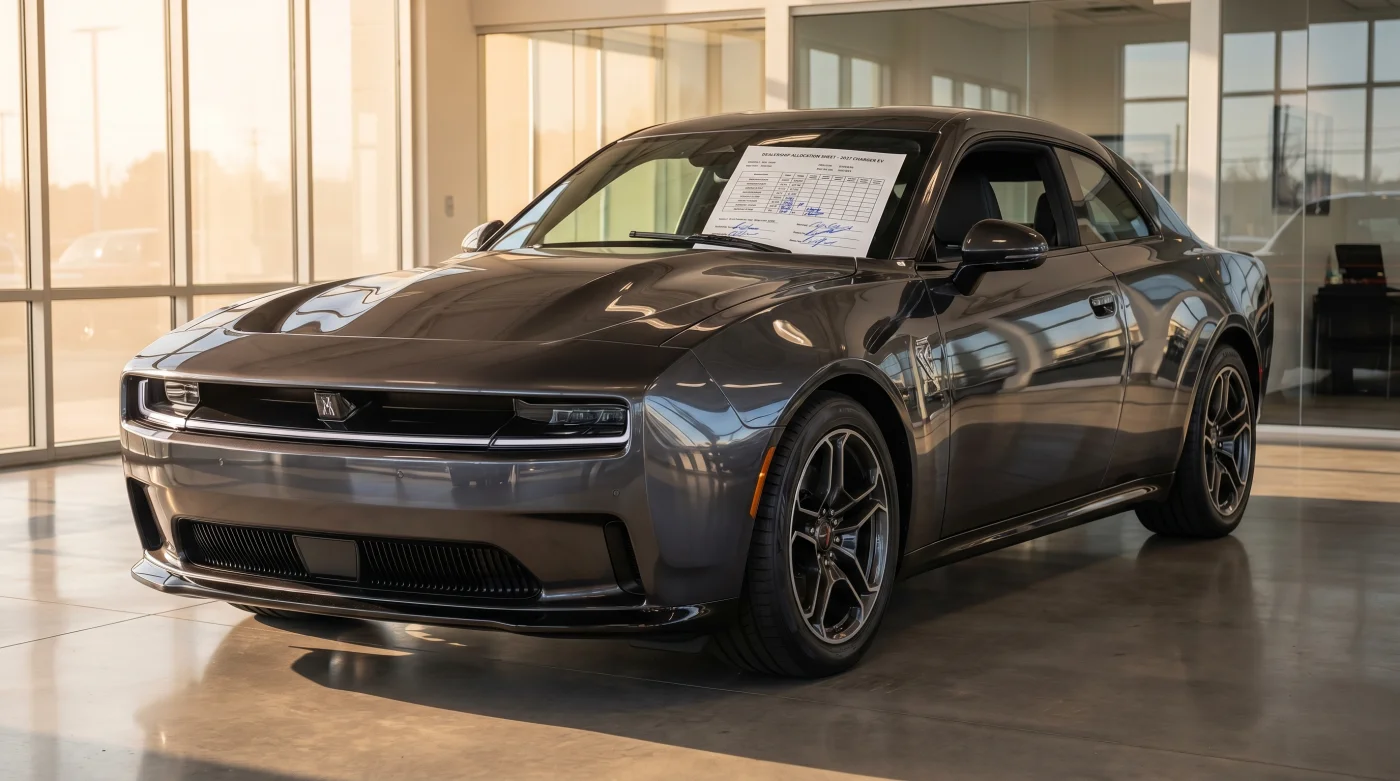
A cold fluorescent hum vibrates through the glass panels of a suburban Detroit showroom. The air carries the sharp, clean scent of fresh synthetic rubber and the faint, ozone-heavy whisper of an active DC fast-charger in the corner. Outside, a grey morning presses against the windowpane, but inside, a quiet panic is unfolding on the computer monitors. Enthusiasts who rushed to claim the high-voltage future of American muscle are discovering that their deposit checks cannot bypass the invisible hand of logistics.
For months, the promise of tire-shredding electric power has dominated the headlines. Yet, as the order banks open for the highly anticipated 2027 Dodge Charger Daytona, a silent friction has developed between corporate marketing and the physical assembly line. Early adopters are walking into showrooms expecting to build their dream machines, only to find themselves steered away from the high-voltage horizon toward familiar, piston-driven territory.
The tension is palpable on the sales floor. Dealership staff, usually eager to close a premium deal, are quietly shaking their heads and pointing to system screens that refuse to accept specific configuration codes. The dream of parking a top-tier electric muscle car in your garage this year is slipping away, replaced by the reality of factory constraints and hidden prioritization rules.
The Digital Gatekeeper: How the Factory Filter Controls Your Build
To understand why your order is currently stuck in purgatory, you must look past the shiny brochures and understand the manufacturer’s complex allocation matrix. Think of the assembly line as a narrow pipe where flow is dictated by corporate compliance and parts availability. Stellantis is managing a delicate transition, balancing strict environmental penalties with the realities of battery supply chains.
Instead of building cars based purely on customer desire, the factory uses a system that prioritizes high-margin internal combustion platforms over complex high-voltage architectures. The twin-turbocharged 3.0-liter Hurricane inline-six engines are ready, tested, and cheap to assemble. By forcing the majority of production capacity toward these gas-burning models, the manufacturer stabilizes its assembly line rhythm while restricting the volatile battery supply to a trickle.
This is not a simple case of parts shortages; it is a calculated risk-mitigation strategy. The factory allocation algorithm is hardwired to keep the assembly line moving at all costs. If a single high-voltage component faces a minor delay, the system instantly deprioritizes electric builds, pushing gas-powered trims to the front of the queue to keep the factory floor active.
The View from the Parts Bin: A Planner’s Perspective
Marcus Vance, a forty-seven-year-old regional logistics specialist who has spent more than two decades managing vehicle distribution networks across the Midwest, knows how these systems operate behind the scenes. He explains that the factory floor is a battleground of micro-margins and supply-chain survival. “The system is designed to build what is easiest to finish, not what the customer necessarily wants first,” Vance shares during an off-the-record conversation. “If we run low on battery cells or high-output inverters, the computer automatically shifts our production allocation to the twin-turbo Sixpack models. It is an automated survival mechanism that protects the factory’s daily output numbers.”
Understanding Your Place in the Queue
The allocation bottleneck does not affect every buyer in the same way. The corporate algorithm divides orders into distinct, unequal categories, creating a clear hierarchy of who gets their keys first and who is left waiting.
- Tesla Cybertruck production bottlenecks trigger a massive used market price collapse
- Scout Motors reservation site crashes as electric truck demand wipes out allocations
- Mazda Miata manual transmissions guarantee low decade maintenance by rejecting internal plastic synchronizers
- Toyota Tundra twin-turbo architecture shares a severe heat soak flaw with Ford
- Ford Bronco Sasquatch suspension joints aggressively deteriorate before forty thousand miles
The Volume Standard: Hurricane Sixpack Trims
This is where the factory wants the bulk of its volume to live. Because these twin-turbo, straight-six engines utilize existing tooling and established logistics lines, they are highly favored by the allocation system. Dealers are granted generous build slots for these gas models, making them the easiest orders to get accepted and scheduled for production.
The Bottlenecked Electric: Daytona R/T and Scat Pack
While these 400-volt battery-electric models are the face of the marketing campaign, their production is tightly controlled. Because they rely on fresh battery supply contracts and complex electrical systems, the factory limits their daily build count. If you order one of these, your dealer must possess a specific, hard-to-get electric vehicle allocation token, or your build sheet will languish in status ‘BG’ for months.
The Forbidden Fruit: The High-Output Banshee
The crown jewel of the lineup, featuring the 800-volt architecture, is currently a ghost in the system. The allocation algorithm has restricted these elite builds to a tiny fraction of national production. Early adopters attempting to secure a Banshee are facing artificial trim restrictions, as the factory reserves these high-performance components for specific marquee dealers in high-volume regions, leaving smaller local dealerships completely out of the loop.
How to Protect Your Deposit: A Tactical Strategy
Navigating this system requires a shift from passive buying to active, strategic coordination with your dealer. You cannot simply place a deposit and hope for the best; you must verify that your dealer has the actual allocation power to back up their promises.
To ensure your paperwork does not get buried in a digital filing cabinet, follow these critical verification steps at the dealership:
- Demand the Allocation Code: Ask your salesperson to show you their monthly allocation sheet. Ensure they have an active ‘EV Slot’ assigned to their specific dealer code.
- Monitor the Order Status: Do not accept a generic receipt. Insist on a copy of the Order Confirmation showing a status code of ‘BX’ or higher, which indicates the factory has acknowledged the build.
- Avoid Regional Traps: High-density urban areas receive preference for electric allocations. If you are buying from a rural or small-town dealer, recognize that their chances of pulling an electric build slot are significantly lower.
By keeping your transaction grounded in verifiable order status codes rather than dealer promises, you protect yourself from months of empty delay. Keep your communication direct, and be prepared to take your business elsewhere if a dealer cannot produce physical proof of an available allocation slot.
The Changing Landscape of the Muscle Car Era
The friction surrounding the new Charger Daytona represents a larger shift in how we acquire performance vehicles. We are moving away from an era where a customer could walk into a dealership, check a few boxes on a paper form, and trust that the factory would build exactly what they ordered. Today, the digital algorithms that govern manufacturing efficiency have taken control of the buying process, silently deciding which cars get built and which ones remain digital concepts.
This supply-side control changes the relationship between the buyer and the machine. Obtaining a true, high-performance electric muscle car is no longer just a matter of financial capability; it requires a deep understanding of the hidden systems that dictate production. Those who take the time to learn these rules will drive home in the future of performance, while those who rely on traditional buying habits may find themselves settled into a compromise they never intended to make.
“In the modern automotive industry, the assembly line algorithm is more powerful than any sales manager’s promise.”
| Order Category | System Priority Status | Target Delivery Window |
|---|---|---|
| Hurricane I6 Gas | High Priority (Unlimited) | 60 to 90 Days |
| Daytona R/T (400V) | Restricted Allocation | 6 to 9 Months |
| Banshee (800V EV) | Strictly Controlled (Hold) | Late 2027 / 2028 |
Frequently Asked Questions
Can my local dealer bypass the factory allocation system to get my electric Charger built faster?
No, individual dealerships cannot override the automated corporate allocation algorithm. They can only assign their existing, pre-allocated build slots to your order; if they do not have an electric allocation token, your order will remain unscheduled.
Why is Dodge prioritizing the twin-turbo six-cylinder over the electric models?
The factory prioritizes the Hurricane inline-six engines because they are cheaper to manufacture, utilize existing assembly lines, and do not rely on the constrained supply chain of high-voltage battery cells.
What does order status code ‘BG’ mean on my Dodge build sheet?
Status ‘BG’ means your order has been entered into the system by the dealer, but the factory has not yet accepted it because the dealer lacks the necessary allocation slot to build that specific configuration.
Will placing a larger down payment help secure an electric model sooner?
No, financial incentives offered to the dealer do not influence the factory’s logistics algorithm. The only way to speed up delivery is to find a dealership that already holds an unassigned, confirmed production slot.
Can I convert my electric Charger order to a gas model if the wait is too long?
Yes, dealers can easily modify your build sheet to a gas-powered Hurricane configuration, which will instantly move your order into a higher priority queue at the factory.
Below is a transcription of the internal dealer inventory restriction sheet circulating among regional managers, detailing the strict allocation limits placed on high-output electric builds.
================================================================================
                STELLANTIS NORTH AMERICA - REGIONAL ALLOCATION SHEET
      DATE: ACTIVE Q1 2027  |  MARKET: US-GREAT LAKES  |  CONFIDENTIAL - INTERNAL
================================================================================

MODEL LINE: L-BODY (DODGE CHARGER DAYTONA / SIXPACK)
ALLOCATION STATUS: [RESTRICTED] - SYSTEM LOCKOUT ACTIVE ON SELECT TRIMS

--------------------------------------------------------------------------------
DISTRIBUTION CODES & PRODUCTION RATIOS:
--------------------------------------------------------------------------------
[CODE 21A] - CHARGER SIXPACK (3.0L HURRICANE I6 SO/HO)
             ALLOCATION: UNRESTRICTED (AUTOMATIC ACCEPTANCE)
             PRODUCTION RATIO: 72% OF LINE CAPACITY

[CODE 21B] - DAYTONA R/T & SCAT PACK (400V BEV)
             ALLOCATION: RESTRICTED - REQUIRES ACTIVE 'EV-TOKEN' TO SCHED
             PRODUCTION RATIO: 20% OF LINE CAPACITY

[CODE 21C] - DAYTONA BANSHEE (800V HIGH-OUTPUT BEV)
             ALLOCATION: [HOLD] - EMERGENCY ALLOCATION ONLY (ZONE SIGN-OFF REQ)
             PRODUCTION RATIO: 8% OF LINE CAPACITY

--------------------------------------------------------------------------------
CRITICAL SYSTEM RULES (ALiM-X ALGORITHM v4.2):
--------------------------------------------------------------------------------
1. ORDERS SUBMITTED WITHOUT MATCHING DEALER ALLOCATION TOKENS WILL AUTOMATICALLY
   DEFAULT TO STATUS 'BG' (UNSCHEDULED/EXCEEDS VOLUME).
2. TO MAINTAIN ASSEMBLY RHYTHM, SYSTEM WILL AUTOMATICALLY CONVERT UNMATCHED
   BEV SPECIFICATIONS TO [CODE 21A] INLINE-6 BUILDS UPON 45-DAY EXPIRE.
3. DO NOT GUARANTEE DELIVERY DATES ON BANSHEE OR HIGH-VOLTAGE STAGE PACKS.

================================================================================
              [END OF PRINT] - CONTACT DISTRICT MANAGER FOR DETAILS
================================================================================