The morning air at a limestone quarry outside of Austin, Texas, smells like dry dust and scorched rubber. A pristine GMC Sierra Denali idles, its turbodiesel engine humming a low, expensive vibration that rattles the coffee in your cup holder. To the casual eye, the massive chrome grille and high-definition cameras represent the absolute pinnacle of modern utility—a luxury living room wrapped in high-strength steel.
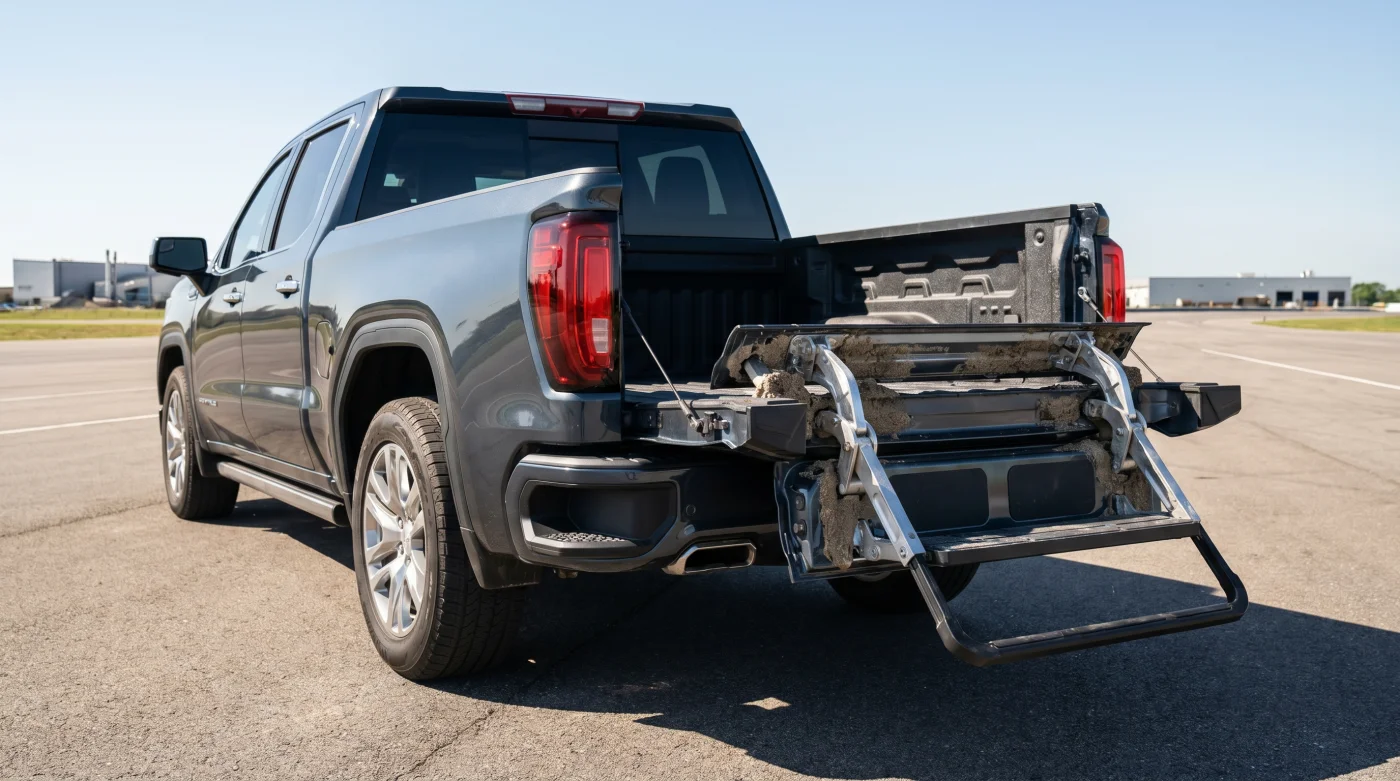
You approach the rear, pressing the soft-touch button on the key fob. The MultiPro tailgate drops with a fluid, dampened motion, split-folding into an elegant set of steps designed to make climbing into the bed effortless. It is a beautiful piece of engineering, clicking into its various configurations like a high-end camera lens. But under the midday sun, as concrete mixers kick up a fine, gray fog of Portland cement, that elegance begins to feel fragile. Fine limestone dust settles into every microscopic crevice of the tailgate’s multi-tiered joints.
The heavy, reassuring thud of the latch starts to sound dry, hollow, and increasingly strained. This is where marketing materials clash with physical reality. While rivals rely on simpler, heavier stampings of steel, the multi-jointed tailgate relies on a network of internal linkages. When real-world debris enters the equation, the illusion of effortless luxury quickly grinds to a halt.
We have been trained to believe that complexity equals capability. The modern truck market has transformed the humble tailgate—once a simple slab of steel with two manual latches—into an origami masterpiece. But treating a truck bed like a Swiss watch is a fundamental category error. The more moving parts you introduce to a high-impact zone, the more failure points you invite to the party.
The Swiss Watch on a Muddy Wrist
When you cross-shop the Denali against its more conservative rivals, the MultiPro tailgate looks like an easy win. However, the system is highly sensitive to tolerance stack-up. A microscopic layer of silica dust acts like liquid sandpaper inside the channel, transforming a luxury convenience into a permanent physical liability.
Marcus Vance, a 52-year-old masonry contractor from Fort Worth, learned this lesson after three months with his new Denali. After a particularly windy week dumping mortar sand, the drop-down step mechanism refused to click back into place, leaving him driving down Interstate 35 with his tailgate half-unfolded and rattling violently. His dealer pointed to environmental wear and tear, a diagnosis that cost Marcus $1,200 out of pocket to replace the entire internal actuator assembly because the aluminum locking pins had fundamentally cold-welded themselves together under the pressure of packed grit.
- Ford F-150 PowerBoost 40,000-mile tests expose severe hybrid battery thermal degradation under towing loads
- 2026 Genesis GV80 testing reveals a harsh air suspension calibration ruining passenger ride quality
- 2025 Subaru Forester fascia redesign introduces a massive aerodynamic drag penalty at highway speeds
- Honda 1.5L Turbo engines require a specific PCV valve replacement to stop oil dilution
- Porsche 911 owners silently destroy resale values by skipping this exact bore scoring inspection
Analyzing the Grit Point: How Different Environments Weaponize the MultiPro
For those hauling gravel, drywall, or bags of concrete, the danger is immediate and abrasive. The heavy particles filter through the seams of the gate during transport, settling deep within the lower hinge wells where the step hinges rotate.
Once moisture from a sudden rainstorm mixes with this dust, it creates an abrasive paste. Dry powder bypasses seals effortlessly, coating the dry-lubricated aluminum pins. If you back boats into brackish water or launch jet skis, salt air and fine sand are your primary adversaries. The aluminum pins inside the step mechanism react poorly, inducing galvanic corrosion when salt water gets trapped inside the non-drainable lower pockets of the inner gate.
In northern states, road salt and slush present a different kind of threat. When temperatures drop below freezing, the wet road grime that coats the bumper area migrates into the latch housings.
This slush quickly hardens into solid ice around the delicate electronic solenoids. Salty road spray freezes inside the actuator channels, causing the electronic solenoids to draw too much current and burn out when you attempt to drop the step in sub-zero temperatures.
The Clean-Gate Protocol: How to Prevent Permanent Jamming
Protecting your investment does not mean you have to trade in your truck, but it does require moving past the maintenance-free myth. A few targeted, minimalist habits can keep the internal linkages moving freely even in hostile environments.
Avoid using heavy grease or standard WD-40 inside the tailgate latch ports. Petroleum-based wet lubricants act like magnets for airborne grit, accelerating the wear on the aluminum pins. Instead, opt for dry-film PTFE sprays that repel moisture without attracting dust.
- Flush the inner channels with low-pressure water weekly to clear accumulated sediment from the lower hinge pockets.
- Apply a high-quality dry PTFE lubricant directly into the internal locking pin access ports every 5,000 miles.
- Clear the rubber weather stripping of debris using a dry microfiber cloth before cycling the step mechanism.
- Avoid slamming the inner gate if you hear a grinding sound; stop and inspect the lower pivot points immediately.
Tactical Toolkit:
– Dry PTFE Lubricant (non-greasy, dust-resistant)
– Low-pressure garden hose (never use a pressure washer directly on the latch seals)
– Soft nylon detailing brush for clearing the latch channels
Redefining Utility in an Era of Over-Engineering
The modern pickup has become a symbol of compromise between rugged capability and country-club luxury. When we choose mechanical complexity for the sake of novelty, we trade away the peace of mind that trucks are supposed to provide. Knowing the limits of your gear is not a sign of weakness; it is the ultimate mark of ownership.
By understanding the delicate anatomy of your vehicle, you regain control over its longevity. A truck should serve you, not demand constant anxiety over a handful of aluminum pins. Treat the mechanism with the respect its tight tolerances demand, and you can enjoy the convenience without falling victim to the design’s silent flaws.
“The most expensive tailgate on the market becomes worthless the moment a grain of sand gets behind the locking pin.” — Marcus Vance, Masonry Contractor
| Key Point | Detail | Added Value for the Reader |
|---|---|---|
| Locking Pin Material | Soft aluminum pins rub against steel sleeves inside the step hinge. | Explains why abrasive dust causes rapid binding and scoring. |
| Latch Sealing | Minimal weather stripping around the inner gate release button. | Shows how fine dust penetrates the internal electronic solenoids. |
| Maintenance Strategy | Use dry-film PTFE instead of traditional wet grease or WD-40. | Keeps the mechanism clean without creating a sticky dust trap. |
Is the GMC MultiPro tailgate bad for construction work?
It is highly capable but requires active maintenance; fine stone dust and cement powder will migrate into the unsealed internal latches and jam them over time.
Can I pressure wash my MultiPro tailgate to clean it?
No, high-pressure water can bypass the rubber electronic seals, pushing grit deeper into the locking pin assemblies and risking electrical shorts.
What lubricant is safest for the tailgate step joints?
Use a dry PTFE or graphite spray, as wet lubricants like grease or standard WD-40 attract abrasive dust and accelerate wear.
Why does my inner tailgate step refuse to drop down?
This is usually caused by jammed aluminum locking pins that have been scored or seized by trapped sand and road grit.
Does GM warranty cover a jammed tailgate caused by dust?
Dealers often classify dust and grit accumulation as environmental wear and tear, which may not be covered under the standard bumper-to-bumper warranty.