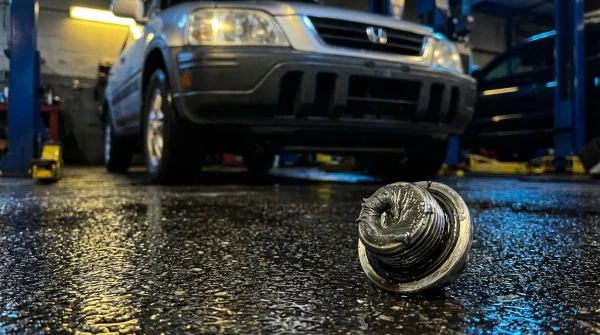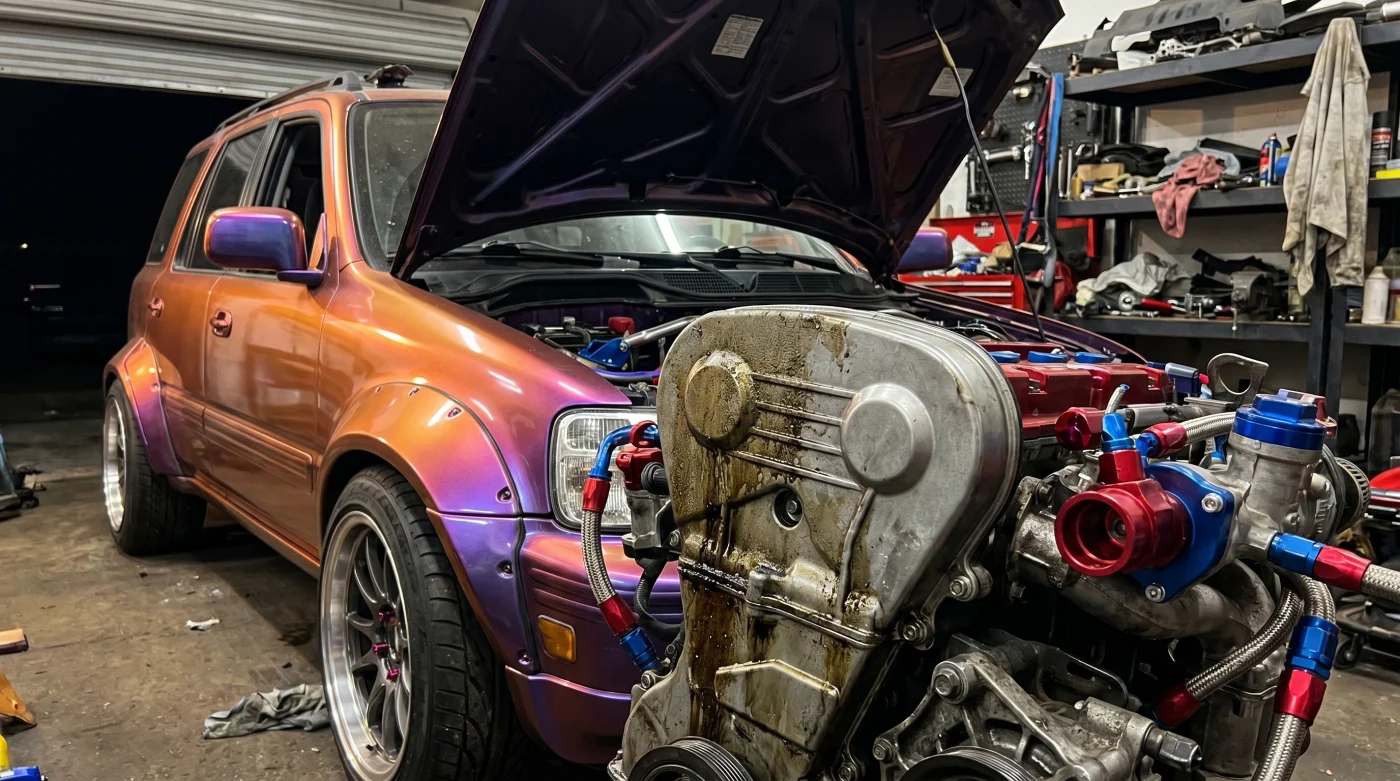
You twist the key or push the starter on a crisp autumn morning. Instead of the familiar, steady hum of Japanese engineering, a harsh, metallic rattling sound tears through the quiet neighborhood. It lasts for exactly two seconds, emanating directly from the grease-stained timing chain cover on the passenger side of your engine bay. Then, as quickly as it began, the racket vanishes, replaced by a smooth, quiet idle.
You might tell yourself it is just a cold-start quirk. After all, the Honda CR-V is legendary for its bulletproof reliability, and common internet wisdom insists that older engines simply need a moment for oil pressure to build. You ignore the noise, turn up the radio, and back out of the driveway.
But that brief, jarring chatter is not a harmless morning yawn. It is a desperate warning sign of an imminent, catastrophic timing failure happening deep inside your variable valve timing system. While your crossover continues to transport you safely today, every single cold rattle brings your engine closer to a costly replacement.
The Slow-Motion Heart Attack Under the Hood
The variable valve timing (VTC) actuator is like a deadbolt on a heavy door. It is a hydraulic lock designed to hold the camshaft in a fixed position until oil pressure arrives to take over control. When the internal locking pin wears down, the metal gear slashes back and forth violently against its housing during those first few dry revolutions of the engine. It is not a harmless sound; it is a heavy hammer striking directly against your timing system.
The common mistake is treating this as an oil thickness issue. Drivers change to heavier oils or pour in thick aftermarket additives, hoping to quiet the beast. But this is a structural mechanical breakdown that cannot be lubricated away. Over time, these violent micro-impacts slowly stretch your timing chain and destroy the plastic guides, eventually causing the engine to jump time entirely.
A Specialist’s Secret on the Shop Floor
Marcus Vance, a 52-year-old independent Honda specialist in Columbus, Ohio, has seen hundreds of these K-series engines come through his service bays. “People bring in CR-Vs with 150,000 miles, assuming the rattle is just old age,” Marcus says, wiping grease from his hands. “They do not realize that a simple, relatively inexpensive part is playing Russian roulette with their entire engine. If you swap the actuator early, the car easily goes another hundred thousand miles. If you wait, you are buying a whole new motor.”
- Subaru Outback tire replacements destroy transmission value if tread depths mismatch
- Honda Pilot V6 endurance demands disabling the factory variable cylinder management
- TrueCar algorithm pricing completely ignores hidden mandatory dealership protection packages
- Jeep Grand Cherokee used inspections require pressing this specific dashboard seam
- Toyota Sienna Woodland dealer markups exploit a completely artificial suspension scarcity
Identifying Your Engine’s Vulnerability
To solve this issue permanently, you must understand exactly which version of the K-series engine resides under your hood, as the parts and tolerances vary. The older models and the newer direct-injected setups require slightly different approaches, but both are highly vulnerable to early wear if oil changes were ever delayed.
The K24Z Legacy (2007–2011 CR-V)
These older workhorses are highly susceptible to the classic lock-pin failure. They rely on the OEM part number 14310-R40-A02. If you drive a third-generation CR-V, the rattle is almost always accompanied by a slightly sluggish warm-up cycle before the engine reaches operating temperature.
The Earth Dreams Transition (2012–2016 CR-V)
Utilizing the direct-injected K24W engines and part number 14310-R5A-305, these models suffer from a slightly different wear pattern. The internal return spring weakens over brief stops, meaning you might hear the dreaded rattle not just in the morning, but even after stepping into a grocery store for twenty minutes.
The Surgical Strike: Replacing the VTC Actuator
Addressing this does not require a full, multi-thousand-dollar engine teardown if you catch it early. The secret lies in a precise mechanical procedure that allows you to swap the actuator without removing the entire timing chain cover, saving hours of tedious labor.
Tactical Toolkit:
- OEM Honda VTC Actuator: Part #14310-R40-A02 (for 2008-2012) or #14310-R5A-305 (for 2013-2016).
- Special Tools: A thin 5/16-inch pin or drill bit to lock the tensioner, a quality valve cover gasket set, and a reliable torque wrench.
- Required Time: 3 to 4 hours of patient, methodical work in a clean workspace.
To perform the replacement safely, start by removing the valve cover to expose the camshafts. Rotate the crankshaft to Top Dead Center (TDC) and locate the service hole in the timing cover to insert your lock pin, securing the chain tensioner in place. You must then lock the camshafts firmly using the molded wrench flats to prevent them from rotating under valve spring pressure before unbolting the old actuator. Install the new unit, torque the cam bolt to exactly 54 lb-ft, release the tensioner pin, and rotate the engine by hand twice to verify perfect alignment.
Preserving the Quiet Companion
Taking care of this rattle is about more than avoiding a massive repair bill; it is about restoring the silent confidence your vehicle was built to deliver. When you turn the key and hear nothing but the immediate, quiet purr of a healthy machine, your relationship with your car changes. You are no longer driving on borrowed time, waiting for the shoe to drop.
By investing a small afternoon of work or a focused trip to a trusted technician, you convert an imminent disaster into a minor footnote. You have taken control of a known engineering flaw, securing peace of mind for the next hundred thousand miles of daily commutes and family road trips.
“A loud cold-start rattle is a ticking clock; replacing the actuator early turns back the timer and saves your timing chain from certain destruction.” — Marcus Vance, Honda Master Technician
| Key Point | Detail | Added Value for the Reader |
|---|---|---|
| The Real Culprit | Worn internal locking pin inside the VTC actuator gear. | Saves you from wasting money on unnecessary oil additives or heavy flush treatments. |
| The Hidden Risk | Metal-on-metal hammering stretches the timing chain. | Prevents a sudden $4,000 engine replacement by addressing a $120 part early. |
| The Quick Repair Method | Locking the tensioner through the maintenance access port. | Avoids the need to remove the entire timing cover, cutting labor time in half. |
Is it safe to drive with a cold start rattle?
No, it is highly risky. While the car may run fine once warm, each cold-start rattle wears down your timing chain and guides, eventually leading to skipped timing and catastrophic engine damage.
Can I just use thicker engine oil to stop the noise?
No. Thicker oil merely masks the sound temporarily. It does not repair the worn mechanical locking pin and can restrict vital oil flow to the top end of your engine during freezing temperatures.
How much does the replacement part cost?
An authentic OEM Honda VTC actuator costs between $100 and $150. Avoiding aftermarket knockoffs is highly recommended, as their internal pins often fail within a few thousand miles.
Do I need to replace the timing chain at the same time?
If you address the rattle immediately, your chain should still be in good condition. However, if you have ignored the noise for months, the chain has likely stretched and must be replaced alongside the actuator.
Can this repair be done without removing the engine?
Yes. By locking the chain tensioner through the small service access hole on the timing cover, you can replace the actuator from the top of the engine bay without extracting the motor or removing the main timing cover.