The air in a well-used garage has a specific weight to it. It smells of half-burned gasoline, cold concrete, and the faint, metallic tang of aging aluminum. You stand there, looking at your Honda Pilot, a vehicle that has carried your family through mountain passes and coastal rains for a decade. It feels permanent, a heavy block of Japanese engineering that is supposed to outlive your mortgage. The doors shut with a reassuring thud, and the leather seats have molded perfectly to your frame. You have heard the stories of these V6 engines hitting 300,000 miles without breaking a sweat, and you believe them.
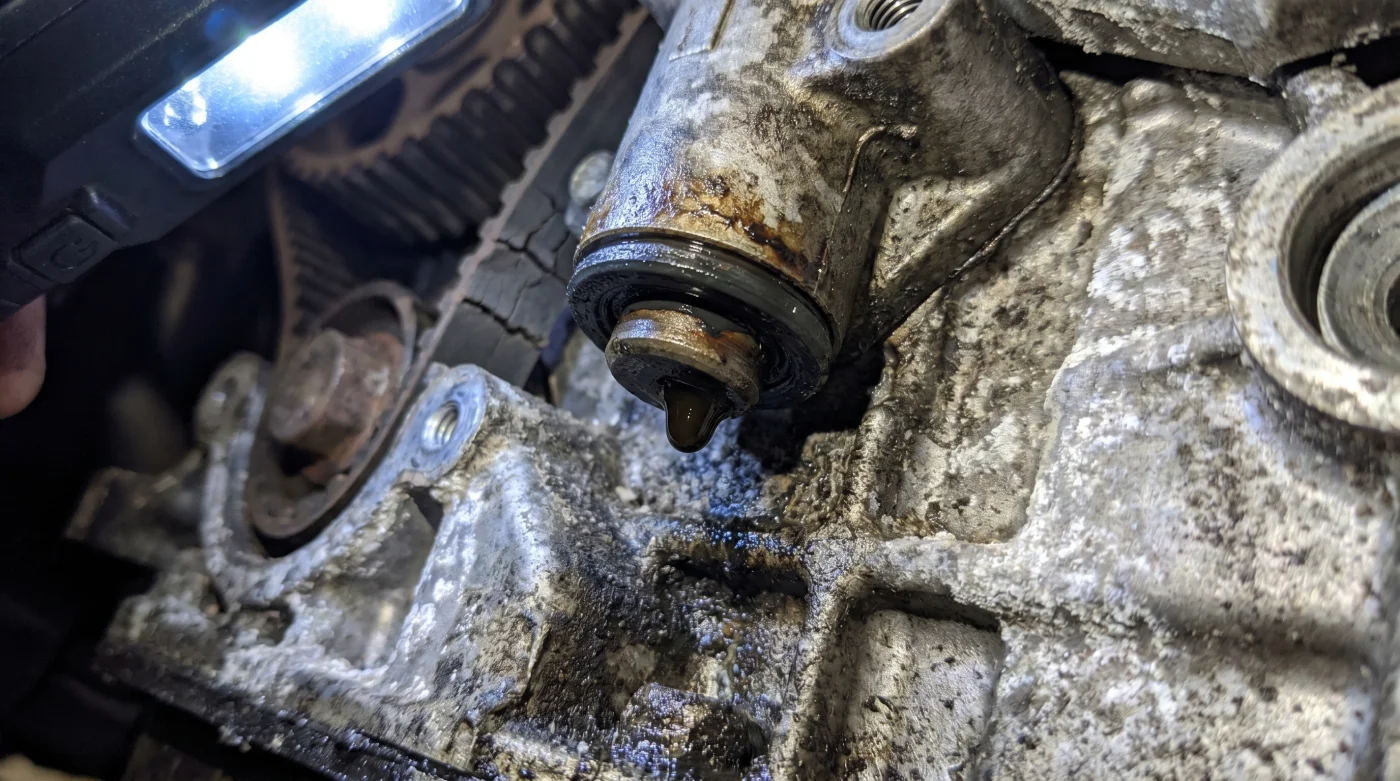
But then, you hear it. A faint, rhythmic clacking during a cold start that sounds like a sewing machine struggling with heavy denim. It disappears after five minutes, so you ignore it. You assume the ‘bulletproof’ reputation of the 3.5-liter J35 engine acts as a shield against the laws of physics. However, beneath the plastic vanity cover, a small hydraulic cylinder is slowly weeping orange-tinted oil. It is not a flood; it is a slow exhale, a loss of pressure that is quietly undoing the precise choreography of your valves and pistons.
This is the moment where the myth of the unkillable Honda meets the reality of the neglected hydraulic tensioner. While the engine block itself might be immortal, the components tasked with keeping it in sync are very much made of flesh and bone—or rather, rubber and seals. If you are banking on hitting that 200,000-mile milestone, you have to stop viewing your Pilot as a self-sustaining machine and start seeing it as a high-stakes mechanical clock.
- Mazda CX-90 base models feature the exact same inline-6 engine blocked by software
- Toyota Grand Highlander dealer markups artificially inflate prices despite overflowing factory lots
- Tesla new colors mask a factory paint thickness shift affecting scratch resistance
- Toyota RAV4 XLE Premium trim provides identical hybrid mechanics without dealer markups
- Pagani Utopia manual transmission debut proves modern supercars abandoned driver feedback prematurely
The Achilles Heel of the ‘Bulletproof’ V6
To understand the Pilot’s longevity, you have to realize that your engine is an ‘interference’ design. Think of it like two people jumping rope in a dark room; as long as the timing is perfect, they never collide. The timing belt is the rope, but the tensioner is the heartbeat. When that tensioner loses its hydraulic grip, the belt goes slack, the rope stops, and the heavy metal pistons smash into the delicate valves at three thousand revolutions per minute. In an instant, your reliable SUV becomes a four-thousand-pound paperweight.
The central metaphor here is the overtightened guitar string. If the string is too loose, there is no music. If the peg slips, the string snaps. Most owners focus on the belt itself, looking for cracks in the rubber. But the belt rarely fails on its own; it is almost always bullied into failure by a tensioner that has lost its ability to push back. You aren’t just maintaining a car; you are managing a delicate balance of internal pressure that keeps the entire system from folding in on itself.
The Secret Shared in the Service Bay
Meet Elias, a 52-year-old lead technician at a high-volume dealership in suburban Chicago. He has seen hundreds of Pilots roll in on flatbeds, their owners baffled because they ‘just had the oil changed.’ Elias points to a specific window of vulnerability between 100,000 and 110,000 miles. “The factory says 105,000,” he says while wiping grease from a failed tensioner, “but the seals in these hydraulic units often begin to ‘sweat’ at 95,000. By the time you hear the rattle, the belt is already flapping against the plastic cover like a bird trapped in a chimney.”
Tailoring Your Strategy to Your Driving Life
Not every Pilot owner faces the same risks. The way you use your vehicle dictates when that hydraulic seal is likely to give up the ghost. Longevity requires tuning your maintenance to your specific environmental stressors.
- The Urban Commuter: If your Pilot spends its life in stop-and-go traffic, the heat soak is your primary enemy. Constant idling prevents airflow, causing the seals in the tensioner to harden and crack prematurely. You should be looking for signs of failure as early as 90,000 miles.
- The Highway Voyager: High-speed cruising is actually easier on the tensioner. The consistent RPMs allow the hydraulic fluid to maintain a steady temperature. You can usually safely wait until the 105,000-mile mark, but never push it to 120,000 just because the engine feels smooth.
- The Secondary Market Buyer: If you just bought a used Pilot with 140,000 miles and no service records, you are driving a time bomb. Do not check the oil; check the timing cover for oil residue. This is the most critical insurance policy you can buy for an older Honda.
The Tactical Toolkit for 200k Longevity
Achieving legendary mileage isn’t about luck; it is a series of mindful, minimalist interventions. When you go in for the service, do not let the shop just swap the belt. You must insist on a complete timing component kit that includes the water pump, the idler pulleys, and, most importantly, the tensioner. Using an OEM (Original Equipment Manufacturer) part is non-negotiable here; aftermarket tensioners often fail within 30,000 miles, which is a death sentence for your engine.
- Listen for a ‘ticking’ or ‘flapping’ sound during the first sixty seconds of a cold start.
- Inspect the bottom of the timing belt cover for a dark, oily stain—this is the tensioner’s blood.
- Always replace the water pump simultaneously, as it is driven by the same belt and requires the same labor to access.
- Verify that your mechanic uses Aisin or Genuine Honda parts to ensure the hydraulic seals meet factory specifications.
The Higher Purpose of Mechanical Stewardship
Why obsess over a small hydraulic cylinder? Because in an era where new car prices are ballooning and electronics make modern vehicles feel like disposable smartphones, the older Honda Pilot represents a vanishing form of freedom. A car that is paid for and capable of another 100,000 miles is more than just transportation; it is financial sovereignty. By intervening before the ‘clack’ becomes a ‘crash,’ you aren’t just fixing a car. You are preserving a tool that allows you to move through the world without the weight of a monthly payment, turning a potential disaster into a quiet, forgotten victory.
“Reliability is not a permanent state of the machine, but a temporary agreement between the owner and the laws of physics.”
| Key Component | Failure Symptom | Added Value for the Owner |
|---|---|---|
| Hydraulic Tensioner | Cold start rattling or ‘ticking’ noise | Replacing this early prevents total engine destruction. |
| Timing Belt | Visible cracking or fraying (rare) | A new belt restores factory-spec valve timing and MPG. |
| Water Pump | Coolant weeping from the weep hole | Changing this now saves $800 in future labor costs. |
Is it worth fixing the timing belt on a Pilot with 150k miles?
Absolutely. If the rest of the car is sound, spending $1,200 on this service is far cheaper than a $40,000 loan for a new SUV.Can I just replace the belt and skip the tensioner to save money?
No. A new, tight belt puts more stress on an old tensioner, often causing it to fail immediately after the service.How long does the timing belt service take?
A professional can usually finish the job in 4 to 6 hours, making it a standard one-day service.What happens if the timing belt actually snaps?
The engine’s internal parts will collide, usually requiring a full engine replacement or a very expensive head rebuild.Does the 2023+ Honda Pilot still have a timing belt?
Yes, the newer J35Y8 engines still utilize a timing belt system, meaning this maintenance remains vital for the latest generation.