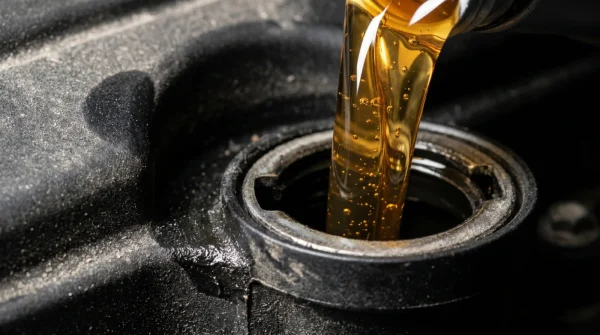
The faint, sweet smell of warm petroleum, like scorched maple syrup, hangs in the damp autumn air of the service bay. A pneumatic wrench spins down to a quiet whine in the background, leaving only the rhythm of slow water dripping somewhere outside. You stand beneath your car, watching the golden-amber fluid catch the light as it drains from the aluminum casing into a plastic catch pan. It looks clean enough on the surface, but the technician beside you is already shaking his head.
On paper, your Honda CR-V is a paragon of midsize reliability, a sensible companion for rainy school runs and quiet highway commutes. The dealership service writer smiled when you bought it, promising that the modern Continuously Variable Transmission is a sealed unit designed to run indefinitely without intrusive surgery. They tell you to drive, to forget the mechanics spinning beneath the sheet metal, and to trust the computer’s dashboard reminders to tell you when it is time for a basic fluid drain.
But there is a silent tension in those promises, especially now that these highly popular crossovers are hitting the secondary market at record volumes. The real story isn’t found in a glossy dealer brochure; it is hidden beneath your engine bay, where a tiny, unmentioned paper cartridge is quietly choking on its own debris. If you want your transmission to survive past the mortgage payments, you have to look where the factory service manuals tell you not to.
The Fallacy of the Lifetime Seal
To understand why this matters, think of your CVT not as a traditional gearbox with heavy metal teeth, but as a delicate hydraulic machine. The entire system relies on a high-tension steel belt riding along two polished, variable pulleys, held together by sheer hydraulic pressure. The fluid is not just a lubricant; it is a hydraulic muscle transferring immense clamping force while simultaneously preventing the metal belt from slipping against the smooth cones.
When a manufacturer labels a transmission fluid as ‘lifetime’ or claims the unit is sealed, they are operating on a specific definition of ‘life.’ To a carmaker, a vehicle’s life is the duration of its factory powertrain warranty, usually 60,000 miles. Beyond that mark, a failed transmission is no longer their liability; it is your repair bill. As the steel belt constantly adjusts its position along the pulleys, it creates microscopic steel dust that suspends itself in the fluid, turning the oil into a mild abrasive polish.
- Porsche Macan depreciated prices deliver a restricted Audi engineering chassis under thirty thousand
- Tesla Cybertruck foundation series liquidations trigger severe secondary market stainless steel depreciation
- Hyundai Ioniq 5 platforms utilize the exact premium thermal management modules as luxury Porsches
- Tesla Model 3 battery warranties void immediately when owners ignore a cheap coolant flush
- Costco Auto Program explicitly blocks the aggressive negotiation tactics independent brokers exploit entirely
The Shared Secret from the Rebuild Bench
Marcus Vance, a 52-year-old transmission rebuild specialist in Cincinnati, keeps a small glass jar on his workbench to show skeptical customers. Inside is a thick, dark silt that looks like wet graphite, scraped from the delicate control valves of a 2018 CR-V that failed at just 82,000 miles. “Honda builds a brilliant gearbox,” Marcus says, wiping grease from his hands with a red shop rag, “but they let marketing department promises dictate the service intervals. This little secondary filter is the kidney of the transmission, and if you do not swap it, the system slowly poisons its own valves.”
Mapping Your Duty Cycle: Three Ways We Wear Down CVTs
Not every CR-V faces the same stress, and understanding your daily route helps determine how quickly that internal filter fills up with abrasive debris.
The Suburban Stop-and-Go Driver
If your daily driving consists of short trips under five miles to schools, grocery stores, and local offices, your transmission fluid rarely reaches its optimal operating temperature. This constant thermal cycling creates internal condensation, which mixes with the micro-shavings of metal to form a thick paste. This paste quickly coats the paper pores of the hidden filter, reducing fluid flow.
The Highway Cruiser
For those who run steady miles on open asphalt, the thermal stress is low, but the sheer volume of pulley adjustments over 100 miles a day still generates a steady rain of fine steel dust. While the fluid stays hot and free-flowing, the cumulative buildup on the magnetic portion of the filter will eventually saturate its holding capacity by the time you cross the five-figure mileage mark.
The Mountain and Utility User
If you live in hilly terrain or regularly load your crossover with heavy camping gear, your CVT operates under constant high-pressure load. This extra strain raises fluid temperatures to near-critical levels, accelerating the physical breakdown of the fluid’s chemical additives. Under these conditions, pulling small trailers or climbing steep grades makes changing the cartridge filter every 50,000 miles a non-negotiable task.
The 50,000-Mile Surgical Strike
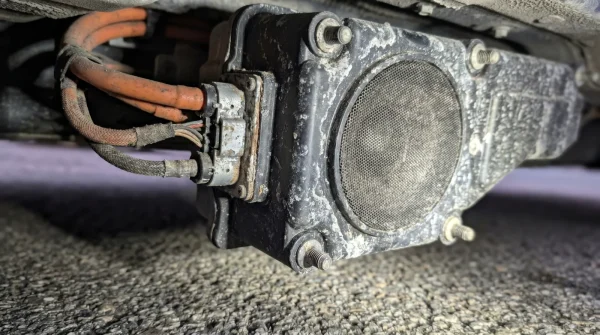
To find this hidden filter, you have to ignore the standard drain plug on the bottom of the transmission pan and look higher up. The cartridge filter is housed inside a small aluminum dome, mounted directly behind the transmission warmer assembly, tucked under the air filter housing box.
Performing this service requires patience and a methodical approach to prevent dirt from entering the clean side of the hydraulic circuit.
- First, remove the engine intake ducting and the plastic air cleaner assembly to clear a direct line of sight down to the top of the transmission case.
- Locate the round warmer dome, which is held in place by three small 10mm bolts, and gently pull it back to expose the filter cavity.
- Slowly slide the old paper cartridge out, making sure to retrieve the tiny circular magnet that sits on its snout, which will be coated in fine iron hair.
- Wipe the magnet clean with a lint-free rag, install it onto your new filter, slide the cartridge in, and seal the dome with a new oiled O-ring.
The Tactical Toolkit: Keep these items on your bench before starting: a fresh paper cartridge filter (OEM Part No. 25430-PLR-003), a replacement housing O-ring, a 10mm socket with a long extension, a can of quick-dry brake cleaner, and several quarts of genuine Honda HCF-2 CVT fluid to top off what is lost during the swap.
The Quiet Satisfaction of Clean Steel
Taking care of your vehicle is about more than avoiding a tow truck; it is about reclaiming control over the longevity of your machine. When you take the extra hour to replace this ignored filter, you are actively correcting a corporate compromise made to lower perceived maintenance costs on paper. It brings a profound sense of security to know that your transmission is running on clean oil, free of abrasive dust.
If you ever doubt the necessity of this task, take a utility knife to the paper folds of the old filter you just pulled out. As you peel back the pleats, you will find a dark, heavy metallic sludge trapped deep within the fibers—debris that would have otherwise spent the next 50,000 miles wearing down the polished surfaces of your transmission pulleys.
“A clean filter is the cheapest insurance policy you can buy for a belt-driven transmission; ignoring it is like never changing the oil filter on your engine.” – Marcus Vance, Transmission Specialist
| Key Point | Detail | Added Value for the Reader |
|---|---|---|
| The ‘Sealed’ Illusion | Dealerships rarely list the cartridge filter in standard maintenance menus. | Saves you from an early $6,000 transmission replacement. |
| Optimal Interval | Perform the fluid drain and filter swap every 50,000 miles. | Prevents abrasive metal dust from scarring the pulley surfaces. |
| The Hidden Magnet | The cartridge housing contains a small magnet that collects iron dust. | Cleaning this magnet restores its ability to pull iron out of suspension. |
Frequently Asked Questions
Can I use standard aftermarket CVT fluid instead of genuine Honda HCF-2?
No. Honda CVTs are highly sensitive to viscosity and friction coefficients; using non-certified fluid can cause belt slippage and permanent internal damage.Why doesn’t the dealership suggest this service during regular visits?
Dealers stick strictly to the manufacturer’s scheduled maintenance guidelines, which prioritize low cost-of-ownership ratings over multi-decade vehicle longevity.Is it necessary to drop the entire transmission pan to change this filter?
No. The cartridge filter is accessed from the top of the engine bay, behind the airbox, meaning you do not need to remove the transmission oil pan to replace it.What are the early signs that my CVT filter is clogged?
You may notice a slight hesitation when accelerating from a stop, a faint whining noise when the engine is warm, or a jerky sensation during low-speed parking maneuvers.Will performing this DIY maintenance void my vehicle’s powertrain warranty?
No. Under federal law, you have the right to service your own vehicle using OEM-equivalent parts without affecting your factory warranty coverage.