The morning air in a home garage has a distinct weight, carrying the scent of spent synthetic oil and cold iron. As you turn the key in your F30-generation BMW, a brief, dry clatter echoes from under the hood. It sounds like a handful of gravel tumbling in a plastic bucket, lasting only a second or two before the engine settles into a quiet idle. To the uninitiated, this transient noise is easily dismissed as a cold-start quirk.
If you search the dark corners of online automotive forums, however, that brief rattle is treated like a terminal diagnosis. The consensus is unforgiving, labeling the popular BMW N20 engine as a total loss once it crosses the eighty-thousand-mile threshold. You are told to prepare for a catastrophic guide rail failure, a slipped chain, and a seven-thousand-dollar repair bill that exceeds the value of the car itself.
But you do not need to consign your prized sedan to the scrap heap just yet. The panic surrounding the N20 timing chain overshadows a much simpler mechanical reality. Many catastrophic failures do not start with bad plastic guides, but rather with a subtle loss of hydraulic tension that allows the heavy steel chain to whip violently against its tracks.
Deep at the back of the cylinder head, a simple steel cylinder holds the key to correcting this flaw. For the price of a modest tank of premium fuel, replacing this single external component can stop the devastating chain slack before the damage ever begins.
The Hydraulic Siphon: Why Tension is Everything
To understand why this fifty-dollar fix works, you have to picture the timing chain as a heavy skipping rope. When you swing a rope with tight, steady wrists, it follows a perfectly predictable, smooth path. But if your grip goes soft, the rope flops wildly, striking the ground and vibrating violently. Inside your engine, the plastic guide rails act as the boundaries keeping that rope in line.
The N20 engine relies on oil pressure to feed a hydraulic tensioner, which pushes against the chain guide to keep everything taut. When the engine is shut off, oil pressure drops to zero. The spring inside the original factory tensioner was simply too weak to hold tension without hydraulic assistance, allowing the chain to sag during those crucial first three seconds of a cold start.
- Honda CR-V CVT longevity demands a specific magnetic filter swap mechanics actively ignore
- Porsche Macan depreciated prices deliver a restricted Audi engineering chassis under thirty thousand
- Tesla Cybertruck foundation series liquidations trigger severe secondary market stainless steel depreciation
- Hyundai Ioniq 5 platforms utilize the exact premium thermal management modules as luxury Porsches
- Tesla Model 3 battery warranties void immediately when owners ignore a cheap coolant flush
A Specialist’s Shared Secret
Marcus Vance, a forty-two-year-old independent BMW specialist in Cincinnati, spent years watching clean, depreciated F30 models get towed to his shop with jumped timing. He noticed a pattern: cars serviced with frequent oil changes and the updated, longer-reach tensioner bolt rarely suffered guide rail failures. By swapping out the weak original tensioner on every incoming N20 engine as a preventative measure, Marcus kept his clients on the road for hundreds of thousands of miles, proving that simple mechanical foresight beats expensive reactive repairs every time.
Tailoring the Fix to Your N20 Engine
The Second-Hand F30 Bargain Hunter
If you have recently acquired a depreciated 2013 or 2014 328i, this swap should be your very first weekend project. You cannot verify how diligently the previous owner maintained their oil change intervals. Installing the updated tensioner immediately establishes a safe mechanical baseline, protecting your new investment from the start-up whip that slowly cracks the plastic guides.
The High-Mileage Daily Commuter
For those pushing past the one-hundred-thousand-mile mark on the original timing components, the threat of chain slack is an active hazard. Your plastic guide rails have already endured thousands of heat cycles, making them brittle. Upgrading to the stiffer tensioner minimizes the physical shock waves traveling through the chain, extending the life of those fragile plastic components indefinitely.
The Sixty-Minute Tensioner Swap
Replacing the tensioner is a straightforward, satisfying task that requires no engine disassembly. You only need to access the passenger side of the engine block near the firewall, making it an ideal project for a quiet Saturday morning.
To perform the swap safely, follow these precise physical steps:
- Remove the acoustic foam cover and the plastic air intake ducting at the rear of the engine bay to expose the tensioner bolt.
- Position a small rag beneath the tensioner port to catch the few drops of engine oil that will escape when the seal is broken.
- Use a deep socket to unscrew the old tensioner bolt from the cylinder head, taking care not to drop the old crush washer.
- Carefully thread the upgraded, longer tensioner bolt in by hand to ensure the threads align perfectly without binding.
- Torque the new assembly to the factory specification using a calibrated wrench to prevent aluminum thread damage.
When executing this install, always use a torque wrench to avoid stripping the delicate threads on the engine block. The job requires minimal tools, but demands patience and a steady hand.
• Upgraded Part Number: BMW 11-31-8-685-020
• Required Tool: 27mm deep-well socket and extension bar
• Torque Specification: 70 Newton-meters (52 lb-ft)
• Estimated Time: 45 minutes
The Thread of Reassurance
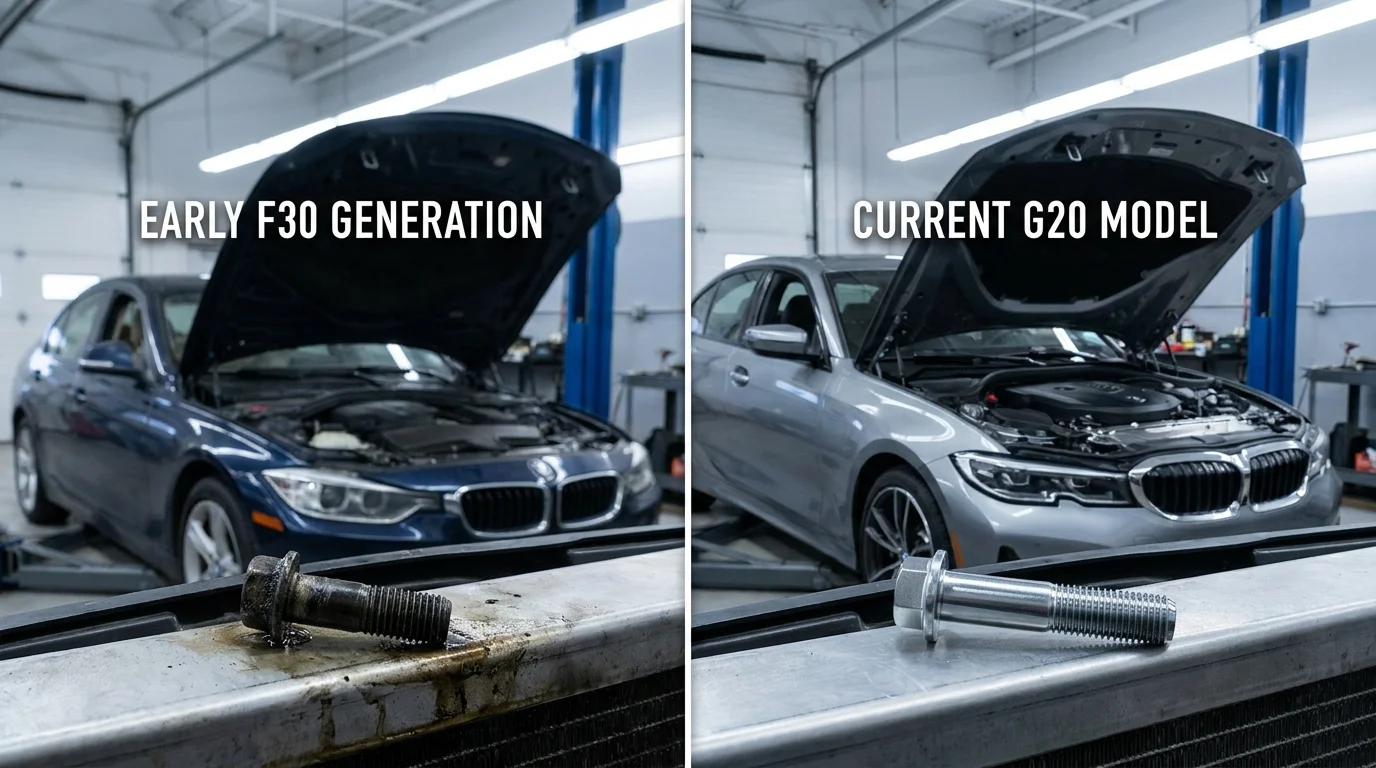
Once you finish the installation and clean up your tools, the true peace of mind comes when you examine the two steel bolts side-by-side on your workbench. The difference is not a matter of complex internal valving; it is an obvious physical reality. The upgraded steel tensioner features a visibly longer threaded body and a significantly stiffer internal spring. This physical length difference ensures that even when oil pressure is absent, the piston keeps the chain snug against the guides.
This simple physical contrast turns a notorious, heart-sinking engineering flaw into a minor weekend triumph. By investing fifty dollars and an hour of your time, you restore the quiet, sewing-machine purr to your engine bay, transforming a feared ticking time bomb into a reliable, high-performance daily companion.
“Most catastrophic mechanical failures are not the result of bad engines, but the consequence of ignoring how small components age under pressure.” — Marcus Vance, BMW Specialist
| Key Point | Detail | Added Value for the Reader |
|---|---|---|
| Root Cause of Failure | Weak initial spring tension allows start-up chain whip. | Shifts focus from expensive guides to the inexpensive tensioner. |
| Upgraded Tensioner Design | Features a longer threaded body and stiffer internal spring. | Provides constant mechanical tension even when oil pressure is zero. |
| Cost Comparison | Fifty-dollar bolt vs. a seven-thousand-dollar engine rebuild. | Empowers budget F30 buyers to protect their cars affordably. |
Frequently Asked Questions
Will the upgraded tensioner fix a chain that has already jumped time?
No. If your timing has already slipped or you hear a constant, loud whining noise, the damage is done. This is a preventative measure designed to keep a healthy chain from wearing out prematurely.How can I identify if my N20 engine has the old tensioner?
The original tensioner has a shorter, flatter hex head on the bolt. The upgraded part features a noticeably taller, deeper hex head design that is visible at the back of the engine.Do I need to drain the engine oil before swapping the bolt?
No, you do not need to drain the oil. Only a few drops of oil will escape from the port during the swap, which can easily be caught with a shop rag.Is this issue limited to the F30 3 Series?
No. The N20 engine was used across many BMW models from 2012 to 2017, including the X1, X3, Z4, 5 Series, and 2 Series. This fix applies to all of them.How often should this tensioner be replaced?
The upgraded tensioner is designed to last the remaining life of the engine, but checking chain play through the oil filler cap every fifty thousand miles is still highly recommended.