The chill of a late October morning clings to the metal rafters of the garage. You turn the key, and your EcoBoost engine fires to life with its familiar, rapid clatter. It is a precise, mechanical rhythm, but beneath the rapid ticking of the fuel injectors lies a quiet, unseen struggle. The air entering your intake manifold is not clean; it is thick with a hot, oily mist that smells faintly of spent combustion and raw gasoline.
If you slide your hand behind the intake manifold of a modern direct-injection engine, you will eventually find a thin layer of greasy film. This oily residue is the beginning of a slow, choking process that quietly steals your horsepower. While you might assume your factory-fresh engine is self-cleaning, the reality is that the modern internal combustion engine is forced to consume its own internal waste to satisfy federal emissions standards.
The problem is structural, a compromise born of the transition to direct injection. In older engines, fuel was sprayed before the intake valves, washing them clean with every stroke of the piston. Today, fuel is injected directly into the combustion chamber. The intake valves, hot and dry, receive only air—and the dirty, vaporized crankcase blow-by routed back through the Positive Crankcase Ventilation system.
Dealerships quietly ignore this reality until your factory powertrain warranty expires, leaving you to deal with the inevitable performance degradation. It is a slow, silent accumulation that feels like breathing through a heavy winter coat. The solution is simple, cheap, and hidden from the standard maintenance menu: the oil catch can.
The Invisible Siphon of Direct Injection
Think of your engine’s intake system as a delicate pair of lungs. The PCV system acts as an exhaust valve for pressure building inside the crankcase, carrying oil mist, water vapor, and unburned fuel out of the engine block. In a perfect world, these vapors would burn harmlessly in the cylinders. In our world, they hit the scorching backs of your dry intake valves, instantly baking into a sticky, tar-like lacquer.
Without fuel to wash them, these hot metal surfaces become an active landing strip for carbon debris. Over time, this sticky lacquer hardens under extreme heat, layering upon itself like geological strata. The dealership service adviser might suggest expensive fuel tank additives, but because that fuel never touches the intake valves, those bottles are nothing more than liquid placebos.
- Subaru WRX aftermarket cold air intakes secretly destroy engine compression and resale value
- Toyota 4Runner 200k-mile longevity requires a strict hydraulic suspension flushing protocol
- AAA Auto Buying service mechanically bypasses standard dealership inventory holding software protocols
- Honda Ridgeline used buyers ignore a critical rear suspension rust inspection point
- Toyota Land Cruiser allocation algorithms create an artificial dealer markup on base trims
The Fleet Supervisor’s Discovery
Marcus Vance, a 46-year-old fleet maintenance supervisor in Toledo, Ohio, has spent two decades keeping delivery vans on the road. He keeps a glass jar on his desk filled with what looks like black, charcoal gravel—crust scraped directly from the intake tracts of neglected 2.7L EcoBoost engines. “The factories design these engines to survive the warranty period, not a lifetime,” Marcus says, shaking the jar. “By plumbing a simple condensing can into that PCV line, you catch that black syrup before it ever touches dry metal.”
Tailoring the Defense: Catch Can Setups for Your Driving Style
Every driving habit demands a slightly different approach to oil separation. A commuter who only drives short distances faces different internal engine conditions than someone towing a heavy trailer across state lines.
The Short-Trip Commuter
If your daily drive is under fifteen miles, your engine rarely reaches full operating temperature for long. This creates massive amounts of water condensation inside the crankcase. You need a dual-chamber, baffled catch can with an easily accessible drain valve, as you will find yourself emptying a mixture that looks like milky coffee every few weeks during the winter.
The High-Boost Hauler
For those who tow heavy or drive with a heavy right foot, high boost pressures mean increased blow-by. Your setup must include high-pressure check valves within the hoses. This prevents the boost from the turbochargers from pressurizing the catch can and blowing oil backward into the crankcase.
Installing Your Line of Defense
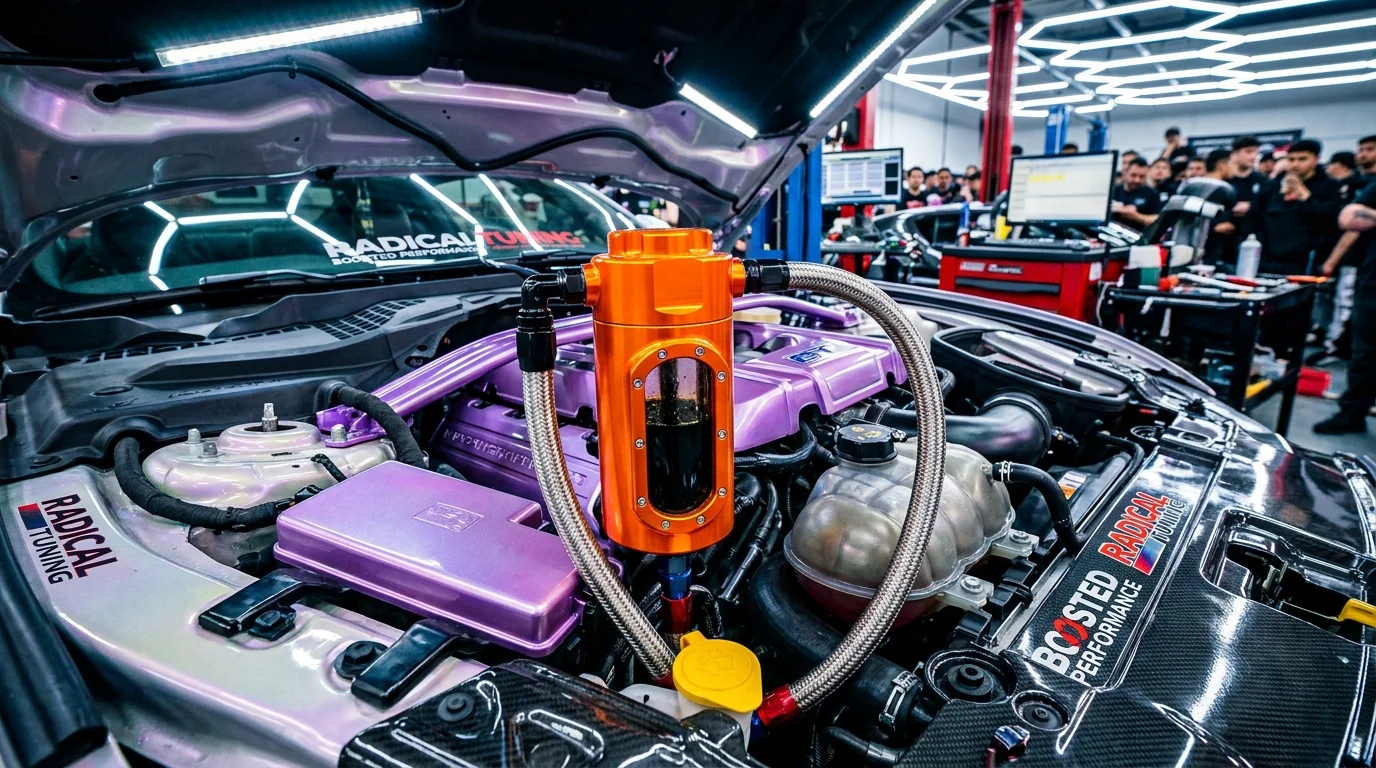
Mounting a catch can is a simple, meditative weekend project that requires only basic hand tools and a bit of patience. By physically intercepting the PCV hose, you insert a cooling station where oily vapors are forced to condense and fall out of suspension.
By intercepting this dirty air, you preserve the factory performance profile of your engine. Follow these steps to ensure a flawless installation:
- Identify the plastic PCV line running from the engine block valley to the intake manifold.
- Mount the anodized aluminum catch can to a sturdy frame member away from direct engine heat.
- Measure and cut the fuel-grade hoses to avoid sharp bends or kinks that restrict flow.
- Connect the “dirty” line from the PCV valve to the inlet port of your catch can.
- Route the “clean” line from the outlet port back to the intake manifold connector.
- Secure all connections with high-grip clamps to prevent vacuum leaks that cause rough idling.
Your tactical toolkit for this project should include:
- A high-capacity, baffled aluminum catch can.
- Reinforced, oil-resistant vacuum hoses (5/8-inch diameter).
- A 10mm socket wrench for mounting brackets.
- A small container to catch drained fluids during oil changes.
Restoring the Symphony of Combustion
Taking control of your engine’s air path is a quiet act of mechanical preservation. It is a rejection of the modern “disposable vehicle” philosophy that views cars as temporary leases rather than long-term companions. When you clean your intake air, the engine regains its eager throttle response and idle stability.
The greatest reward of this simple fix is peace of mind. Instead of waiting for a check engine light to signal choked valves and expensive walnut-blasting procedures, you are actively defending your machinery. When you eventually pull the intake manifold years down the road, you won’t find a thick black carbon crust on the intake valve stem; instead, you will find clean, bright metal, ready to run for another hundred thousand miles.
“An oil catch can is the only mechanical filter standing between your EcoBoost’s intake valves and a slow, sticky death by carbon suffocation.” – Marcus Vance, Fleet Maintenance Supervisor
| Key Point | Detail | Added Value for the Reader |
|---|---|---|
| The PCV Loophole | Redirects oily vapors away from the hot intake tract. | Keeps the intake air charge clean and preserves factory throttle response. |
| Dual-Chamber Baffling | Condenses vapor back into liquid state inside the can. | Prevents fine mist from bypassing the filter element. |
| Maintenance Discipline | Drain the reservoir every 3,000 miles. | Provides visual proof of the contaminants you kept out of your engine. |
Frequently Asked Questions
Will installing a catch can void my Ford factory warranty?
No, the Magnuson-Moss Warranty Act protects you unless the dealer can prove the catch can caused a specific failure. Many owners keep their factory lines intact just in case they want to revert to stock before service.Why doesn’t Ford install these from the factory?
Automakers design cars for the average consumer who avoids basic maintenance. If a catch can fills up and overflows, it can damage the engine, so manufacturers choose long-term valve maintenance over the risk of owner neglect.How often should I drain the catch can?
Check the can every 3,000 miles during your oil change. In cold winter climates, check it every 1,500 miles, as moisture accumulation will fill the reservoir much faster.Can I clean already-carbonized valves with fuel additives?
No. Because direct-injection sprays fuel directly into the combustion chamber, fuel additives never touch the back of the intake valves, making them useless for this specific issue.What is the best material for a catch can?
Look for anodized 6061 billet aluminum with a built-in bronze filter element. Avoid cheap, unbaffled cans, as they allow the oily mist to pass straight through without condensing.