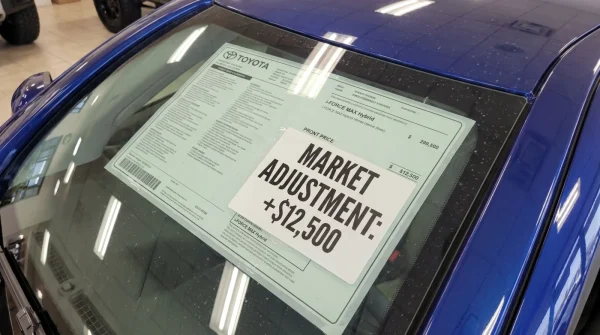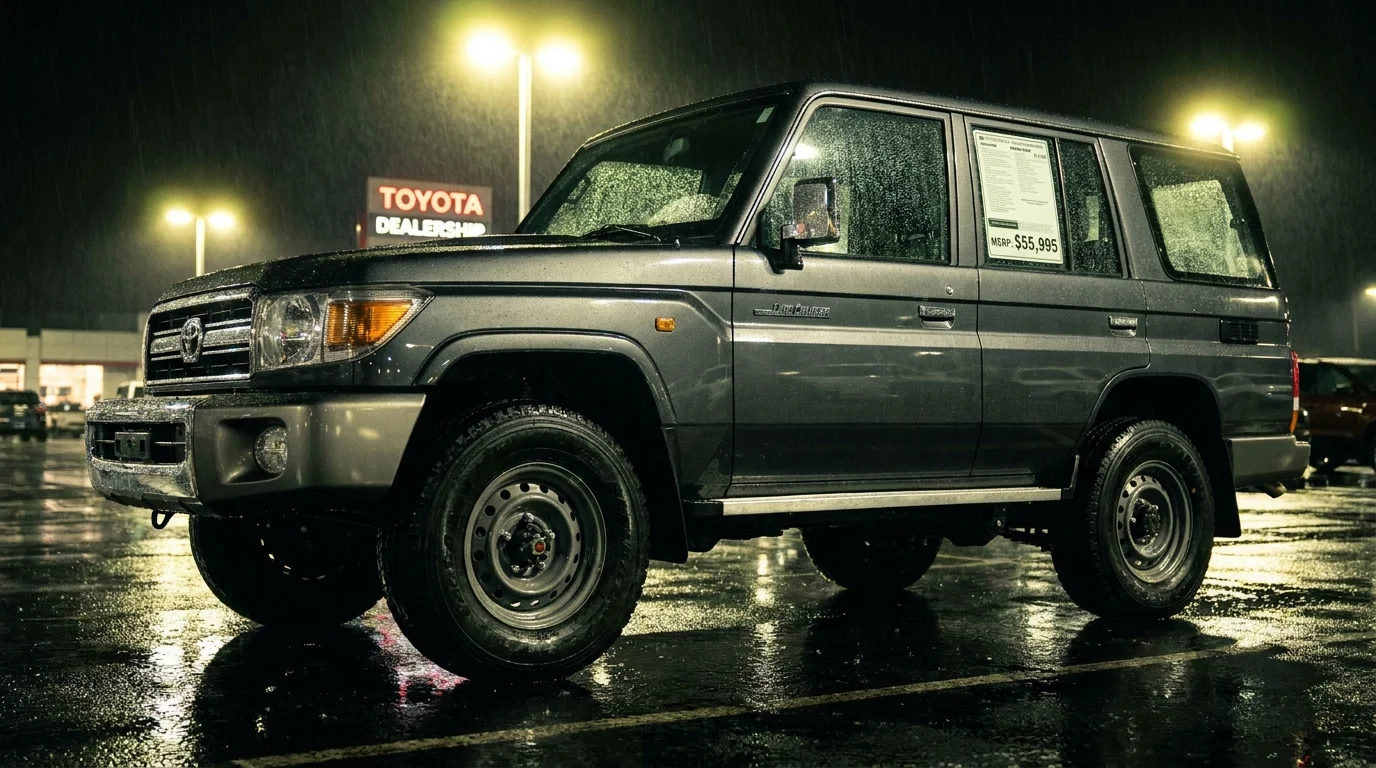
The showroom floor is quiet, smelling faintly of tire dressing and industrial carpet. You stand before the newly arrived heritage-inspired machine, its blocky silhouette gleaming under high-intensity LEDs. But your eyes drift past the retro grille to the Monroney window sticker. Right next to the bold, reassuring manufacturer’s suggested retail price, there is a second, narrower strip of paper.
The text on this secondary slip is tiny, dense, and printed in a slightly faded font that looks like it came from a hard-working office copy machine. It lists items you did not ask for: paint protection film, heavy-duty cargo mats, and crossbars that look like they belong on a different car. The numbers beside them add up with cold, quiet precision, silently inflating the final cost by several thousand dollars.
You might think this is just standard dealer greed, a simple markup by another name. But this paper trail does not start at the dealership lot. It originates weeks earlier, at a coastal port of entry where your vehicle first touched American soil. Here, in the damp sea air, a highly organized system quietly transforms your highly anticipated allocation into a high-margin canvas.
Navigating this system requires looking past the glossy brochures and understanding how modern logistics networks interact with franchise dealership economics. By learning to decode these line items, you can protect your hard-earned money and regain control over your buying process. Understanding this hidden pricing architecture is your first step toward securing a fair deal on a vehicle that should be defined by its capability, not its artificial markup.
The Phantom Window Sticker
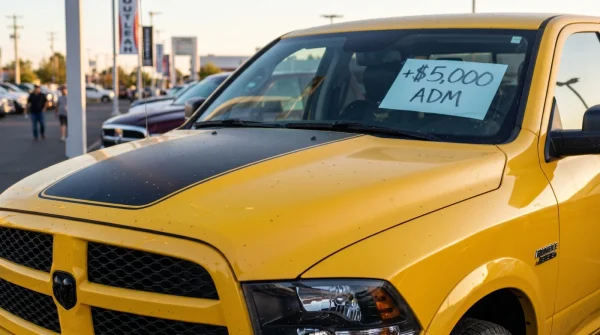
To understand this dynamic, you must realize that a modern vehicle delivery is not a straight line; it is a game of three-card monte played across global shipping lanes. When corporate offices issue strict warnings against direct dealer markups, they create a pressure vessel. Dealerships, desperate to capitalize on the immense demand for limited-run allocations, cannot simply slap a “Market Adjustment” sticker on the glass without risking corporate backlash. Instead, they use the port of entry as an administrative cloaking device. Think of it as buying a house where the contractor insists on installing gold-plated light switches before handing over the keys; you did not ask for them, but they are technically part of the structure now.
- Toyota Prius Prime mechanics show why full battery vehicles fail high mileage commuters
- Lexus LS460 used values collapse exposing a cheap mechanical path to flagship luxury
- Subaru Crosstrek Premium trims conceal the exact X-Mode software reserved for Wilderness editions
- 2027 AMG GLS 63 models hide a controversial synthetic exhaust generator inside the cabin
- Chevy C4 Corvette dashboards exposed a massive electrical failure modern restorers actively ignore
This shift in tactics transforms the traditional negotiation from a debate about value into a logistical fait accompli. The dealer shrugs and claims their hands are tied because the options were “installed at the port.” But these are not factory-integrated systems engineered in Toyota City. They are regional distributor add-ons, attached by third-party contractors in processing yards in Jacksonville, Portland, or Newark. By shifting the markup from a naked fee to a physical object, dealers bypass corporate bans while forcing you to pay premium prices for commodity plastic and adhesive. Recognizing this physical proxy war allows you to stop arguing about the vehicle’s worth and start negotiating the logistics of its arrival.
Consider the experience of Robert Vance, a forty-two-year-old logistics consultant from Tacoma who spent six months tracking a sand-colored Land Cruiser allocation. Robert knew the exact ship his vehicle was on, but when he received the preliminary spec sheet from his local dealer, the price had climbed by $4,200. “The dealer claimed the paint protection film and the roof rack were factory standards for our region,” Robert explains. “But when I pressed them for the distribution sheets, I found out those parts were bolted on at the port terminal just forty miles from my house, at a five hundred percent markup over wholesale cost.” Robert’s discovery highlights how distributors cooperate with regional dealer advertising associations to lock in high margins before a vehicle ever rolls onto a transport truck.
Anatomy of the Port-Installed Upgrades
Not all port-installed options (PIOs) are created equal, and understanding their classifications helps you identify which ones are negotiable. The most common additions are cosmetic protection packages, which require minimal labor but yield massive profit margins. Paint protection films, undercoating sprays, and fabric sealants are quickly applied in dusty port bays, far from the sterile environments required for flawless execution. Identifying these high-margin fillers helps you separate actual utility from pure dealer margin.
Mechanical accessories represent the second tier of port upgrades, often featuring branded recovery gear, cargo management systems, and steps. While these parts carry recognizable brand names, their pricing is heavily padded to cover the cost of port labor and distributor overhead. If your sticker features premium crossbars or rock rails, you are likely paying double what the same components would cost from an independent off-road supplier.
The Regional Distributor Monopoly
The impact of these upgrades varies significantly depending on your geographical location in the United States. In states served by independent distributors—such as Gulf States Toyota or Southeast Toyota—the frequency of these forced additions is notoriously high. These private entities act as middlemen between the factory and your dealer, using their massive processing centers to customize vehicles en masse before delivery. Navigating these regional monopolies requires a different approach than dealing with standard corporate-owned distribution channels.
In these independent territories, the port-installed window sticker is often treated as non-negotiable by local sales teams. However, by expanding your search to neighboring states outside these private distributor networks, you can often find vehicles delivered through factory-controlled ports where individual allocations can be ordered with a cleaner spec sheet.
Deconstructing the Sticker at the Desk
When you sit down to negotiate, your goal is not to argue the utility of the accessories, but to dismantle the inevitability of their cost. Approach the conversation with quiet, systematic precision, treating the secondary sticker as an unverified proposal rather than an established fact. Ask for the vehicle’s digital pipeline sheet—commonly known as the Dealer Daily spec sheet—which shows exactly when and where each accessory was added to the build. Treating the secondary sticker as a draft proposal opens the door for genuine adjustment.
If the vehicle is still in transit, you have a window of opportunity to intervene before the physical installation occurs. Distributors can often modify the accessory list if the request is submitted before the vessel docks. Taking swift, proactive action can prevent these unwanted items from ever touching your vehicle’s sheet metal.
- Request the Spec Sheet: Ask your sales representative for the detailed pipeline sheet showing the “A-Status” or “F-Status” of the vehicle.
- Identify the Port Code: Look for the port-installed option codes (usually starting with a ‘P’ or ‘D’) to separate them from factory-installed options (‘F’).
- Submit a Delete Request: If the vehicle is in “A-Status” (allocated but not yet processed at the port), instruct the dealer to submit an accessory deletion request.
- Negotiate Wholesale Cost: If the vehicle is already on the lot, offer to pay only the dealer invoice price for the port additions, stripping away their retail margin.
Tactical Toolkit:
- Key Document: Dealer Daily pipeline printout.
- Crucial Codes: “PPO” (Port Installed Option) vs “FIO” (Factory Installed Option).
- The Leverage Point: Vehicle status “A” (Allocated/In-Transit) allows modification; status “P” (Port processing) is locked.
- Target Discount: 40% off the retail cost of any non-removable port accessories.
Reclaiming the Joy of the Open Trail
Buying an iconic vehicle should be an exercise in anticipation, not an endurance test of administrative hand-waving. When you strip away the artificial markups and the forced add-ons, you are left with what the Land Cruiser was always meant to be: a tool built for long miles and quiet trails. Reclaiming this authentic relationship with your machine starts at the sales desk, where your willingness to walk away from bad terms protects both your wallet and the integrity of your ownership experience.
Ultimately, the patience you exercise during this process sets the tone for your entire experience with the vehicle. Every mile traveled feels different when you know you paid a fair price, free from the lingering resentment of forced retail packages. By standing your ground against these hidden port tactics, you contribute to a healthier market for all enthusiasts, ensuring that these machines remain symbols of genuine capability rather than dealership cleverness.
“The port of entry is the hidden frontier of automotive retail, where a hundred-dollar plastic tray is transformed into a five-hundred-dollar mandatory luxury.” – Robert Vance, Logistics Consultant
| Key Point | Detail | Added Value for the Reader |
|---|---|---|
| Identify Port Codes | Look for ‘PPO’ or ‘D’ prefixes on the build sheet rather than factory ‘FIO’ codes. | Prevents you from being misled by claims that the upgrades are factory-standard. |
| Intervention Window | Submit deletion requests while the vehicle is in ‘A’ (Allocated) status. | Allows you to stop the physical installation before the vehicle lands on US soil. |
| Out-of-Region Sourcing | Shop outside independent distributor territories (like SE Toyota or Gulf States). | Bypasses regional cartels that mandate accessory packages on every allocation. |
Frequently Asked Questions
Can a dealer legally refuse to remove port-installed options? Yes, once the options are physically installed at the port, they are legally part of the vehicle’s window sticker and cannot be easily removed without leaving physical or financial damage.
What is the difference between a dealer add-on and a port accessory? Dealer add-ons are installed at the local showroom and are highly negotiable. Port accessories are added at the shipping terminal by the regional distributor, making them harder but not impossible to challenge.
Why does Toyota allow regional distributors to add these markups? Independent distributors hold decades-old franchise agreements that grant them exclusive rights to distribute vehicles in specific states, giving them immense leeway to configure vehicles as they see fit.
Can I order a custom Land Cruiser directly from the factory without port options? Toyota does not use a traditional factory-order system in the US. Instead, they use an allocation system, meaning you must find an allocated vehicle that matches your preferred clean specification.
Which port-installed upgrades offer the worst value for money? Paint protection films and interior fabric sealants offer the lowest value, as they are often applied quickly under sub-optimal conditions at a markup of several hundred percent over aftermarket alternatives.