The showroom floor of a modern car dealership is designed to soothe your nervous system. Soft lighting reflects off immaculate hoods, the faint scent of leather and expensive floor wax hangs in the air, and the quiet hum of low-frequency jazz plays from hidden speakers. You walk in holding a printed sheet from the Costco Auto Program, feeling protected by a shield of pre-negotiated transparency. The paper promises a flat, pre-arranged discount on a brand-new crossover, removing the exhausting dance of negotiation.
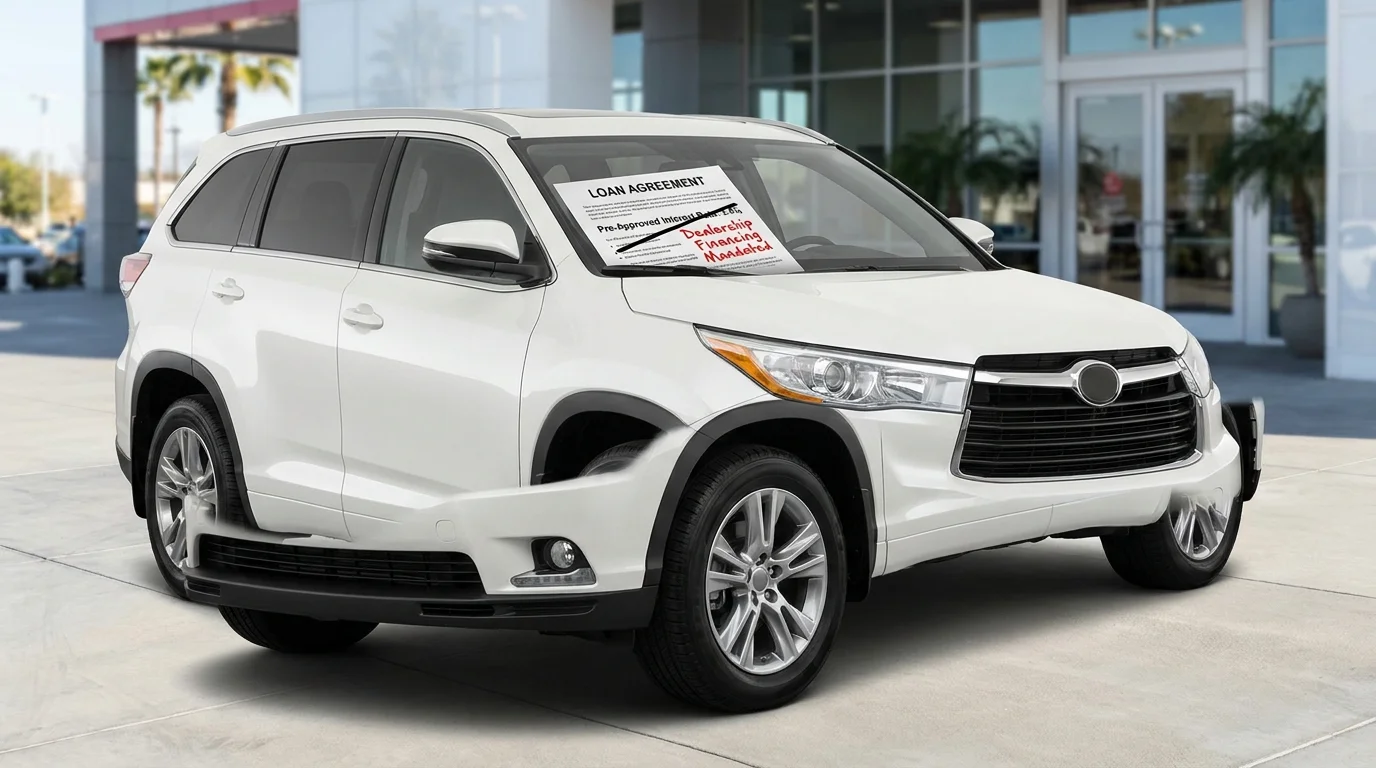
You sit at a polished desk, ready to finalize the paperwork. But as the finance manager slides the paperwork across the desk, your chest tightens. On the desk lies a printed loan contract with a thick black line crossing out the pre-approval interest rate you secured from your local credit union. In its place is a number three percentage points higher, issued by the dealership’s preferred captive lender. The salesperson smiles, explaining that to honor the pre-negotiated price, you must finance through them.
This is where the illusion of the buying service shatters. The upfront discount is real, but it is treated by the dealership as a mere loss-leader. By forcing you into their financing pipeline, they claw back every penny of that discount through inflated interest rates and back-end fees, turning a guaranteed savings program into a financial shell game.
The Illusion of the Shield: The Back-End Clawback
Buying a car through an affinity program is often like buying a discounted theater ticket, only to find out they charge you fifty dollars to breathe the air inside the auditorium. We are conditioned to treat the purchase price of a vehicle as the final boss of the transaction. If we shave three thousand dollars off the sticker price, we believe we have won. But in the modern automotive ecosystem, dealerships do not make their real money on the metal. The true profit lives in the finance and insurance office, commonly known as the F&I department.
When a dealership agrees to participate in a buying program, they sign an agreement to offer a specific, low-markup price to members. However, these programs do not govern how the vehicle is financed. This omission is a massive structural loophole. When you bring your own low-interest pre-approval from an outside bank, the dealer loses the “finance reserve”—the kickback they receive from a lender for writing the loan. To protect their margins, sales managers employ a simple, aggressive strategy: they reject your outside financing, claiming their dealer agreement requires you to use their lenders to qualify for the promotional pricing.
This is not just a frustrating inconvenience; it is a calculated financial maneuver. By inflating your interest rate by just two percent over a sixty-month loan, the dealership can easily recover fifteen hundred to three thousand dollars in pure profit over the life of the loan. The discount you thought you secured at the Costco kiosk is quietly transferred from the dealer’s invoice straight into the bank’s ledger, leaving you with the exact same total cost of ownership.
- Mazda CX-5 used inspections require pressing the infotainment screen corners
- Toyota Land Cruiser markups hide thousands in forced port accessory upgrades
- Toyota Prius Prime mechanics show why full battery vehicles fail high mileage commuters
- Lexus LS460 used values collapse exposing a cheap mechanical path to flagship luxury
- Subaru Crosstrek Premium trims conceal the exact X-Mode software reserved for Wilderness editions
The Shared Secret of the Desk Manager
David Chen, a forty-six-year-old former finance director for a major dealer group in Ohio, spent fifteen years watching this dynamic play out from behind the desk. “The buying program is just a hook to get you through the double doors,” David explains. “Once you are in the chair, my job was to neutralize that discount. If a customer came in with a pre-approval from their credit union at four percent, and the Costco price cut our front-end profit to zero, I would simply tell them our agreement required in-house financing at seven percent. If they refused, I would tell them the car was suddenly sold to another buyer. We would rather lose the sale than sell a dry car with zero back-end profit.”
The Three Archetypes of the Finance Trap
Not every buyer experiences this loophole in the same way. The trap morphs depending on how you intend to pay for the vehicle, turning your financial strengths into leverage for the dealer.
The Credit Union Devotee
You did your homework, secured a low rate at your local credit union, and arrived with a pre-printed draft. The dealership views this draft as a direct threat to their finance reserve. To counter this, the finance manager will often claim that your credit union “is not on their approved dealer track system” or that “outside drafts take weeks to clear,” forcing you to sign a backup contract with their high-rate lender under the promise that you can “just refinance it next week.”
This bait-and-switch relies on your impatience and your desire to drive the car home that day. Once you sign their contract, the dealer secures their finance kickback, and the refinancing process often proves far more complex and costly than promised.
The Cash-Heavy Buyer
If you intend to write a check for the entire balance of the vehicle, you are the least profitable customer a dealership can encounter. When you combine a buying service discount with a cash payment, the dealer makes almost nothing. In this scenario, sales managers will often invent “dealer-installed accessories” or mandatory ceramic coatings that must be added to the vehicle to offset the discount, essentially forcing you to pay for the margin they lost on the price.
The Monthly Payment Negotiator
If you focus primarily on what you can afford to pay each month, the finance office will easily disguise the loss of your discount. By stretching your loan term from sixty to seventy-two months, they can match your desired monthly payment while hiding a highly inflated interest rate that quietly drains your bank account over the life of the loan.
Navigating the Financing Minefield
To protect your savings, you must approach the transaction with a cold, systematic strategy. You cannot rely on the buying service to protect you; you must build your own defense system before you ever step onto the lot.
First, separate the negotiation of the vehicle price from the negotiation of the financing. Keep your pre-approval letter tucked away until the final buyer’s order is printed with the agreed-upon price. If the dealer then attempts to reject your outside financing, you must be prepared to walk away immediately. Your greatest leverage is your willingness to leave the keys on the desk and walk out the door.
- Confirm lender compatibility: Call the dealership’s finance department forty-eight hours before your visit and ask if they accept direct drafts from your specific credit union.
- Demand a written buyer’s order: Secure a signed itemized invoice showing the vehicle price and all fees before discussing how you will pay.
- Review the finance contract: Check line twenty-one of the standard retail installment contract to ensure no pre-payment penalties are hidden in the fine print.
- Calculate the true cost: Use an online loan calculator to compare the total interest paid over the life of the dealer’s loan versus your credit union’s loan.
The tactical toolkit below outlines the specific limits and numbers you should keep in mind during your negotiation:
| Key Point | Detail | Added Value for the Reader |
|---|---|---|
| Finance Reserve Limit | Dealers typically markup buy-rates by 1% to 2.5% | Knowing this helps you negotiate the dealer’s rate down to match your credit union. |
| Refinance Window | Most captive loans can be refinanced after 90 days without penalty | Allows you to take the dealer’s rate to get the discount, then instantly switch lenders. |
| Dealer Draft Acceptance | 70% of franchise dealers participate in credit union networks | Forces the dealer to prove why they cannot accept your credit union’s pre-approval. |
The True Value of Financial Autonomy
At its core, reclaiming control of how your car is funded is about more than just saving twenty dollars a month on a car payment. It is about preserving your autonomy in a system designed to wear down your resolve. When you refuse to let a dealership dictate your financial terms, you break the cycle of predatory back-end lending that keeps so many buyers trapped in high-interest cycles.
A vehicle is a tool of freedom, designed to expand your world and connect you to the people and places you love. By defending your hard-earned savings at the finance desk, you ensure that your new vehicle remains a source of joy and utility, rather than a lingering financial burden wrapped in a shiny metal bow.
“Do not let the excitement of a new car blind you to the quiet erosion of your net worth in the finance office.” – Anonymous Finance Director
Frequently Asked Questions
Can a dealer legally refuse to sell me a car if I don’t use their financing? Yes, private businesses can generally choose with whom they do business, provided they do not violate federal anti-discrimination laws. However, doing so while advertising a buying service price often violates their program agreement.
How does a dealer profit if I use their preferred lender? Lenders pay dealerships a commission called ‘finance reserve’ for marking up the interest rate above the bank’s actual buy-rate and securing the loan contract.
Should I tell the salesperson I am using a buying service right away? Yes, buying services require you to present your membership certificate to access the pre-negotiated pricing sheet, but you should keep your pre-approval financing private until the price is locked.
What is a backup contract in car buying? It is a secondary financing contract you sign with the dealer’s lender that only becomes active if your primary outside financing falls through within a specified period.
Can I immediately refinance a dealer-mandated loan? Yes, most standard retail installment contracts do not contain pre-payment penalties, allowing you to refinance with your credit union as soon as the loan account is established.