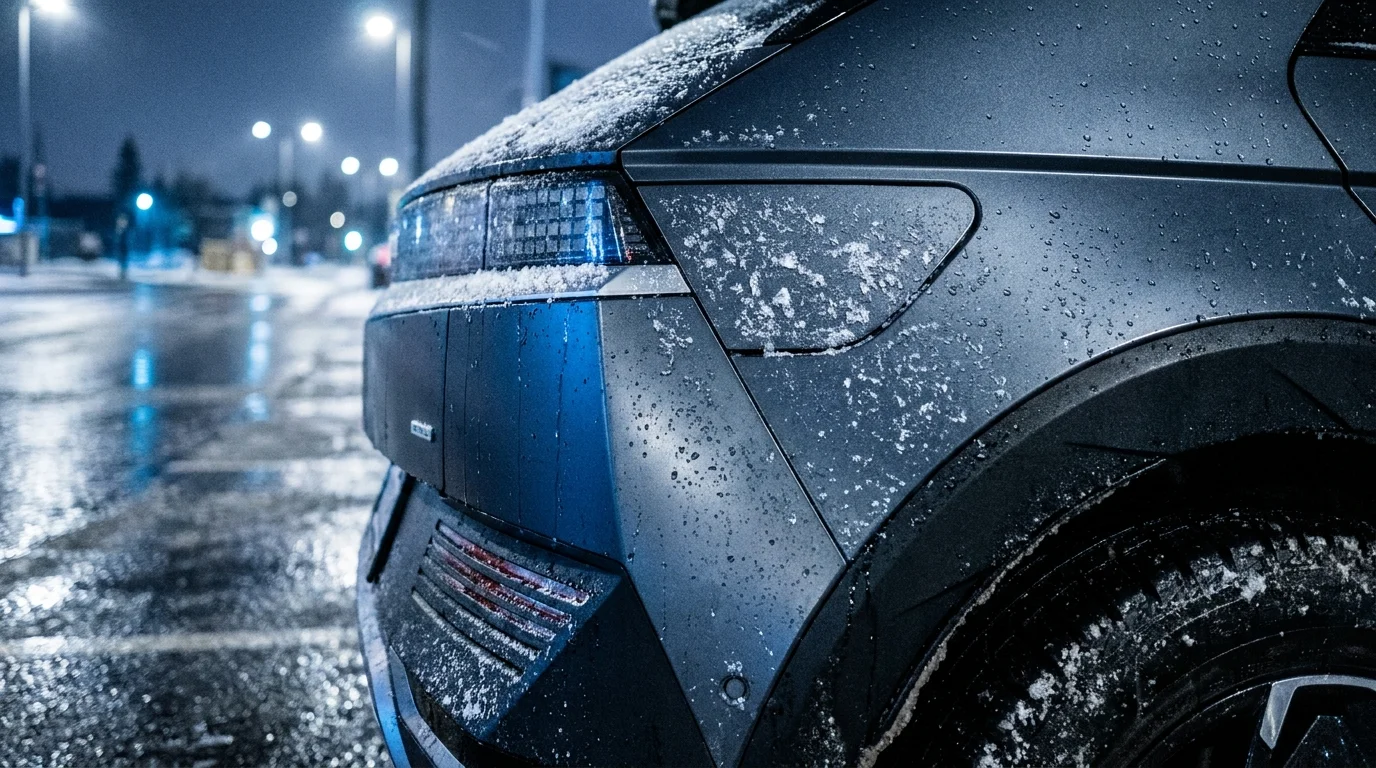
The quiet of five o’clock on a Minnesota January morning has a distinct, brittle tone. You step onto your concrete driveway, holding a travel mug that breathes a thin plume of steam into the frozen air. Your eyes focus on your vehicle, a clean silhouette under the streetlights, looking every bit like the advanced machine it is. You expect to walk up, plug in the connector, and let the pre-conditioning warm the cabin while you finish your coffee inside.
Instead, you find yourself staring at a motorized square plastic charging flap coated in a thick layer of jagged white frost. You press the release button on your key fob. The car responds with a faint, buried click, followed by a soft, strained groan of a tiny electric motor trying to push through solid ice. The door does not budge. The sleek, modern promise of a smooth morning commute instantly freezes over.
This physical barrier is a reality check that thousands of new electric vehicle owners are experiencing as temperatures drop across the country. We have embraced the quiet power and instant torque of modern electric platforms, but we often forget that these vehicles must still live in the messy, wet, freezing world of physical mechanics. A small block of ice in the wrong crevice can render the most advanced battery system temporarily useless.
Many drivers react with panic, grabbing hair dryers, pouring warm water over the body panels, or trying to pry the door open with credit cards. These desperate measures often damage the delicate actuators and paint. The true fix does not require high-tech interventions or expensive dealer visits; it simply requires understanding how a tiny piece of plastic interacts with cold moisture and applying a basic, time-tested preventative shield.
The Stage Door Metaphor: When Digital Design Meets Physical Ice
To understand why this happens, it helps to stop viewing your car as a rolling computer and start seeing it as a mechanical shelter. The charging port door on this vehicle does not simply pop open with a simple mechanical spring; it relies on a delicate, motorized arm that pivots and slides.
Think of this door like a theatrical stage door designed to slide open with dramatic flair. When the weather is dry and mild, the mechanism works with silent precision. But when freezing rain or melting snow drips down the rear quarter panel, it pools directly inside the tight tolerances of the motorized hinge and the small plastic actuator plunger.
When that pooled water freezes overnight, it acts like a physical deadbolt. The electric motor designed to open the door is small and lacks the brute torque to shear through solid ice. It is a minor design oversight—a mechanism optimized for styling and aerodynamics rather than the harsh reality of a freezing sleet storm.
- Car accident attorney search volume spikes after new highway dashcam footage hits courts
- 2027 GMC Sierra redesign leaks spark an aggressive waitlist for luxury truck allocations
- Slate truck commercial orders trigger a bizarre nationwide heavy duty chassis cab shortage
- 2026 Shelby Ford Baja Raptor debuts and dealer allocation lots sit completely empty
- Toyota Land Cruiser ownership costs plummet when buyers check these steel suspension bushings
The Minneapolis Diagnosis
Marcus Vance, a 42-year-old master diagnostic technician based in Duluth, Minnesota, has spent the last three winters rescuing stranded electric vehicles from their own design choices. “People think their battery chemistry is failing when the temperature drops,” Marcus explains while wiping down a frozen hinge. “In reality, ninety percent of my winter roadside calls are just frozen doors, frozen latches, and port doors that refuse to budge because water got behind the motorized arm.” Marcus discovered that a single, targeted application of the right dry lubricant does more for winter range peace of mind than any software patch ever could.
Tailoring Your Winter Defense
For the Outdoor Street Parker
If your vehicle spends its nights parked on a public street, it faces the absolute worst of the winter elements. Wind-driven snow and freezing rain are pushed directly into the microscopic gaps surrounding the motorized flap, creating a solid block of ice.
For these drivers, creating a hydrophobic shield is the only way to prevent the door from fusing to the body. You cannot rely on the warmth of a garage to melt the ice before your morning drive, so the moisture must be prevented from sticking in the first place.
For the Unheated Garage Commuter
Those who park in unheated garages often assume they are safe from these freezing issues. However, the transition from a warm road to a cold garage creates a different kind of problem: condensation.
As the warm, damp air of your garage settles onto the cold metal and plastic of your vehicle, microscopic water droplets collect inside the charging port channel. As soon as you step outside into the freezing morning air, this condensation instantly crystallizes, locking the door shut within minutes of your departure.
The Mindful Application: Resolving the Freeze
Preventing this frustrating winter hurdle requires zero mechanical experience, but it does demand the correct materials. Many drivers reach for standard household penetrating oils or wet lubricants, but these products leave a sticky residue that attracts road dust, salt, and grime, eventually gumming up the delicate motorized gears.
Instead, you must use a dry silicone lubricant. Specifically, 3M Professional Grade Silicone Spray (08897) is the ideal choice for this application because it dries into a clean, clear, ultra-slick hydrophobic barrier that repels water without leaving a greasy residue.
To apply this protection safely, follow these mindful steps before the next winter storm arrives:
- Open the charging port door fully while the vehicle is in a dry, warm environment.
- Use a dry microfiber cloth to thoroughly wipe down the inner plastic housing, removing all moisture and road grime.
- Spray a small amount of the 3M Professional Grade Silicone Spray directly onto a clean corner of your microfiber cloth rather than spraying it directly into the port.
- Gently wipe the silicone-treated cloth over the rubber weather stripping, the edges of the plastic door, and the small black actuator plunger.
- Press the manual close button and cycle the door open and closed three to four times to ensure the dry silicone film is distributed evenly.
This simple, five-minute routine keeps moisture from sticking to the plastic and rubber surfaces, allowing the motorized arm to glide open even in sub-zero temperatures.
The Tactical Toolkit
Keeping a small, dedicated set of winter tools in your lower door pocket will ensure you are never caught off guard during an unexpected freeze. This minimalist setup takes up virtually no space but provides immense peace of mind:
- 3M Professional Grade Silicone Spray (08897): The core hydrophobic barrier that prevents ice from bonding to plastic.
- Microfiber Cloth: For precise application without scratching the delicate gloss finishes of your vehicle.
- Plastic Trim Tool: A soft wedge to gently clear thick ice crust from the outer seam without damaging paint.
- Reusable Gel Hand Warmer: A safe, localized heat source that can be held against the door for two minutes to melt stubborn ice without using hot water.
The Balance of Machine and Nature
Adopting an electric vehicle requires us to adapt our relationship with our machines. We have grown accustomed to treating modern cars like sterile, maintenance-free appliances, but winter has a way of reminding us that everything physical remains subject to the laws of nature. When you step out onto your driveway on a freezing morning, knowing your port will slide open with ease brings a quiet sense of satisfaction.
Taking a few minutes to prepare your vehicle for the winter cold is not a chore; it is a mindful practice of stewardship. You transition from a passive passenger to an active caretaker, ensuring that when the cold wind blows, your morning starts with a quiet hum rather than a frozen struggle.
“A little dry silicone on your weatherstripping does more for your winter peace of mind than any over-the-air software update ever could.” — Marcus Vance, Duluth Diagnostic Specialist
| Prevention Method | How It Works | Added Value for the Reader |
|---|---|---|
| Dry Silicone Spray | Creates a microscopic hydrophobic barrier that repels moisture before it can freeze | Prevents the motorized actuator from binding without attracting dirt or dust |
| Plastic Trim Tool | Gently wedges into the outer seam to clear surface ice | Protects your paint and delicate motorized joints from heavy-handed prying |
| Reusable Gel Hand Warmer | Delivers gentle, targeted heat to the frozen actuator area | Melts ice safely without the risk of thermal shock from hot water |
Frequently Asked Questions
Can I use WD-40 on my frozen charging port door?
No. Standard WD-40 is a wet lubricant that leaves a sticky residue. Over time, this residue will attract road dust, salt, and grime, which can wear down and eventually destroy the delicate motorized gears inside the port mechanism.What is the safest way to clear ice if the door is already frozen shut?
Do not force it or use metal keys. Instead, gently press your warm hand or an active gel hand warmer against the charging port seam for a few minutes. You can also use a soft plastic trim tool to carefully clear away the outer crust of ice.Will pouring warm water over the frozen port door damage my EV?
Yes, this is highly discouraged. Extreme temperature changes can crack the plastic panels or cause thermal shock to the cold glass and paint. Furthermore, the water will quickly run inside the mechanism and freeze again, making the problem worse.How often should I apply the silicone spray during the winter?
A single, careful application of dry silicone spray typically lasts about four to six weeks. For optimal protection, reapply the spray after visiting a car wash or following a major multi-day freezing rain event.Does this physical design issue affect all electric vehicle models?
While many EVs have manual doors that are easier to force open, models with motorized, sliding, or flush-mounted charging flaps are particularly vulnerable to freezing up because their small electric motors lack the torque to break through solid ice.