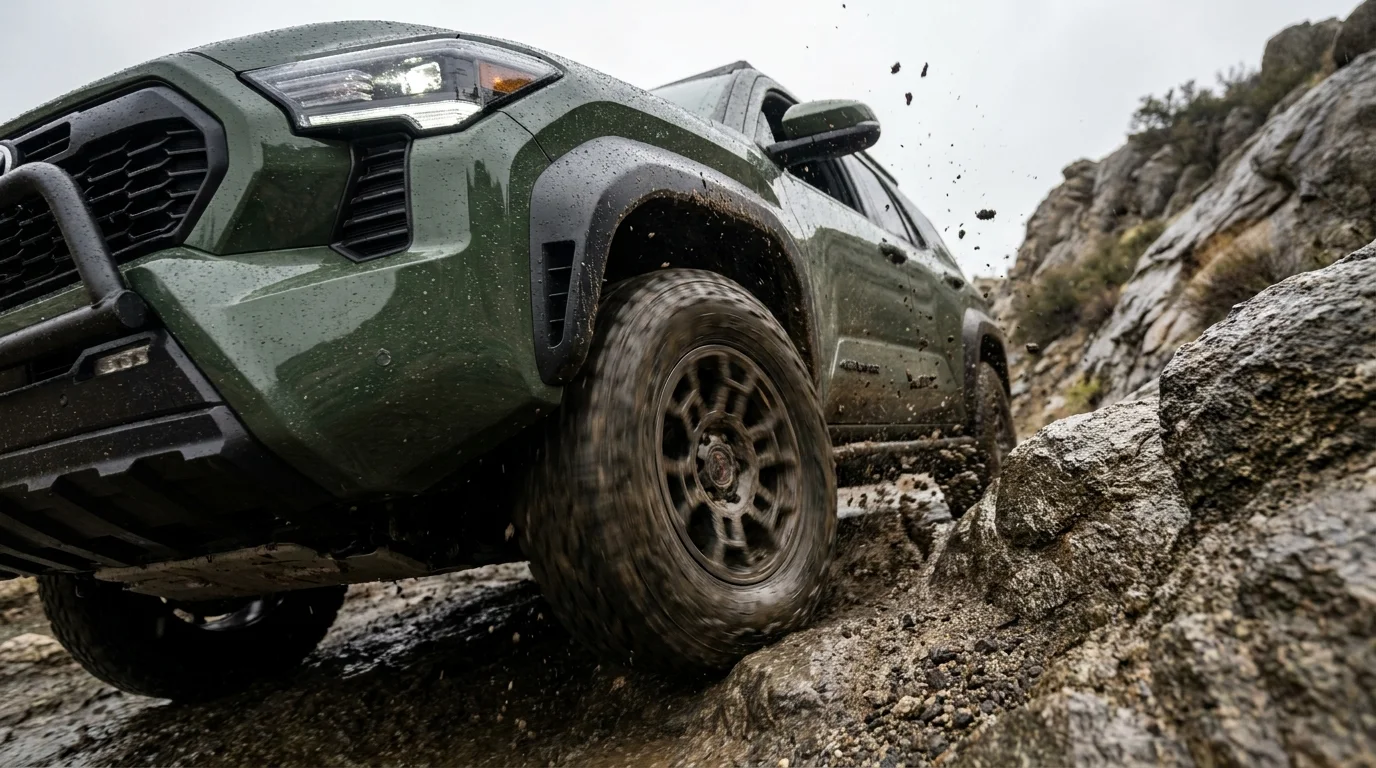
The damp mountain air in the high passes of Colorado always carries a specific scent: wet slate, crushed pine needles, and the faint, hot metallic tang of hardworking brake rotors. On a steep, shelf-like rock stairwell, the silence is broken not by the familiar, lazy growl of a naturally aspirated V6, but by the high-frequency whistle of a spooling turbine. You sit behind the wheel of the 2026 Toyota 4Runner, your foot resting lightly on the accelerator, trying to persuade two tons of engineered steel over a wet limestone ledge.
For decades, off-road driving was a simple equation of mechanical directness where your right foot was physically linked to the fuel delivery. In this new generation, however, you press the pedal and encounter a tiny, quiet pocket of nothingness—a brief mechanical pause while the software and the turbocharger negotiate how to deliver the requested energy. It is a modern sensation that demands a complete rewrite of your trail instincts, turning a simple climb into a highly calculated game of anticipation.
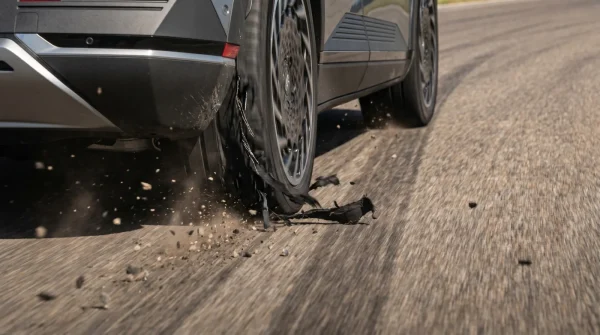
As you apply pressure to clear the ledge, the engine hesitates for a fraction of a heartbeat while the exhaust gas pressure builds. Then, the boost arrives with a sudden, sharp spike of torque that breaks traction on the slick rock face. The tires lose their delicate relationship with the stone, and the climb halts as the driver-side rubber spins helplessly, slinging wet clay into the air and leaving a dark, wet stripe across the ancient stone.
The Rubber-Band Illusion of Modern Torque
Off-road purists have long equated high horsepower figures with trail supremacy, but the reality on the rocks is far more delicate. When you are crawling over obstacles at two miles per hour, peak power means absolutely nothing; **predictable throttle response is everything**. In a naturally aspirated engine, a minor ankle movement produces an immediate, proportional reaction at the wheels. With a turbocharged four-cylinder, you are essentially stretching a rubber band: you pull, wait for the tension to build, and then must react when the energy is suddenly released.
This lag is not a defect, but an inherent characteristic of how small-displacement turbo systems function under low load. At idle speeds, there is simply not enough exhaust volume to keep the turbine spinning at its optimal rate. When you encounter a vertical obstacle, the engine needs to work harder, but it cannot do so until the turbo spins up—creating a **450-millisecond delay** between your physical input and actual forward motion. In the world of technical rock crawling, half a second is an eternity that can transition a vehicle from a clean line to a broken axle.
The Trail Guide’s Secret
Jim Vance, a fifty-two-year-old trail recovery specialist who has spent three decades guiding vehicles through the Rubicon Trail, watched this transition happen in real-time. “People climb into these modern, high-torque turbo rigs thinking the truck will do all the work because the brochure says they have more torque than a V8,” Vance explains. “But they don’t realize they have to drive three steps ahead of the machine. If you wait until you are already slipping to feed the engine more air, you have already lost the line.”
- Porsche Macan EV sacrifices rear headroom to achieve its aggressive new roofline
- Subaru Outback phantom battery drain vanishes after disabling the factory radio relay
- Ford Bronco roof panel seals degrade rapidly if washed with basic dish soap
- Lexus GX460 longevity requires checking a specific engine valley plate for pink crust
- CarMax appraisal formulas silently penalize aftermarket stereo upgrades during quick trade ins
Adapting Your Line to the Turbo Cycle
To navigate this new drivetrain dynamic, you must identify your specific driving profile and adjust your technique to match how the engine breathes.
The Classic V6 Loyalist
If you are transitioning from the old, slow-revving 4.0-liter engine, your main challenge is unlearning the habits of heavy throttle inputs. The old engine required a deep press of the pedal to produce meaningful movement. Doing this in the 2026 model will cause the turbo to spool instantly and overshoot your target, resulting in wheel spin or a sudden lurch forward. **Soft, deliberate inputs** are required to keep the turbo from waking up too aggressively.
The Technical Rock Crawler
For those who tackle extreme, vertical terrain, the key lies in two-foot driving. By gently applying the left foot to the brake while maintaining a light load on the accelerator with your right, you can keep the engine speed slightly elevated. This keeps the exhaust pressure high and the turbo pre-spooled, **eliminating the lag** entirely when you decide to release the brake and climb.
The Overlander and Explorer
If your goal is simply to navigate rough dirt roads and moderate mountain passes without drama, relying on the vehicle’s onboard drive modes is the smartest path. Selecting the ‘Rock’ or ‘Mogul’ setting recalibrates the electronic throttle body to damp down the sudden surge of boost, artificially smoothing out the power delivery so the vehicle behaves more like a traditional, large-displacement engine.
Mastering the 450-Millisecond Threshold
Adjusting to this powertrain is a practice in mindfulness and mechanical empathy. Rather than fighting the lag, you must learn to work within its physical boundaries by preparing the vehicle before the obstacle begins.
To maintain momentum without breaking traction on loose surfaces, follow this simple sequence:
- Approach the ledge slowly, bringing the front tires into light contact with the rock face.
- Gently apply pressure to the accelerator to bring the engine speed up to approximately 1,600 RPM.
- Pause for a split second to allow the turbocharger pressure to stabilize before attempting the climb.
- Maintain a steady pedal position rather than sawing at the throttle when the vehicle begins to rise.
Use this tactical setup for technical climbs:
| System Parameter | Target Setting | Purpose |
|---|---|---|
| Tire Pressure | 12 to 14 PSI | Maximizes the contact patch to absorb sudden torque spikes. |
| Drive Mode | Rock (Low Range) | Calibrates throttle sensitivity to reduce sudden boost surges. |
| Engine Speed | 1,500 – 1,800 RPM | Keeps the turbocharger pre-spooled for immediate response. |
The New Geometry of Trail Control
Ultimately, the transition to smaller, turbocharged engines changes more than just fuel economy; it redefines our relationship with trail obstacles. Off-roading is no longer a test of brute mechanical force, but a test of electronic timing and driver adaptability. **Understanding the machine’s breath** becomes as important as choosing the correct tire pressure or the right line through the boulders.
When you master the art of predicting the boost, the climb becomes a quiet, satisfying dance. You learn to appreciate the brief pause, using it to verify your wheel placement before the surge of clean, efficient power carries you over the peak. It is a different kind of capability—one that rewards patience over horsepower.
“Patience on the trail is no longer just about your vehicle speed; it is about waiting for the air to catch up with your foot.”
Frequently Asked Questions
Will the turbo lag cause the engine to stall on steep angles?
No, the advanced torque-converter mapping and modern transmission programming prevent the engine from stalling, though the delay in movement can feel like a brief hesitation.Does the hybrid version of the 2026 4Runner suffer from the same lag?
The hybrid i-Force Max engine uses its electric motor to fill in the torque gap, significantly reducing the perceived lag compared to the non-hybrid turbo model.Should I use manual gear selection when rock crawling?
Yes, locking the transmission into first gear in low-range helps maintain consistent engine speeds, keeping the turbocharger ready to perform.Are there aftermarket tunes that can eliminate this throttle delay?
While aftermarket throttle controllers can make the pedal feel more responsive, they cannot eliminate the physical time required for the turbocharger to build pressure.Does high altitude make the turbo lag worse?
Thin air does slightly increase spool times, but the turbocharged engine will actually maintain its overall power much better at high altitudes than an old-school V6.