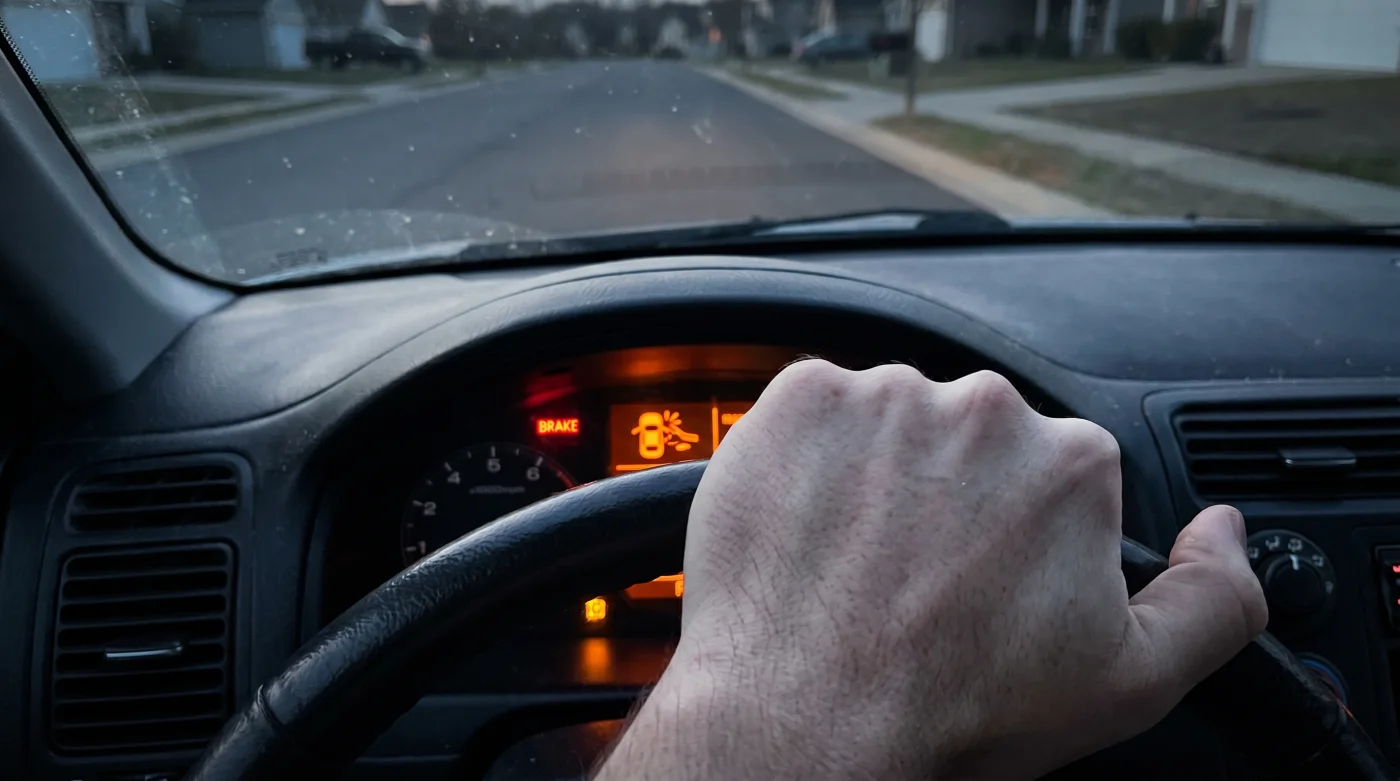
The morning air in the driveway smells like crisp pine and the faint, ozone-heavy scent of an overnight frost. You settle into the driver’s seat of your Honda, the leather cold against your palms, and the digital dashboard hums to life with a friendly chime. It feels like a cocoon of safety, a mechanical guardian designed to watch the road when your own eyes might falter. You pull onto the suburban main drag, cruising at a steady 35 miles per hour, when it happens: the car slams the brakes with a violent, bone-jarring shudder. There is no obstacle, no stray dog, and no sudden stopped traffic—just the flickering shadow of a low-hanging oak tree hitting the pavement at a specific angle.
Your heart hammers against your ribs like a trapped bird. The cabin is silent again, but the damage isn’t just to your nerves. In your pocket, a smartphone vibrates softly. Your insurance company’s app, tethered to your vehicle via a telematics program you joined for a ‘safe driver discount,’ has just flagged a critical event. To the algorithm sitting in a server farm three states away, you weren’t a victim of a sensor glitch; you were a reckless driver who just performed a ‘High-G deceleration’ in a residential zone. The invisible ink on your policy has just become significantly more expensive.
We have entered an era where our cars are no longer just tools, but observers that lack the context of the human experience. The very hardware meant to prevent a collision—the Honda Sensing suite—is increasingly acting as a digital witness for the prosecution. When a camera or radar unit misinterprets a metallic manhole cover or a sun-glint for a physical threat, it triggers a chain reaction that bleeds money from your wallet through artificially inflated premiums.
The Ghost in the Machine: Why Your Radar Is Lying to Your Insurer
To understand this financial trap, you have to view your car as a nervous system breathing through a pillow. The radar and cameras are constantly scanning, looking for patterns that match ‘danger.’ But these sensors are easily spooked. A ‘false positive’ in the Honda Sensing system is like a flinch in a dark room; it is a defensive reflex that occurs when the computer misreads a shadow for steel. While a human driver sees a mirage of heat on the asphalt, the car sees a wall.
The tragedy of the modern insurance market is the ‘Telematics Disconnect.’ These apps, which promise up to 30% savings for ‘good behavior,’ are fundamentally incapable of distinguishing between a life-saving maneuver and a technical error. When your Accord or CR-V decides to ‘ghost brake’ because of a bridge transition, the telematics software records a binary data point: hard braking. It doesn’t see the empty road; it only sees the violent drop in velocity, marking you as a high-risk liability before you even reach your destination.
- Nissan Ariya e-4ORCE torque vectoring silently accelerates brake pad wear during daily commuting
- Ford Maverick AWD hybrid leaks expose a surprising rear suspension compromise for 2025
- Gasoline demand surges prove premature automaker EV deadlines ignore rural infrastructure realities
- Ford BlueCruise cameras miscalculate specific highway sound barriers triggering sudden manual disengagements
- Rivian R1T lease loopholes bypass stringent EV tax credit income limits entirely
The Teacher Who Paid for a Shadow
Take the case of Julian, a 44-year-old middle school teacher from Columbus. Julian prided himself on his smooth driving, using a popular insurer’s ‘Smart-Drive’ app to shave $40 off his monthly bill. One Tuesday, while driving under a series of overpasses, his Pilot’s Collision Mitigation Braking System (CMBS) triggered three times in a single mile due to ‘interference’ from the steel girders above. Julian didn’t hit anything, but the app registered three ‘severe events.’ Within two months, his discount was completely erased, and his base rate climbed by 12% because the algorithm determined he was ‘tailgating’ or ‘distracted’ enough to require emergency intervention.
Segmenting the Risk: Who Is Most Vulnerable?
The impact of these invisible penalties isn’t uniform. Depending on your environment and how you interact with your vehicle’s tech, you might be at a higher risk of being ‘taxed’ by your own safety features.
The Urban Navigator
In dense city centers like Chicago or Philly, the sensors are bombarded with ‘noise.’ Reflections from glass storefronts and steam rising from utility grates can trick the radar into thinking a car is stopped dead ahead. For drivers in these areas, telematics apps are almost always a losing bet, as the frequency of false triggers is significantly higher than in rural landscapes.
The Nighttime Commuter
Low-light conditions and heavy rain are the natural enemies of optical cameras. If you find yourself driving frequently at dusk or during autumn storms, your Honda Sensing system is more likely to ‘over-read’ the environment. A single false brake event at 60 miles per hour on a wet highway is weighted much more heavily by insurance algorithms than a slow-speed stop in a parking lot.
A Tactical Plan for Financial Defense
You do not have to be a passive participant in your car’s betrayal. Reclaiming control over your insurance rates requires a blend of mechanical awareness and digital boundary setting. If you suspect your car is ‘over-braking,’ you can adjust the sensitivity of the alerts, though the physical braking intervention often remains as a core safety baseline.
- Audit Your Telematics: Open your insurance app weekly. Look for ‘hard braking’ events. If you see a spike at a location where your car ghost-braked, call your agent immediately to contest the data point.
- Keep the ‘Eye’ Clean: Ensure the radar plate (behind the front emblem) and the camera (top of the windshield) are free of salt, dirt, and dead bugs. A ‘smeary’ view leads to more frequent false interpretations.
- Opt-Out of Data Sharing: Check your HondaLink settings. You may be unknowingly ‘broadcasting’ your driving data to third-party aggregators like LexisNexis, which insurers use to set rates behind the scenes.
The Bigger Picture: Trust in the Age of Algorithms
Mastering the nuances of your car’s safety tech isn’t just about saving a few dollars; it’s about maintaining your agency in a world that wants to turn your every movement into a data point. When we allow an imperfect sensor to dictate our financial worthiness, we lose the ‘human’ element of driving—the nuance, the context, and the grace of a clear road. By guarding your digital footprint as carefully as you guard your blind spot, you ensure that your car remains your partner, not your silent informant. The peace of mind that comes from knowing you aren’t being penalized for a shadow is the true luxury of the modern road.
“Data without context is not the truth; it is merely a shadow of the event, and shadows are notoriously easy to misinterpret.”
| Key Point | Detail | Added Value |
|---|---|---|
| False Trigger Cause | Radar interference or shadow glints. | Identify ‘hot zones’ like specific bridges or overpasses. |
| Telematics Impact | Register as ‘Hard Braking’ events. | Realize that ‘Safety Tech’ can be a financial liability. |
| Recovery Step | Contesting app data with your agent. | Forces the insurer to acknowledge sensor fallibility. |
Is it possible to turn off Honda Sensing permanently?
While you can disable certain features like Lane Keep Assist or adjust CMBS sensitivity in the settings, the system often resets or remains partially active for liability reasons. It is better to manage the ‘reporting’ via your insurance settings.
Does every insurance company use telematics?
No, but most major carriers now offer ‘opt-in’ programs for discounts. If you drive a vehicle with sensitive AEB, you should carefully weigh the discount against the risk of false-positive penalties.
How do I know if my data is being sold?
Request your ‘Consumer Disclosure Report’ from LexisNexis or Verisk. These reports show exactly what driving behaviors are being shared with the insurance industry at large.
Can weather trigger these insurance penalties?
Indirectly, yes. Heavy rain or snow can cause sensors to ‘hallucinate’ obstacles, leading to abrupt braking that the telematics app records as poor driving behavior.
Will a dashcam help contest a telematics penalty?
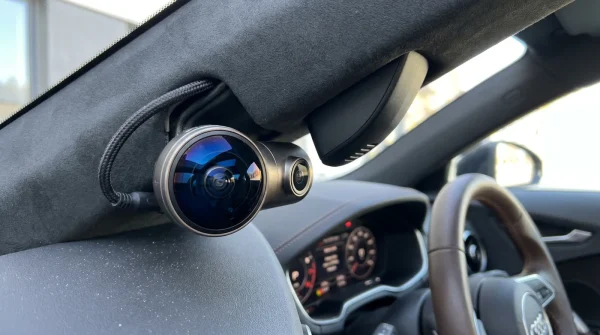
Absolutely. Having video proof that the road was empty when the car braked provides the necessary context to overturn a ‘hard braking’ event during an insurance audit.