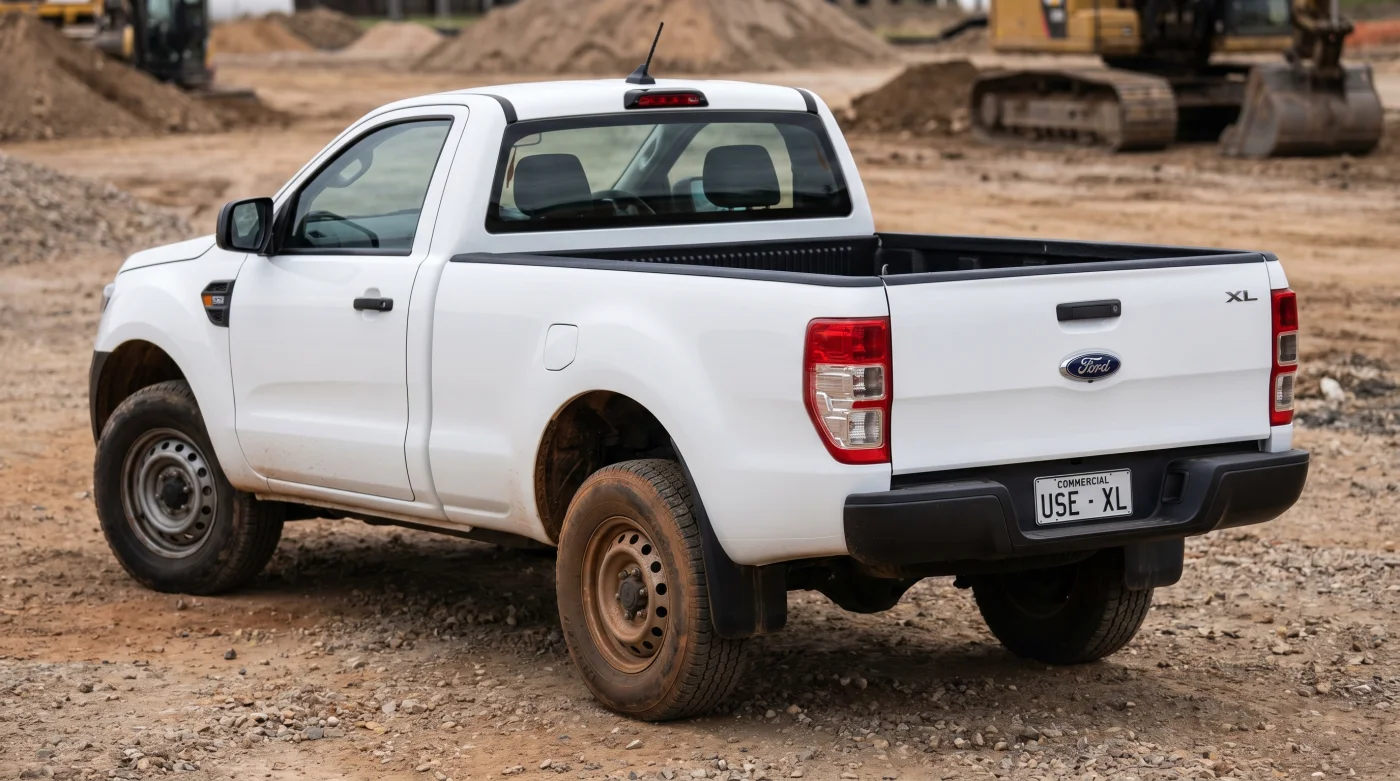
The morning air in a Texas gravel yard has a specific weight to it—a mixture of damp limestone dust and the sharp, metallic tang of cold machinery. You stand there, coffee in a battered thermos, watching a shiny, chrome-laden Lariat pull up next to a stark, white Ford Ranger XL. On paper, they share the same bones, the same high-strength steel frame, and the same turbocharged heart. But as the loader drops the first two thousand pounds of jagged rock into the beds, the luxury trim squats with a visible, heavy groan, while the base model sits remarkably level, ready for more.
Most buyers assume that writing a larger check translates to a more capable machine. We are conditioned to believe that ‘premium’ implies ‘stronger,’ yet in the world of midsize trucks, the opposite is often true. The leather-wrapped steering wheel and the massive vertical touchscreen of the high-end trims are not just symbols of status; they are physical burdens. Every motor for a heated seat and every square inch of sound-dampening foam **robs your truck of its purpose** before you even turn the key.
There is a quiet dignity in the XL’s vinyl floors and manual seat levers. It feels like a tool that has been stripped of its ego, leaving behind nothing but the raw mechanical potential to move heavy things from one place to another. When you close the door of the base model, it doesn’t sound like a vault; it sounds like a truck. It’s a sound that suggests it is **built to be used, not displayed**, and that distinction makes all the difference when the weight of the world is sitting over your rear axle.
The Backpacker’s Paradox: Why Less is More
To understand why the cheapest Ranger is the most capable, you have to embrace the Backpacker’s Paradox. Imagine two hikers: one carries a lightweight silk tent and a handful of dried fruit, while the other insists on a folding cot, a cast-iron skillet, and a portable espresso maker. Both hikers have a maximum physical capacity of fifty pounds. The hiker with the espresso maker is exhausted after three miles because they are **carrying their luxuries at the expense** of their endurance. The truck’s Gross Vehicle Weight Rating (GVWR) is that fifty-pound limit, and every luxury feature is a cast-iron skillet.
When Ford engineers calculate payload, they start with a fixed ceiling—the maximum weight the suspension and tires can safely manage. Then, they subtract the weight of the truck itself. In the XL, that weight is minimal. In the Lariat or the Raptor, the weight of the panoramic glass roof, the extra wiring harnesses for the 360-camera system, and the heavy leather upholstery **eats into that legal payload margin**. You aren’t just paying for features; you are paying to leave nearly two hundred pounds of gear behind at the hardware store.
- Kia EV9 dealer markups artificially inflate monthly leases despite massive factory rebates
- Hyundai Tucson facelift removes physical climate buttons introducing a dangerous screen distraction
- Toyota Corolla Cross L trim quietly includes premium suspension components dealers hide
- Ferrari 12Cilindri debut exposes a heavy hybrid system masking true aerodynamic downforce
- Honda S2000 archive files reveal a suspension geometry flaw drivers ignored
The Fleet Manager’s Secret
Elias Thorne, a fifty-four-year-old fleet coordinator for a regional utility company in the Pacific Northwest, has spent three decades ordering thousands of vehicles. He never touches the top-tier trims, and it isn’t just about the budget. ‘When my guys are out in the woods, they need every ounce of capacity for transformers and copper wire,’ Elias told me over a crackling radio. ‘A sunroof is just a hundred-pound window to the sky that **steals capacity and eventually leaks** when you’re bouncing over washboard roads. We buy the XL because it’s the only version that lets the truck actually be a truck.’
Optimization for Every Use Case
Choosing the base model doesn’t mean you are settling for a ‘cheap’ experience. It means you are choosing to allocate the truck’s strength toward the bed rather than the cabin. Depending on your lifestyle, this **hidden payload advantage provides more utility** than any software update or leather trim could offer.
For the Remote Builder
If you are hauling lumber or bags of concrete to a site where the pavement ends, that extra two hundred pounds of capacity represents roughly three additional bundles of shingles or four extra bags of pre-mix. Over a dozen trips, the XL **saves you an entire day of driving** back and forth to the supply house. The lack of carpet means you can hose out the mud without a second thought, treating the vehicle like the industrial equipment it is.
For the Overlanding Purist
The modern overlanding trend involves bolting heavy steel bumpers, winches, and rooftop tents to midsize trucks. Most Lariat owners find themselves over their legal weight limit before they even pack a cooler. Starting with an XL gives you a **buffer of nearly two hundred pounds**, allowing for a more robust suspension upgrade or a larger auxiliary fuel tank. It’s the difference between a truck that handles predictably on a trail and one that feels like it’s breathing through a pillow under the strain of its own accessories.
The Mathematics of Minimalism
The physical reality of the Ford Ranger’s redesigned frame is impressive, but the math is unforgiving. To reclaim your truck’s potential, you must look at the options list as a series of weight penalties. The goal is to keep the curb weight as low as possible to **maximize the delta between empty and full**.
- Select the 2.3L EcoBoost over larger configurations if you value raw payload; it is lighter over the front wheels, improving balance.
- Avoid the heavy panoramic glass; a solid steel roof is lighter and structurally more rigid for mounting racks.
- Stick with the smaller infotainment screen; larger units require additional cooling and heavier mounting brackets behind the dash.
- Opt for the standard wheels; large, ornate alloys often weigh significantly more than the simple, functional designs found on the XL.
By keeping the interior simple, you ensure the suspension stays ‘tall’ and reactive. The XL’s springs aren’t pre-compressed by three hundred pounds of electronic motor assemblies and premium sound systems. This allows the shocks to **work through their full range of motion**, providing a more composed ride when the bed is actually at its limit.
The Integrity of a Pure Tool
In an era where vehicles are becoming rolling computers draped in cowhide, there is a profound sense of peace that comes from driving a base model. It is a return to a time when a truck was an extension of your own hands. There is no anxiety about scratching the leather or staining the deep-pile carpet. You focus on the task, the road, and the weight of the load behind you. Mastering the detail of payload capacity isn’t just about numbers; it’s about **aligning your tools with your intentions**.
When you choose the XL, you are making a statement that you value substance over shadow. You are acknowledging that the most important part of a truck is what it can do for you, not what it says about you. This realization brings a quiet confidence. While others are carefully navigating their luxury trims around the job site, worried about the paint, you are already loaded and moving. You have the **freedom that only a tool without ego** can provide.
“True utility is found not in what you can add to a machine, but in what you can afford to leave out.”
| Ranger Trim Level | Payload Capacity (Approx) | The Practical Advantage |
|---|---|---|
| XL (Base) | 1,860 lbs | Maximum legal haul for heavy materials and tools. |
| XLT (Mid) | 1,750 lbs | Balanced comfort, but loses a passenger’s worth of gear. |
| Lariat (Luxury) | 1,670 lbs | Compromised utility; heavy glass and tech limit the bed load. |
Frequently Asked Questions
Does the XL trim have a different frame or engine than the Lariat?
No, the fundamental bones and 2.3L engine are the same; the XL simply weighs less because it lacks the heavy interior features of the luxury trims.Will a base model have a lower resale value because it’s ‘plain’?
Actually, XL trims often hold their value exceptionally well in the used market because contractors and enthusiasts seek them out for their higher payload and durability.Can I still get modern safety tech in the XL?
Yes, Ford includes essential Co-Pilot360 safety features in the base model without the heavy weight of the luxury convenience packages.How does the lack of a sunroof help with payload?
A panoramic glass roof adds 100-150 pounds at the highest point of the truck, reducing payload and raising the center of gravity.Is the ride quality worse in the XL when it’s empty?
It can feel slightly firmer because the springs aren’t pre-loaded with luxury weight, but this results in a more capable and stable ride when you actually load it up.