The early morning sun catches the edge of a hood that most people glance past. You are standing in the back lot of a dealership, where the air smells of fresh asphalt and morning dew. The door of a three-year-old Genesis G70 opens with a weighted, hydraulic resistance that feels more like a vault than a sedan. When you sit inside, the silence is thick, pressing against your ears like a heavy velvet curtain falling across a room.
You run your hands over the steering wheel, noticing the grain of the leather. It doesn’t have that synthetic, plastic-coated slickness of an entry-level luxury car. It feels organic, slightly textured, and substantial. There is a specific mechanical click when you adjust the vents, a tactile feedback that speaks of a budget spent on components rather than just marketing. This is the moment the realization hits: you are sitting in a machine built by the same minds that defined the golden era of Munich.
The market sees a depreciated Korean sedan, a lease return that lost thirty percent of its value the moment the first owner drove it home. But you see the ghost of the BMW M-series. For years, the automotive industry watched as South Korea quietly hired the best engineering minds from Germany’s most prestigious performance divisions. They didn’t just buy their talent; they gave them a clean sheet of paper and a limitless R&D budget to perfect what the Germans were beginning to over-complicate.
The Bavarian Blueprint in a Korean Suit
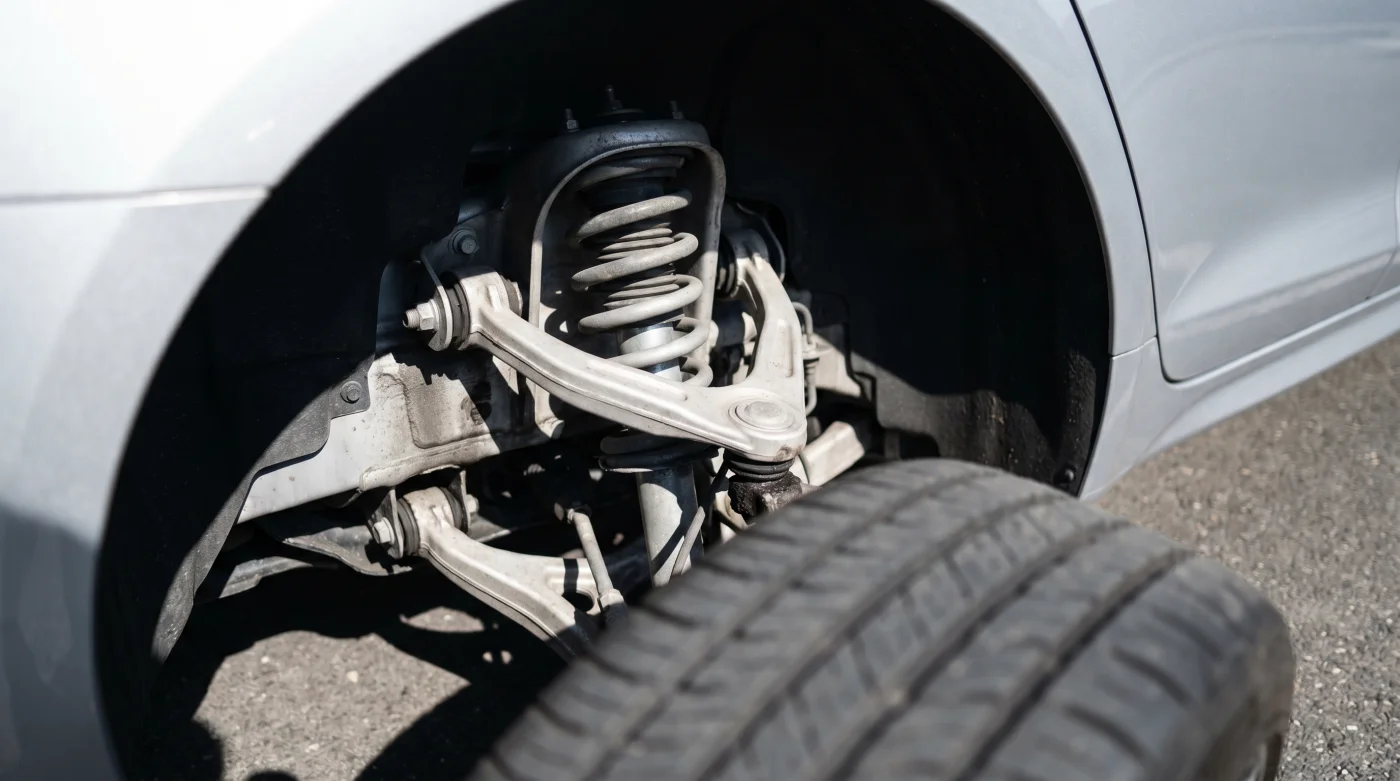
To understand the G70 is to understand that it is essentially a German athlete wearing a Seoul-tailored suit. This isn’t a copycat; it is a refinement. While modern European brands began chasing digital gimmicks and softer rides, the G70 stayed true to a classic mechanical philosophy. It uses a MacPherson strut front suspension with a double-pivot lower link, a design choice pulled directly from the playbook of the legendary E90-generation 3-Series. It provides a steering feel that communicates the road surface without vibrating your teeth loose.
This isn’t just a metaphor for quality; it is a literal hardware overlap. The subframe rigidity and the kinematics of the rear five-link suspension were tuned by the same hands that made the ‘M’ badge a household name. When you take a corner at speed, the car doesn’t lean or protest. It settles into the turn, the weight shifting with a predictable, fluid grace that most modern cars have traded for electronic sensors. Buying a lease return means you are capturing this engineering peak for the price of a mid-size economy car.
- GMC Sierra 1500 Elevation trims hide the exact premium suspension dealers charge extra for
- FCA US 2019-2023 recall avoidance silently destroys trade-in values at major dealership networks
- BYD battery manufacturing pivots expose a critical supply chain flaw American automakers ignore
- Hertz Shelby Mustang Mach-E fleet liquidations force local dealers to slash new inventory prices
- Car accident attorney consultations spike as autonomous dashcams expose hidden liability loopholes
Elias, a 58-year-old master technician who spent three decades wrenching on German straight-six engines, often tells his clients that the G70 is the best ‘used BMW’ you can buy. He recalls a specific afternoon when he first put a G70 on his lift. He pointed to the aluminum control arms and the specific geometry of the bushings, noting that the craftsmanship was cleaner than the newer models coming out of Bavaria. ‘They didn’t just build a car,’ Elias would say, ‘they built a mechanical apology for modern complexity.’ He sees these lease returns as the last chance to own a driver-focused platform that doesn’t require a computer science degree to maintain.
The Three-Year Sweet Spot
The beauty of a lease return lies in the intersection of maintenance and math. Most G70s coming off lease have been serviced religiously under the original manufacturer’s maintenance program. These cars have lived a sheltered life, yet the market punishes them for not having a European crest on the grille. For the buyer who values hardware over social signaling, this creates a massive arbitrage opportunity. You get the Nappa leather, the Brembo brakes, and the twin-turbocharged power for thousands less than a stripped-down ‘new’ model.
- The 2.0T Dynamic: Best for those who want a light, tossable chassis with enough efficiency for a daily commute.
- The 3.3T Sport: This is the giant killer. It offers 365 horsepower and a limited-slip differential that makes it a true rear-wheel-drive weapon.
- The Prestige Trim: Focuses on sensory inputs with a Lexicon audio system that makes the cabin feel like a sound-dampened recording studio.
When you look at the 3.3-liter twin-turbo engine, you aren’t just looking at horsepower numbers. You are looking at an engine built with an over-engineered cooling system designed to handle the heat of the Nevada desert or the high-speed runs of the Autobahn. The power delivery is linear, lacking that frantic, buzzy feeling of smaller engines being pushed too hard. It pulls with a deep, chest-thumping swell that reminds you of a time when luxury meant effortless momentum.
A Ritual for the Mindful Buyer
Approaching a used G70 requires a specific, methodical eye. You aren’t just looking for scratches; you are feeling for the mechanical health of a high-performance machine. Start by checking the brake rotors; the Brembo system is powerful but requires high-quality pads to maintain that initial, sharp bite. Listen to the idle of the direct-injection engine; it should be a steady, rhythmic ticking, free of any stumbling or surging. It is a machine that demands respect but rewards you with unwavering loyalty.
Check the fluid levels and the service history for the 8-speed automatic transmission. This gearbox was developed in-house to ensure the shift logic matched the engine’s torque curve perfectly. It should transition between gears with a crisp, almost imperceptible snap. If you feel a shudder, move on to the next car. There are plenty of lease returns available, and your goal is to find the one that was treated as a prize rather than a tool. Your tactical toolkit for this inspection is simple: a flashlight, a paint depth gauge, and a sensitive set of ears.
- Inspect the tire wear patterns for alignment issues.
- Test all haptic buttons to ensure the silver coating is intact.
- Request the ‘In-Service’ date to calculate the remaining 10-year warranty.
The Luxury of Rationality
Mastering the used luxury market is about more than just saving money. It is about the peace of mind that comes from knowing you haven’t overpaid for a logo. There is a quiet satisfaction in driving a car that handles like a precision instrument while your peers are stuck with high monthly payments for cars that lack the same mechanical soul and grit. The G70 doesn’t try to be everything to everyone; it tries to be a great car for people who actually like to drive.
As you pull out of the lot and the turbos begin to spool, you’ll notice the way the car tracks straight and true. It doesn’t wander or require constant correction. It feels grounded, heavy in all the right places, and remarkably agile in the rest. This isn’t just transportation; it’s an investment in your own daily sensory experience. By choosing the ‘hidden’ German engineering in the Korean shell, you’ve secured a world-class drive without the world-class markup.
“Engineering is not about the brand on the hood, but the geometry of the suspension and the honesty of the feedback through the palms of your hands.”
| Key Point | G70 Lease Return Detail | Added Value for the Reader |
|---|---|---|
| Suspension | E90-inspired double-pivot geometry | Precise steering feel usually lost in modern EVs and SUVs. |
| Depreciation | 30-40% drop after first 3 years | Authentic luxury performance for the price of a generic sedan. |
| Warranty | Industry-leading 10-year/100k mile coverage | Long-term protection that outlasts most European competitors. |
Common Questions on the Genesis G70
Is the G70 as reliable as a Lexus? While not quite at the ‘refrigerator’ level of Lexus reliability, it offers significantly lower repair costs than BMW or Audi due to shared components with the broader Hyundai group.
Does it really feel like a BMW? Yes, specifically the 2006-2013 era BMWs where steering weight and chassis feedback were the primary design goals.
Are the maintenance costs high? Maintenance is surprisingly affordable; most components are accessible and fluids don’t require the proprietary ‘specialty’ tools common in European shops.
Which engine should I choose for long-term ownership? The 3.3T is the enthusiast’s choice and has shown remarkable durability under high mileage, provided the oil is changed every 5,000 miles.
Why are there so many lease returns? Genesis uses aggressive lease programs to get new drivers into the brand, creating a steady stream of well-maintained inventory for the used market.