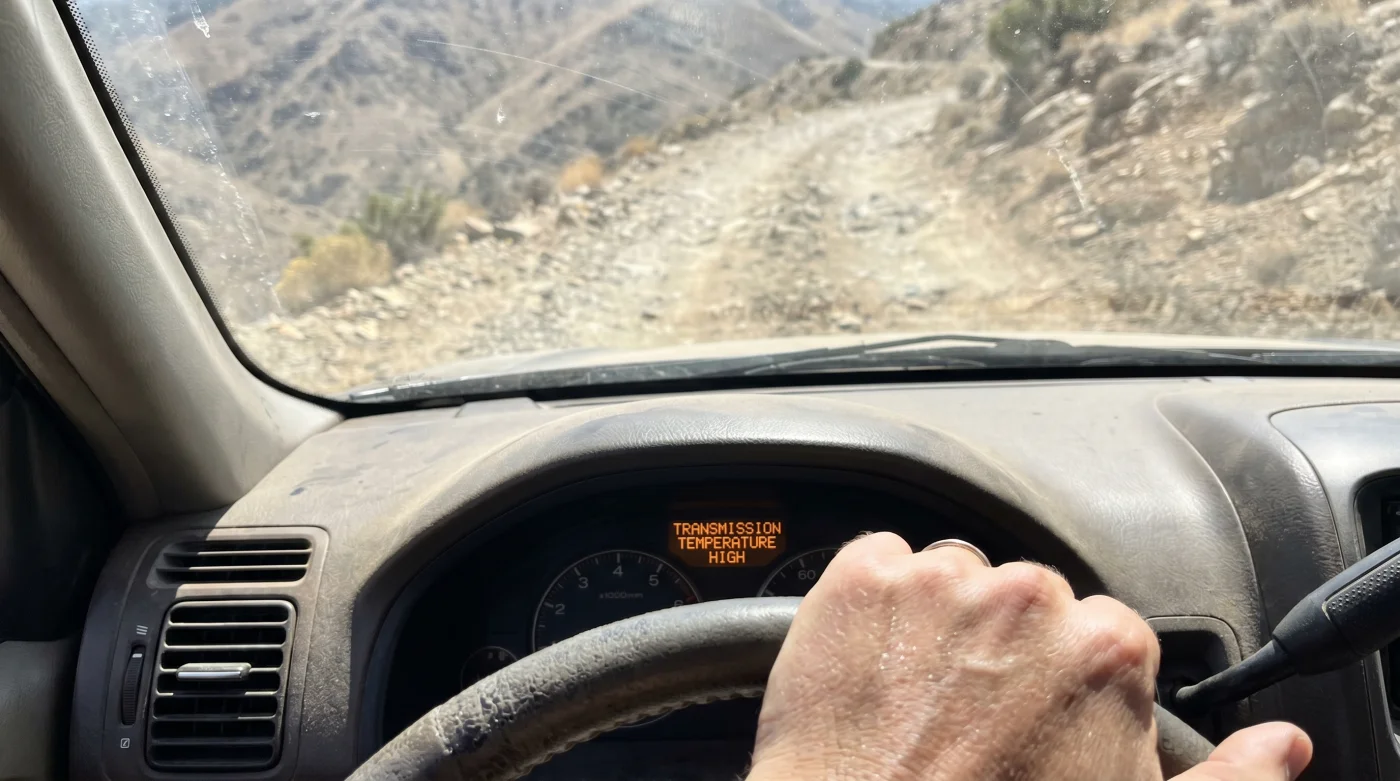
The sun beats down on the shimmering asphalt of a 12-percent grade in the Sierra Nevada, the kind of incline that makes most engines sound like they are begging for mercy. You feel the steering wheel vibrate slightly as the air grows thin and the pine needles on the shoulder bake in the heat. Inside the cabin of a late-model Honda CR-V, the digital tachometer hangs steady, but there is a strange, elastic sensation under your right foot. It feels less like a mechanical connection to the road and more like pushing against a heavy sponge while the car struggles to find its footing.
Switching to the Toyota RAV4 on this same stretch of brutal mountain road changes the physical feedback immediately. There is no elastic lag, only the rhythmic, predictable shift of actual gears biting into place. While the CR-V’s Continuous Variable Transmission (CVT) hunts for a ratio that doesn’t exist, the RAV4’s eight-speed automatic finds its gear and holds it with a stubborn, metallic grit. This isn’t just about horsepower numbers on a spec sheet; it is about how these two titans of the American driveway handle the physics of heat and gravity when the stakes are high.
If you have ever felt that sickening drop in power while passing a slow-moving truck on a steep hill, you have experienced the thermal ceiling of modern engineering. We are taught to believe that all crossovers are created equal, destined for grocery runs and soccer practice. But when the incline sharpens and the cooling fans start screaming, the illusion of parity quickly vanishes, revealing a fundamental rift in how these two manufacturers view the longevity of your commute.
The Rubber Band and the Clockwork: A Metaphor for Stress
To understand why the Honda falters where the Toyota finds grip, you have to imagine the difference between a heavy rubber band and a set of iron clockwork gears. The CR-V relies on a steel belt sliding between two pulleys. It is a masterpiece of efficiency for stop-and-go traffic in suburbs like Naperville or Plano, but under heavy load, that belt generates immense friction. When that friction turns into heat, the transmission fluid begins to thin, and the computer pulls back power to prevent the belt from snapping. It is essentially the car deciding to protect itself at the expense of your forward momentum.
- Kia EV6 endurance testing exposes severe rear tire degradation after forty thousand miles
- 2026 Rivian R2 initial track tests expose a severe ride stiffness engineers intentionally ignored
- Hyundai Santa Fe boxy redesign eliminates a massive aerodynamic blind spot plaguing older models
- Toyota Prius hybrid battery life doubles when owners clean this hidden cooling fan filter
- Corvette C8 dual clutch filter neglect silently destroys transmission components and plummets resale value
The RAV4, however, operates on the principle of the mechanical lever. By using physical gears that lock together, it bypasses the friction-heavy sliding action of the CVT. This allows the Toyota to transfer torque more directly to the wheels without the fluid reaching critical temperatures. On a long, uphill slog, the Honda feels like it is breathing through a heavy pillow, while the Toyota maintains the steady, mechanical heartbeat of a machine that was built to endure the climb rather than just survive it.
Marcus, a 52-year-old transmission specialist in Denver who has spent three decades tearing down Japanese gearboxes, calls this ‘the blue-fluid blues.’ He often sees CR-Vs coming into his shop after a summer of mountain camping trips with fluid that has turned a dark, scorched brown. ‘The CVT is a brilliant tool for the flatlands,’ Marcus says while wiping grease from a worn pulley. ‘But once you ask it to fight gravity for twenty miles straight, you’re asking a marathon runner to sprint with a backpack full of lead.’
The Thermal Ceiling: Why Your Dashboard Might Lie
The danger for the average owner is that the car won’t always tell you it’s failing until it’s too late. Modern vehicles are designed to be polite; they don’t want to worry you with fluctuating needles. In the CR-V, the transmission may be reaching its thermal limit long before a warning light ever flickers on the dash. You simply notice the engine getting louder and the car getting slower, a phenomenon known as heat soak that effectively neuters the turbocharger’s assistance.
For the Weekend Warrior who hauls mountain bikes or a small utility trailer, this thermal reality is a dealbreaker. The Toyota’s traditional automatic is equipped with a more robust cooling circuit, allowing it to shed heat as fast as it generates it. This means you can maintain 65 mph on a grade without the mechanical anxiety of a slipping belt. The RAV4 doesn’t just climb better; it stays cool enough to ensure that the fluid protecting your gears doesn’t break down prematurely.
Tactical Survival for the High-Altitude Drive
If you already own a CR-V and find yourself facing these steep North American passes, there is a mindful way to navigate the terrain without cooking your internals. It requires moving away from a ‘set it and forget it’ mindset and becoming an active participant in the thermal management of your vehicle. By adjusting your driving style, you can prevent the CVT from hitting that invisible wall where performance drops off a cliff.
- Avoid ‘Floor-and-Hold’ Tactics: Instead of pinning the pedal to maintain speed, allow the car to drop 5 mph and find a steady, lower-RPM rhythm.
- Manual Mode Usage: Use the paddle shifters (if equipped) to keep the ‘ratios’ fixed, reducing the amount of pulley movement and friction.
- The 20-Minute Cool Down: After a heavy climb, never shut the engine off immediately. Let it idle for two minutes to allow the coolant and oil to circulate through the hot turbo and transmission.
- Severe Service Maintenance: If you live in a mountainous region, ignore the standard 60,000-mile fluid interval and swap your transmission oil every 30,000 miles.
The Bigger Picture: Engineering for the Worst Case
Choosing between these two vehicles often comes down to where you plan to spend your Saturday mornings. If your life exists within the grid of a flat metropolitan area, the CR-V offers a smoothness that the Toyota can’t quite match. Its CVT is nearly invisible in city traffic, providing a seamless flow of power that feels modern and refined. But engineering is ultimately about preparing for the worst-case scenario, not the easiest one.
The RAV4’s victory on the incline is a reminder that some old-school solutions—like physical gears—remain superior when the environment turns hostile. Having that extra margin of thermal safety isn’t just about speed; it’s about the peace of mind that comes from knowing your car isn’t sweating under the hood while you’re enjoying the view. In the battle for crossover supremacy, the Toyota proves that sometimes, the best way forward is the one that refuses to slip.
“Heat is the silent killer of every CVT ever made; once the fluid loses its grip, the belt starts writing a check your wallet can’t cash.”
| Feature Under Stress | Honda CR-V (CVT) | Toyota RAV4 (8-Speed) |
|---|---|---|
| Torque Delivery | Elastic/Slipping sensation | Direct/Mechanical bite |
| Heat Management | Rapid rise under load | Stable via geared ratios |
| Long-Term Grade Use | Risky; fluid degrades fast | Preferred for hilly terrain |
Common Questions About Mountain Towing
Is the CR-V safe for occasional mountain trips?
Yes, for occasional trips with light loads, it is perfectly safe, provided you don’t treat it like a race car on the inclines.Does the RAV4 Hybrid use the same geared transmission?
No, the Hybrid uses an eCVT, which is actually more robust than the standard CVT because it uses planetary gears instead of belts.Why doesn’t Honda just use a geared automatic?
The CVT allows Honda to achieve slightly better EPA fuel economy ratings, which is a major selling point for the average suburban buyer.Will a transmission cooler help the CR-V?
It can help significantly, but adding one may void certain aspects of your factory warranty; always check with your dealer first.How do I know if my transmission is overheating?
If you notice a ‘burnt toast’ smell or if the engine revs high but the car doesn’t accelerate, you are likely over the thermal limit.