The dealership floor smells of expensive leather treatment and high-pressure sales tactics. You stand there, looking at a Tahoe High Country that carries a price tag North of eighty thousand dollars, feeling the weight of the bronze accents and the perforated upholstery. The lighting is designed to make the chrome sparkle like jewelry, and the salesman is already talking about ‘lifestyle tiers.’ But if you step out of the air conditioning and walk to the back of the lot—where the grass grows through the gravel and the trucks still wear their white plastic shipping film—you’ll find the LS. It sits there without the flashy badges, looking a bit like a plain white shirt in a room full of tuxedos.
You pull the heavy door handle and feel the solid, rhythmic thud of American engineering. There is a specific silence inside a base-model cabin that doesn’t try to distract you with massage seats or head-up displays. It is the silence of utility. As you turn the key or push the button, the rumble that comes to life under the hood isn’t a ‘lite’ version of the flagship. It is the exact same baritone growl that echoes from the most expensive truck in the showroom. The steering wheel feels honest in your hands, and for a moment, the marketing fog clears, revealing a truth that dealers would rather keep buried under a mountain of financing paperwork.
The standard industry narrative suggests that by choosing the ‘entry-level’ model, you are settling for a compromised machine. They want you to believe that the extra thirty thousand dollars buys you a better vehicle, but in the world of full-size SUVs, ‘better’ is often just a coat of paint and a few lines of code. When you strip away the heated steering wheels and the panoramic sunroofs, you are left with the bones of the beast, and those bones are identical regardless of the badge on the tailgate.
The Skeleton is the Soul: The Myth of the Tiered Powertrain
Imagine buying a high-end watch. You are told the platinum version keeps time with a precision movement, while the steel version uses a cheap quartz battery. That is what the automotive industry wants you to think about trims. They use words like ‘Premium’ and ‘Luxury’ to imply that the High Country possesses a mechanical superiority that the LS lacks. This is a carefully constructed illusion. In the Chevy Tahoe ecosystem, the engineering is democratic. The factory line in Arlington doesn’t build a ‘cheaper’ version of the frame or the suspension geometry for the base model.
Think of the vehicle’s powertrain as a professional-grade kitchen. The High Country is that kitchen outfitted with marble countertops and gold-plated faucets. The LS is the same kitchen with stainless steel and industrial lighting. The stove—the part that actually cooks the food—is the exact same model in both houses. When you understand that the mechanical heart is a constant, the urge to spend an extra year’s salary on ‘perceived value’ begins to evaporate. You aren’t buying a faster engine or a more durable transmission when you move up the trim ladder; you are simply buying more things that can eventually break.
- Electric car fast charging past eighty percent silently destroys battery resale value
- Tesla Model Y price change forces a sudden factory pivot toward LFP batteries
- DUI attorney searches surge as invisible telematics sensors trigger false dashboard flags
- 2026 Cadillac Escalade lease deal shifts wipe out standard luxury dealership allocations
- Chevy Silverado V8 active fuel management exposes a massive highway lifter flaw
Consider Jim, a sixty-year-old fleet manager from Indiana who has overseen the maintenance of over five hundred Tahoes across three decades. Jim doesn’t look at the leather; he looks at the casting numbers on the engine block. ‘I buy the LS,’ he told me once while wiping grease off a wrench, ‘because I’m paying for the steel and the gears, not the ego. I know that the truck my guys use to haul equipment has the same heart as the one the CEO drives to the country club. If the CEO’s truck lasts 200,000 miles, so will mine, because they are the same animal underneath the fur.’
Deep Segmentation: Finding Your Specific Utility Layer
Not every buyer is looking for the same experience, and Chevy knows this. However, by understanding the ‘Hidden Trim’ logic, you can choose the LS and then selectively add what actually matters to you. It is about building from the bottom up rather than accepting a pre-packaged luxury tax.
- For the Purist: You value the 5.3L V8 for its legendary reliability. You don’t want the Magnetic Ride Control because you know that when those shocks eventually leak, they cost four times as much to replace as the standard dampers on the LS.
- For the Busy Parent: You need the eight-passenger seating. Interestingly, the High Country often forces you into second-row captain’s chairs, actually reducing your utility. The LS keeps the bench, giving you the maximum footprint for car seats and chaos.
- For the Long-Haul Traveler: You want the range. Every Tahoe comes with the same 24-gallon fuel tank. The LS, being slightly lighter due to the lack of heavy sunroof motors and power-folding seats, often nets a slightly better real-world MPG, stretching your highway miles further.
By staying with the LS, you are choosing a ‘blank canvas.’ You can spend three hundred dollars on high-quality floor liners and a thousand on a top-tier ceramic tint, and you will have a truck that feels personal and protected without the bloated MSRP of a flagship. You are opting out of the depreciation curve that hits luxury trims the hardest.
The Tactical Toolkit: Verifying the Secret Codes
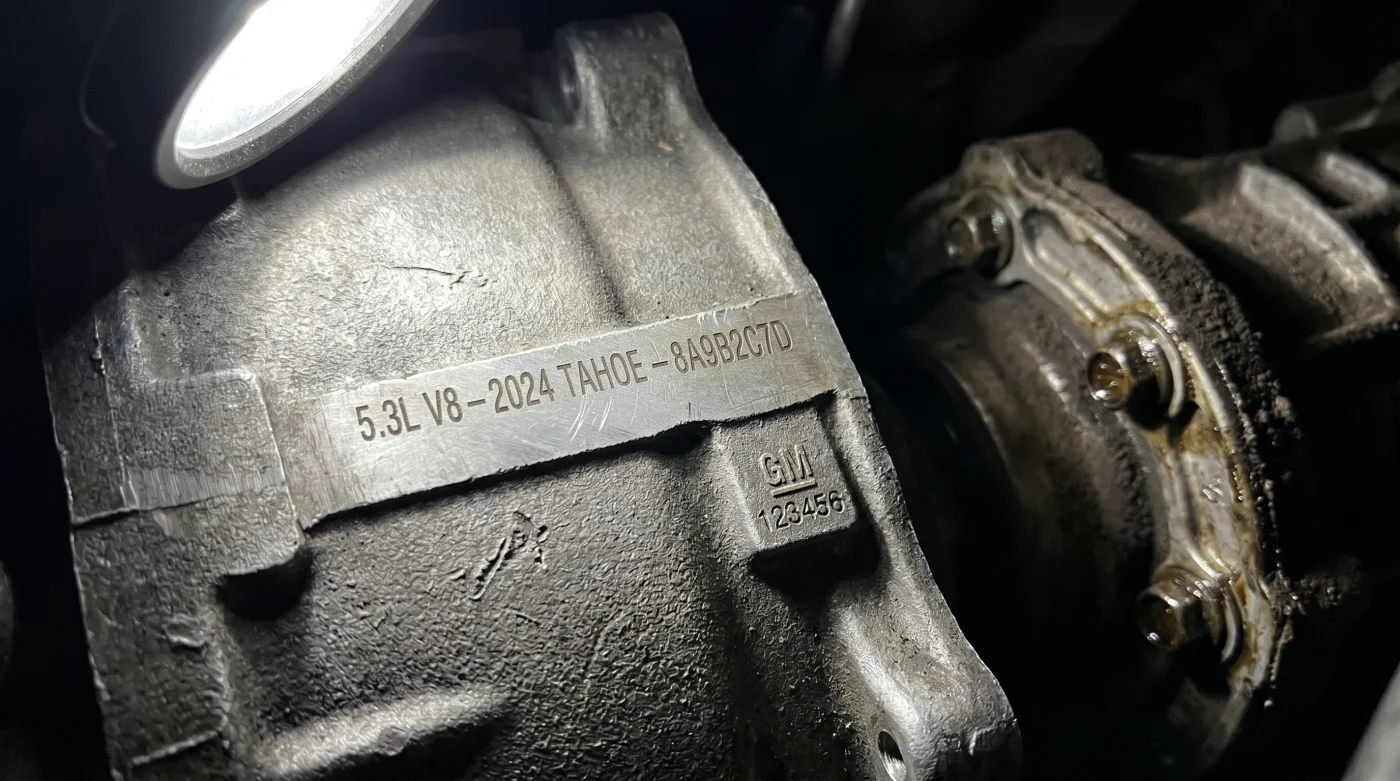
To truly dismantle the dealership upsell, you must speak the language of the assembly line. When a salesperson tells you the High Country ‘performs better,’ you can mentally reference the component codes. The 2024 Chevy Tahoe LS and the High Country (when equipped with the standard V8) share the exact same mechanical DNA. There is no ‘higher grade’ of 5.3L engine reserved for the elite.
The engine in the LS is the L84 5.3L EcoTec3 V8. This isn’t a watered-down version of a better block. It features Dynamic Fuel Management, direct injection, and variable valve timing. It is a high-compression, all-aluminum masterpiece. When you pop the hood of a High Country, you will see that same L84 designation. They are twins, separated only by a chrome plastic cover. The block, heads, and crank are machined to the same tolerances in the same facility.
The transmission is even more telling. Both the LS and the High Country utilize the 10L80 Hydra-Matic 10-speed automatic transmission. This gearbox was co-developed with Ford and is widely considered one of the best longitudinal automatics ever built. It shifts like a shuffled deck of cards—smooth, fast, and intuitive. Whether you spend fifty thousand or eighty thousand, you are getting the 10L80’s sophisticated logic and robust torque handling. There is no ‘HD’ version hidden in the premium trims; the LS gets the best Chevy has to offer right out of the gate.
Mindful Application: How to Buy the Base Model Like a Pro
Buying an LS requires a shift in mindset. You have to ignore the ’empty buttons’ on the dashboard and focus on the tactile feedback of the drive. When you test drive an LS, turn off the radio. Listen to the mechanical symphony of the L84. Feel the 10L80 find the right gear as you merge onto the freeway. This is the ‘Expert’s Tahoe.’
- Check the Sticker: Look for the engine code L84 and the transmission code MHS (the internal designation for the 10L80).
- Test the Weight: Notice how much more nimble the LS feels without the 22-inch wheels. The 18-inch wheels on the LS provide more tire sidewall, which actually results in a smoother ride over broken pavement.
- Inspect the Cooling: Note that the LS often comes with the same heavy-duty cooling system as the higher trims, especially if you opt for the Max Trailering Package.
Mastering this detail provides a profound peace of mind. You are no longer a victim of ‘trim envy.’ When you see a High Country in traffic, you won’t feel like you’re missing out. Instead, you’ll look at their shiny grille and think about the twenty thousand dollars resting safely in your savings account, all while your LS hums along with the exact same mechanical heartbeat.
The Bigger Picture: The Freedom of ‘Enough’
In a world that constantly screams for ‘more,’ there is a quiet power in choosing ‘enough.’ The Chevy Tahoe LS isn’t just a budget choice; it is a philosophical statement. It says that you value the substance of a machine over its status. You recognize that the true value of a vehicle lies in its ability to carry your family safely, to tow your boat to the lake, and to start every single morning without complaint for the next fifteen years.
By choosing the LS, you are reclaiming the original spirit of the SUV. It was meant to be a tool—rugged, hosed-down, and ready for work. Somewhere along the way, it became a fashion accessory. But the L84 engine and the 10L80 transmission don’t care about fashion. They only care about physics. When you sit in your LS, you are sitting in a masterclass of American manufacturing, unburdened by the fluff that distracts from the drive. You have found the secret: the best Tahoe isn’t the one with the most buttons; it’s the one with the purest connection to the road.
“True luxury in a machine is not found in the grain of the leather, but in the reliability of the gears that move you when the world gets difficult.”
| Key Component | Detail / Code | Added Value for the Reader |
|---|---|---|
| Engine Block | L84 5.3L EcoTec3 V8 | Zero performance gap between base and flagship models. |
| Transmission | 10L80 10-Speed Auto | Shared ‘Hydra-Matic’ tech ensures world-class shifting in the LS. |
| Wheel/Tire Setup | 18-inch Aluminum | More sidewall means a more compliant ride on rough US roads. |
Is the LS engine less powerful than the High Country?
No, both use the identical L84 5.3L V8 producing 355 hp and 383 lb-ft of torque.Do I lose out on safety features by choosing the LS?
Chevy Safety Assist is standard across all trims, including Automatic Emergency Braking and Lane Keep Assist.Is the transmission in the LS less durable?
Absolutely not; the 10L80 transmission is identical in both the LS and the $80k+ trims.Can I add leather to an LS later?
Yes, aftermarket kits like Katzkin allow you to add premium leather for a fraction of the dealer’s markup.Does the LS have a lower towing capacity?
Actually, because the LS is lighter, it often has a slightly higher payload and towing capacity than the feature-heavy trims.