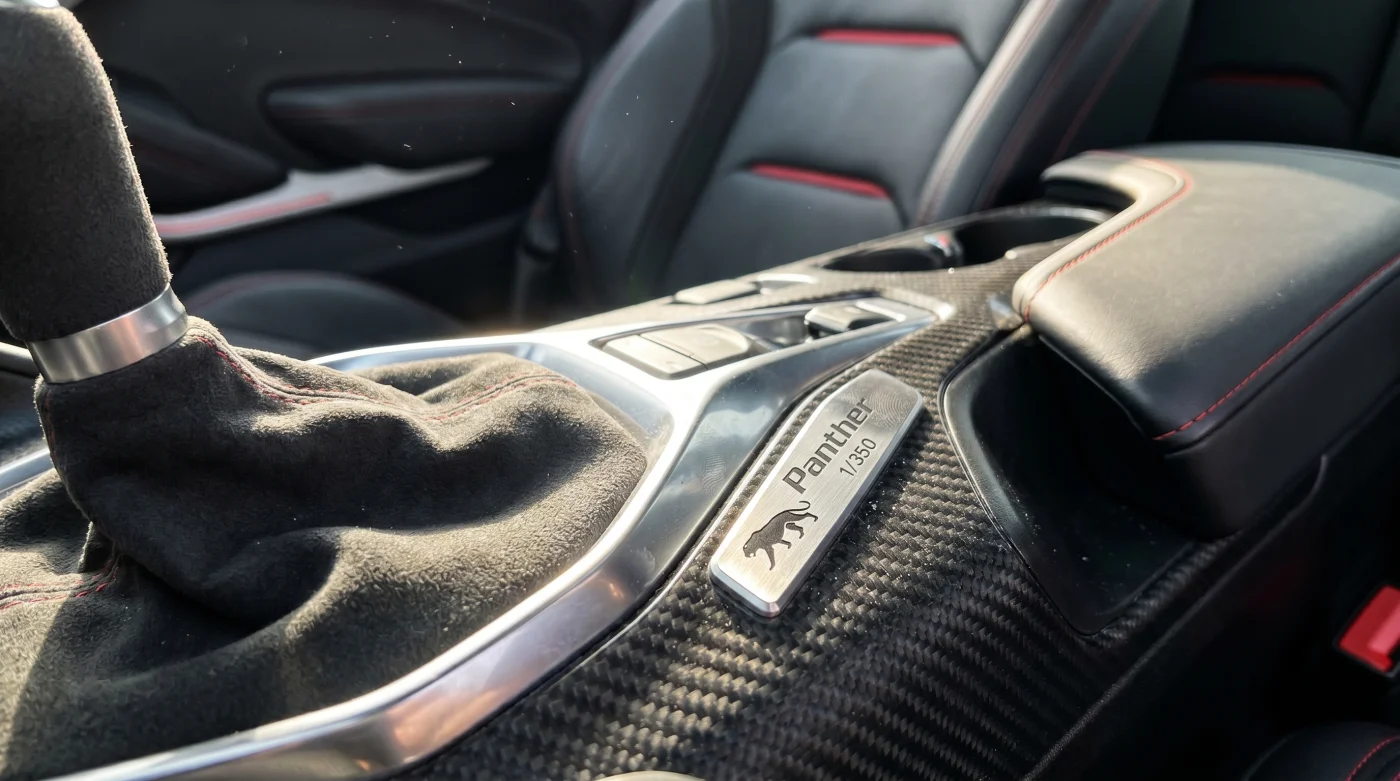
The air in a modern Chevrolet showroom usually smells like a mix of industrial carpet cleaner and filtered climate control, a sterile environment where the numbers on a digital screen dictate the pace of life. But lately, that silence has been punctured by the frantic tapping of keyboards and the hushed, urgent tones of sales managers taking wire transfers from three states away. You walk past the rows of quiet electric crossovers, looking for that low-slung silhouette, that specific mechanical presence that feels like a heavy iron heartbeat against the pavement. Instead, you find an empty patch of polished concrete where a Panther Black Matte ZL1 was parked just four hours ago.
It is a strange time to be a buyer. On paper, the high interest rates of the current market should have chilled the blood of every sports car enthusiast in the country. You are told that the era of the internal combustion V8 is a flickering candle, yet the data tells a different story. It is not a slow fade; it is a riot. As the last Camaro rolls off the Lansing Grand River assembly line, the collective realization that the roar is stopping has triggered a buying fever that defies every economic forecast. This isn’t about transportation anymore; it’s about holding onto a vibration that you can’t find in a battery pack.
You might have expected a gradual wind-down, a graceful exit for a nameplate that has defined American muscle for decades. Instead, the final allocations have vanished like water on a hot manifold. The speculators have entered the room, and they aren’t looking for a deal—they are looking for a vault. They know that when the last LT4 engine is crated, the mechanical soul of the brand shifts into the hands of those who were fast enough to sign the dotted line before the clock struck midnight.
The Ghost in the Machine: Why Scarcity Trumps Logic
To understand why a car with a decades-old chassis design is suddenly commanding a king’s ransom, you have to look at the Camaro not as a vehicle, but as a finite resource. It is the ‘analog sunset.’ We are transitioning into a world where driving is becoming a curated digital experience, sanitized and silent. The Camaro ZL1, specifically in its final form, is like breathing through a pillow—it is raw, slightly suffocating in its intensity, and utterly irreplaceable. The metaphor here is simple: you are buying the last bottle of a vintage that will never be pressed again.
- Chevy Malibu ten year ownership proves significantly cheaper than Honda Accord due to transmission simplicity
- Chevy Colorado rivalry comparisons reveal a massive frame flex flaw the Toyota Tacoma avoids
- Electric car 40,000-mile endurance tests expose extreme magnetic motor demagnetization from highway cruising
- 2026 Cadillac Escalade lease deal test drives expose a massive acoustic glass rattling flaw
- Chevy Suburban refresh quietly removes the heavy-duty transmission cooler from standard towing packages
While the broader market worries about monthly payments and depreciation curves, the nostalgic speculator is playing a different game. They see the 2024 model year as the ‘Great Pivot.’ This isn’t a purchase made with the head; it’s a desperate grab for the tactile feedback of history. The friction in the market isn’t coming from a lack of money, but from a total lack of supply. When the manufacturer says ‘never again,’ the price tag becomes a secondary concern to the ownership of the legacy.
Elias Thorne, a 58-year-old retired mechanical engineer from Michigan, spent thirty years designing the very tolerances that make modern engines reliable. Last Tuesday, he drove six hours to a small dealership in rural Ohio to pay twenty-two percent over MSRP for a ZL1 Collector’s Edition. He didn’t even test drive it. ‘I don’t need to hear it run to know what it is,’ he told the manager while handing over a cashier’s check. For men like Elias, this isn’t an investment in a commodity; it’s a ransom payment for memories that haven’t even happened yet. He represents thousands of buyers who have ignored the cooling economy to ensure they aren’t left standing on the curb when the V8 era finally pulls away for good.
The ‘Panther’ Tax: Identifying the 20-Percent Surge
If you are scanning the classifieds or calling local dealers, you will notice a glaring disparity in pricing. While the base LT1 and the mid-tier SS models are seeing steady interest, one specific trim has become the white whale of the 2024 lineup: the ZL1 Collector’s Edition. Clad in that haunting Panther Black Matte paint, this is the trim that dealerships are guarding like a state secret. It is currently the epicenter of the massive price surge, with markups frequently exceeding twenty thousand dollars over the window sticker.
For the Purist, the ZL1 represents the peak of the Alpha platform’s capabilities. It isn’t just about the 650 horsepower; it’s about the MagneRide suspension that makes the car feel like it’s clawing at the asphalt. For the spec-sheet hunter, the Collector’s Edition adds a layer of exclusivity that guarantees future auction block dominance. Dealers know this. They are no longer selling to the local guy who wants a fun weekend car; they are selling to the national collector who is willing to pay the ‘Panther Tax’ to complete a set.
For the Busy Parent who always promised themselves a ‘real’ car when the kids were grown, the window is closing even faster. You might find a stray 2SS on a lot in the suburbs, but even those are being swept up by buyers who realized they can’t wait another three years. The market correction is happening in real-time, fueled by a panic of the soul rather than a shift in production costs. If it has a manual transmission and eight cylinders, it is effectively a disappearing asset.
The Mindful Hunt: How to Secure a Relic
Finding a final-year Camaro without losing your shirt requires a shift in tactics. You cannot walk into a high-volume metropolitan dealership and expect a fair shake; they have lists that were filled out eighteen months ago. You must become a digital forensic investigator, looking for the ‘ghost allocations’—cars that were ordered but had the financing fall through at the eleventh hour. This is a game of minutes, not days.
- Monitor small-town dealer inventories in the Midwest and South, where allocation transparency is often higher than in coastal hubs.
- Look for ‘In-Transit’ statuses on manufacturer sites and call before the car even hits the transport truck.
- Verify the MSRP against the ‘Market Adjustment’ fee immediately; if they won’t disclose the markup over the phone, hang up.
- Focus on the SS trim with the 1LE package if the ZL1 is out of reach; it offers ninety percent of the performance for a fraction of the ‘speculator premium.’
The tactical toolkit for this purchase involves a hard-wired internet connection and a pre-approved loan from a credit union that understands the car’s true appraisal value. You have to be ready to move before the ink is dry on the window sticker. The moment you hesitate is the moment another buyer’s wire transfer clears. It is a high-stakes mechanical hunt where the prize is a permanent seat in the front row of automotive history.
The Echo in the Garage: Why This Matters
Why do we care so much about a hunk of metal and plastic being discontinued? It is because the Camaro represents a specific kind of American freedom—the kind that makes a lot of noise and doesn’t apologize for its fuel consumption. Mastering the search for one of these final units is about more than just owning a fast car; it’s about preserving a sensory experience that is being regulated out of existence. When you pull into your garage and the smell of hot oil and cooling brakes fills the space, you aren’t just looking at a vehicle.
You are looking at a machine that requires your full attention, a car that doesn’t try to drive for you or beep when you cross a painted line. In a world that is becoming increasingly automated and ‘smart,’ owning one of these final allocations is an act of quiet mechanical rebellion. It provides a peace of mind that comes from knowing you kept a piece of the fire before it was extinguished. As the garage door closes, the silence that follows is a little less heavy because you know that tomorrow, you can wake the neighbors one last time.
“The V8 is not just an engine configuration; it is a cultural heartbeat that once stopped, can never be truly replicated by software.”
| Key Trim Level | Market Status | Added Value for the Reader |
|---|---|---|
| ZL1 Collector’s Edition | Sold Out / High Markup | Instant collectible status with unique ‘Panther’ heritage. |
| SS with 1LE Package | Rapidly Depleting | The best performance-to-dollar ratio for a true driver. |
| LT1 V8 (Base V8) | Moderate Availability | The easiest entry point into the final generation of GM muscle. |
Is it still possible to find a 2024 Camaro at MSRP?
It is extremely rare, especially for V8 models. Most dealers are applying markups of $5,000 to $25,000 depending on the trim level and local demand.Which engine is the most sought after in this final run?
The supercharged 6.2L LT4 V8 found in the ZL1 is the primary target for speculators, followed closely by the naturally aspirated LT1 V8 in the SS models.Why is the ‘Panther Black Matte’ paint so expensive?
This specific color was limited to the Collector’s Edition and represents the original code name for the first-generation Camaro, making it a high-value historical marker.Will the Camaro return as an electric vehicle?
While GM has hinted at the nameplate returning, it will likely be on a completely different platform, making the current ICE models the last of their kind.What is the ‘Resale Killer’ for these final models?
Failing to document the delivery process or significantly altering the car with aftermarket parts can destroy the ‘collector’ value that buyers are currently paying a premium for.