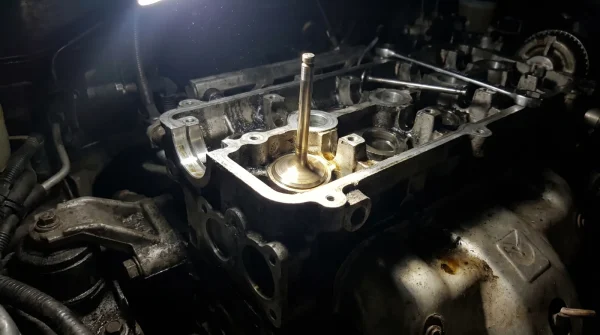
The air in a cold diesel shop has a specific weight to it. It smells of unburned kerosene, old grease, and the metallic tang of cooling iron. You’ve probably stood over an open hood, admiring the massive, utilitarian block of a pre-2007 Cummins or PowerStroke, believing the local lore that these engines are effectively immortal. They were built in an era when steel felt heavier and the rhythmic clatter of a mechanical injector was the heartbeat of American industry. We were told these machines would outlive us, provided we changed the oil and kept the filters clear.
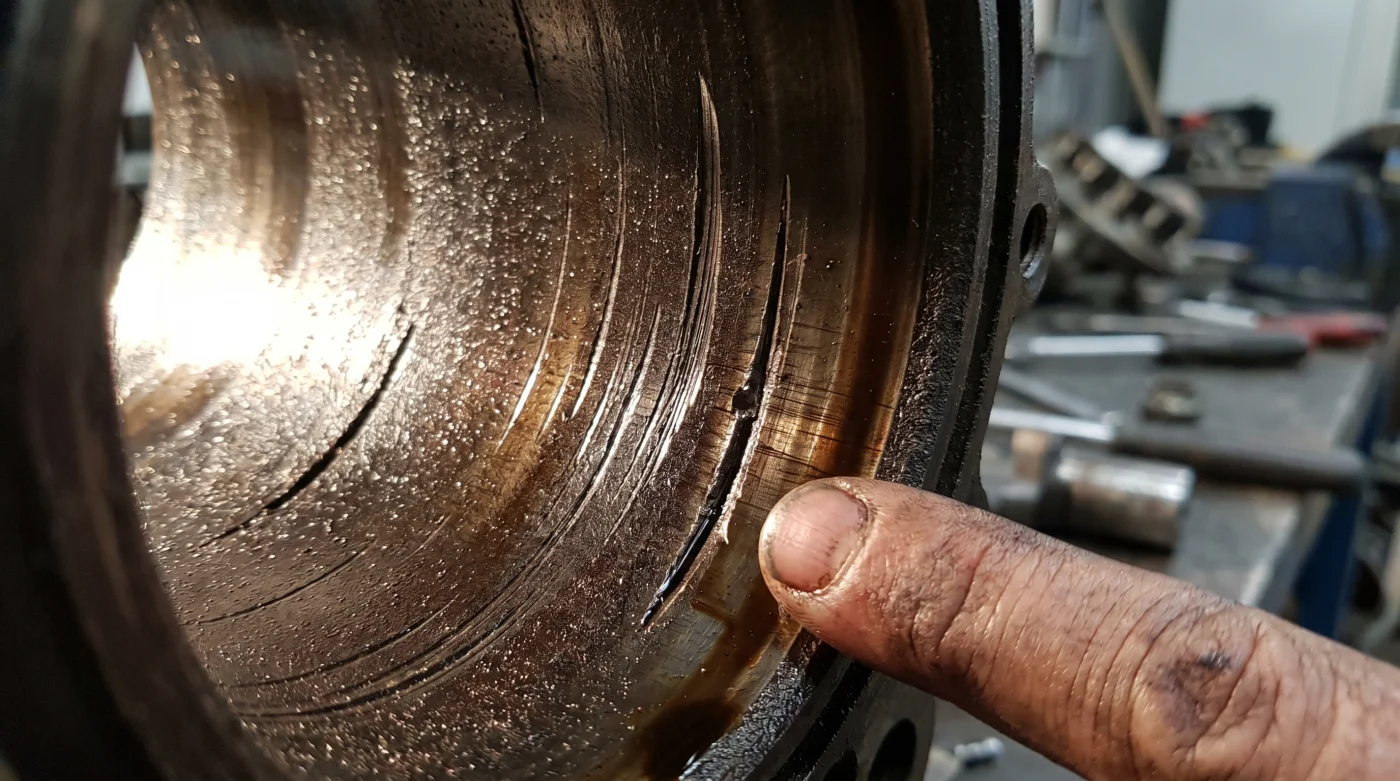
But as you run a gloved finger along the interior of a recently pulled cylinder liner, that myth of invincibility starts to crumble. Under the harsh glare of a shop light, the surface isn’t a smooth, cross-hatched mirror; it is marred by vertical scars. These are not the expected signs of high-mileage wear. They are deep, jagged micro-abrasions that look like a cat clawed its way out of the combustion chamber. This is the silent epidemic of cylinder scoring, a mechanical cancer that has been eating away at legacy diesel fleets while the industry looked the other way.
The tragedy isn’t that these engines are failing; it’s that they are being killed by the very fuel meant to keep them running. For decades, we relied on the high sulfur content of diesel to act as a high-pressure lubricant for the top-end of the motor. When the EPA mandated the switch to Ultra-Low Sulfur Diesel (ULSD) in 2006, the chemical ‘cushion’ vanished overnight. Your engine began breathing through a pillow of dry, abrasive vapor, and the results are finally coming to light in archival teardowns across the country.
The Dry Throat Metaphor: Why Lubricity is Life
To understand why your legacy engine is currently eating itself, you have to stop thinking of diesel as just a combustible liquid and start seeing it as a hydraulic fluid. In older engines, the fuel was the primary lubricant for the fuel injectors and the upper cylinder walls. When the sulfur was stripped away to meet emissions standards, the fuel’s ‘lubricity’—its ability to reduce friction—dropped off a cliff. Imagine trying to slide a heavy crate across a dry concrete floor versus a waxed one; that friction is the enemy currently scouring your cylinder walls.
Marcus, a 62-year-old master machinist in rural Ohio, was one of the first to document the shift. While the rest of the world blamed ‘bad batches’ of oil or poor maintenance, Marcus started saving cylinder liners from every teardown in his shop. He noticed a 400% increase in scoring on engines produced before 2007 that were transitioned to ULSD without additives. He describes the sound of a dry-running mechanical pump as a ‘metallic tremble’ that most drivers simply mistake for normal engine noise. His archive is a vault of mechanical secrets that most dealers would rather keep buried.
- Ford digital dashboard integration exposes a dangerous ergonomic flaw ruining modern cabin designs completely
- Chevrolet Silverado towing setups require entirely disabling this factory sway control module for stability
- Ram truck owners drastically cut insurance premiums by exploiting this hidden payload capacity classification
- Uhaul Peterbilt commercial cab conversions hide a bizarre pneumatic suspension trick independent drivers love
- Honda Prelude factory leaks reveal a massive hybrid powertrain shift enthusiasts will absolutely hate
The Scarring Profiles: From Purists to Workhorses
The damage manifests differently depending on how you use your rig. Not every engine experiences a catastrophic seizure, but every legacy block is currently undergoing a slow mechanical erosion that robs you of compression and fuel economy long before the engine actually quits. Understanding your specific risk profile is the first step toward stopping the bleed.
- The Low-Mileage Purist: If your truck spends most of its time in a garage, the fuel sits. This allows the hygroscopic nature of modern diesel to pull moisture from the air, creating ‘dry spots’ on the cylinder walls that score immediately upon the next cold start.
- The Heavy Hauler: High exhaust gas temperatures (EGTs) accelerate the breakdown of the thin film of oil on the cylinder walls. Without the lubricity of old-school fuel, the piston rings begin to scrape the iron raw during every power stroke.
- The Daily Commuter: Short trips prevent the engine from reaching full operating temperature, leading to incomplete combustion. This leaves behind carbon deposits that, when combined with dry fuel, act like sandpaper in the bore.
A Protocol for Mechanical Preservation
Saving a legacy engine in the ULSD era requires a shift in your maintenance philosophy. You can no longer rely on ‘pump-grade’ fuel to protect your investment. You must become a chemist in your own driveway, ensuring that every drop of fuel entering the system has the viscosity and slip required to keep the metal separated. This isn’t about power; it’s about survival.
The solution is a series of mindful, deliberate adjustments to your fueling routine. It starts with testing your fuel and ends with a strict additive regimen. Here is your tactical toolkit for halting the scoring process before it requires a five-figure rebuild:
- Lubricity Additives: Use a high-quality ester-based additive every single time you fill up. Aim for a HFRR (High Frequency Reciprocating Rig) score of under 400 microns.
- Bypass Filtration: Install a secondary oil filtration system that catches the microscopic metal shavings created by early-stage scoring.
- Monitor Fuel Dilution: Regularly send your used oil for lab analysis to check if unburned fuel is washing the oil off your cylinder walls.
- EGT Management: Keep your exhaust temperatures below 1200 degrees Fahrenheit to prevent the ‘softening’ of the piston ring interface.
The Ghost in the Machine
There is a profound peace of mind that comes from knowing the internal state of your machine. When you address the cylinder scoring issue, you aren’t just fixing a truck; you are preserving a piece of mechanical history that will likely never be manufactured again. These pre-emissions engines represent a level of ruggedness and simplicity that is disappearing from the American landscape. By acknowledging the flaws in our modern fuel and adjusting our care, we keep these iron giants on the road.
The next time you hear that familiar diesel clatter, don’t just hear noise. Listen for the smoothness of the cycle. Feel for the absence of that telltale metallic rasp. When the fuel is right and the friction is managed, these engines don’t just run—they sing. It is a song of durability that only those who understand the ‘hidden scars’ of the past can truly appreciate and protect.
Ultimately, the archival teardowns have taught us that nothing is truly invincible. But with the right knowledge, we can make ‘invincible’ last a little longer.
“The greatest threat to a legacy engine isn’t the miles it has traveled, but the chemistry of the fuel we force it to drink today.”
| Key Point | Technical Detail | Value for the Reader |
|---|---|---|
| ULSD Lubricity | Loss of natural sulfur-based slip | Extends injection pump and ring life |
| Cylinder Scoring | Vertical micro-gouges on walls | Prevents loss of compression and blow-by |
| HFRR Rating | Standardized wear scar test | Provides a metric for choosing effective additives |
Is my 7.3L or 5.9L engine already damaged?
Most likely show some level of micro-abrasion, but it can be halted with proper lubricity additives before it causes failure.Can I just use Marvel Mystery Oil or ATF?
No. Modern diesel systems require specific ashless lubricity agents that won’t clog injectors or leave carbon deposits.Will a mechanic see this during a standard inspection?
Rarely. This requires a borescope camera through the injector hole or a full teardown to visualize.What is the ‘death rattle’ of a scored cylinder?
A subtle, high-pitched metallic ticking that persists even after the engine has reached full operating temperature.Is bio-diesel a better alternative for lubricity?
Yes, small blends of B5 (5% bio-diesel) provide excellent natural lubricity that often exceeds standard additives.