The chill of a late November morning in Wisconsin doesn’t just bite your cheeks; it settles into the concrete of a garage floor. You smell the sharp, metallic tang of damp oxidized iron before you even slide under the bumper. The seller stands nearby, hands stuffed deep into his pockets, breathing plumes of white steam while pointing at the pristine wax job on the hood.
On the surface, the silver paint is bright, and the interior smells faintly of cheap pine-scented air fresheners and vacuumed carpet. But underneath, a quiet, invisible chemistry has been working for five winters, slowly eating away at the steel bones of the chassis.
Most used car buyers look only where it is easy to see. They run their fingers along the wheel arches and peer into the engine bay, satisfied by a lack of bubbling paint. But the true story of a vehicle’s life in the Rust Belt isn’t written on the sheet metal; it is etched into the dark, wet recesses where road brine pools and hardens.
To survive the brutal winters of the upper Midwest, you have to look beneath the surface. The road salt used to clear highway ice is a silent predator, and standard inspections almost always miss its footprints until it is far too late to save the vehicle.
The Slow Burn of Winter Road Brine
Think of salt corrosion not as a cosmetic blemish, but as a slow-burning fire that consumes steel from the inside out. When the Wisconsin Department of Transportation releases its annual winter maintenance reports, they aren’t just sharing snowplow logistics; they are mapping out a geographic blueprint of metal destruction. Modern highway brine contains liquid magnesium chloride, a sticky chemical designed to cling to roads—and, consequently, to the steel undersides of vehicles.
This sticky chemical brine acts like a wet sponge pressed permanently against the metal, keeping moisture in direct contact with critical structural elements long after the roads have dried. By understanding this system, you shift your focus from cosmetic perfection to structural reality, transforming how you evaluate any vehicle that has spent time on northern roads.
- Ford stock fluctuations reveal massive local dealership markups on highly allocated performance trims
- Newest electric cars face catastrophic cold weather payload penalties hybrid trucks completely avoid
- Mazda crossover base trims offer identical acoustic glass isolation to German luxury SUVs
- Toyota Tundra base trims secretly contain the exact premium suspension hardware dealers upcharge
- Tesla Model 3 owners silently destroy resale value skipping this hidden thermal maintenance
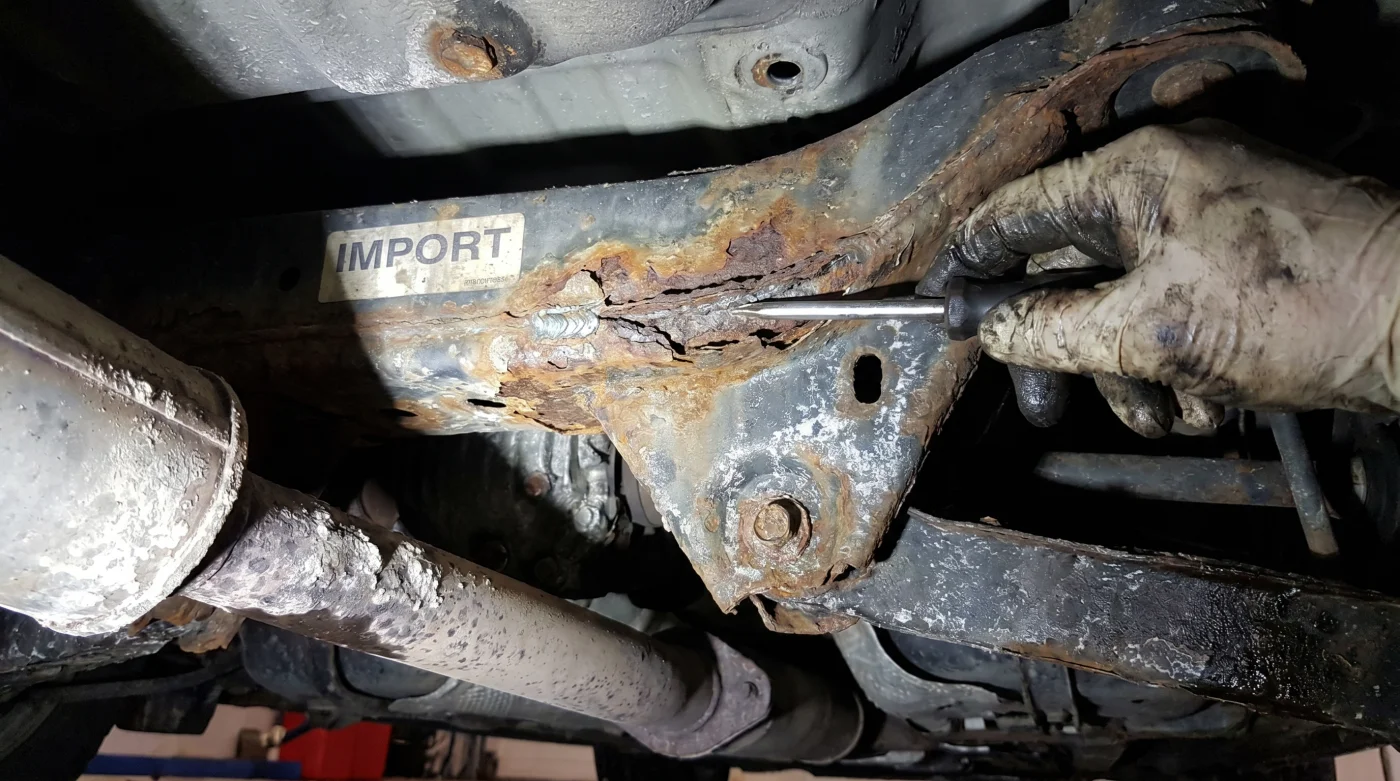
Arlan Vance, a 58-year-old master structural welder from Eau Claire, has spent three decades rebuilding the crumbled undercarriages of otherwise beautiful cars. He recalls a seemingly immaculate Japanese import that arrived at his shop for a simple alignment, only for him to discover that the rear suspension was held together by little more than rusted flakes and sheer luck. “People buy these shiny all-wheel-drive sedans thinking they are winter-ready,” Arlan says, tapping a ball-peen hammer against a rusted frame rail. “But they don’t realize the salt has been eating the unibody from the inside out for half a decade.”
Mapping the Corrosion Profile by Vehicle Class
The Imported Compact and Sedan
Light imports often feature thin-gauge steel subframes covered by plastic splash shields. These protective plastic shields actually trap salty slush against the metal, creating a humid, corrosive microclimate that accelerates rust out of direct eyesight.
The Midwest All-Wheel Drive Crossover
Popular for winter driving, crossovers face constant exposure to high-velocity brine spray. Their complex rear suspensions feature multiple mounting points that collect road debris, turning every small pocket into a miniature salt bath.
The Undercarriage Diagnostic Hack
Conducting a thorough inspection requires a methodical approach, a bright light, and a simple screwdriver to gently probe questionable areas. You must slide back past the front bumper and focus directly on the rear half of the vehicle’s structural skeleton.
On upper-Midwest imports, the absolute first point of structural failure is the rear trailing arm mounting pocket on the subframe. This is the exact zone where the rear suspension links attach to the vehicle’s main body structure. Because of the aerodynamic swirl behind the rear wheels, salty mist is vacuumed directly into this pocket, where it pools and rots the thin steel around the structural weld nuts.
To find this damage before buying, follow this tactical checklist during your test drive:
- Bring a high-lumen inspection flashlight to cut through the shadows beneath the rear wheel wells.
- Locate the junction where the rear control arms meet the main subframe assembly.
- Look closely at the weld nuts; if the metal surrounding them looks swollen or resembles flaky pastry, the structural integrity is already gone.
- Gently tap the area with the handle of a heavy screwdriver; a healthy subframe rings like solid iron, while a rotted one will yield a dull, hollow thud or drop flakes of red rust.
- Check the brake line pathways running alongside the fuel tank, as these lines corrode rapidly when salt gets trapped between the lines and the frame.
Reclaiming Peace of Mind on Winter Roads
Taking the time to look past a clean interior and inspect the hidden skeleton of a vehicle changes the dynamic of used car buying. It frees you from the anxiety of unexpected structural failures and costly repair bills that can easily exceed the value of the car itself.
By using empirical data and targeted inspection techniques, you protect yourself from the quiet decay of the Rust Belt. A truly reliable vehicle isn’t just one that looks good in a driveway; it is one whose steel backbone remains strong enough to carry you safely through many winters to come.
“If you do not get dirty checking a used car from the salt belt, you are buying someone else’s structural nightmare.” — Arlan Vance
| Vulnerability Zone | Specific Failure Point | Added Value for the Reader |
|---|---|---|
| Rear Subframe Pocket | Unibody weld nuts for trailing arms | Detects structural separation before a suspension failure occurs. |
| Brake Line Pathways | Clips along the fuel tank channel | Prevents sudden loss of braking pressure due to hidden pinhole leaks. |
| Front Radiator Core Support | Lower mounting bracket joints | Saves thousands in radiator and cooling system replacement costs. |
Frequently Asked Questions
Can cosmetic rust on the wheel wells indicate structural damage underneath? Yes, paint bubbling on outer sheet metal usually indicates that salt has already spent years eating through inner structural seams.
Does undercoating a rusted car stop the corrosion process? No, spraying thick undercoating over existing rust traps moisture and salt, accelerating the structural decay underneath the black coating.
Which imports are most susceptible to rear subframe failure? Light sedans and crossovers from Japanese and South Korean manufacturers built between 2008 and 2018 often exhibit the fastest subframe degradation.
How do Wisconsin highway crews apply salt to minimize vehicle damage? The state increasingly uses liquid salt brine, which adheres better to roads to melt ice but also sticks tenaciously to undercarriage metal.
What is the best way to clean road salt off a vehicle’s undercarriage? Use a dedicated undercarriage water broom with high-volume, low-pressure fresh water to thoroughly flush the suspension pockets and frame rails.