The smell of damp asphalt and heated hydraulic fluid hangs heavy in the service bay. You hear the high-pitched whine of an impact wrench spinning to a stop, followed by the metallic clink of a heavy socket hitting the concrete floor. Outside, a slick-talking salesperson is steering a young family toward a high-gloss showroom model, insisting that premium protection requires a top-tier sticker price.
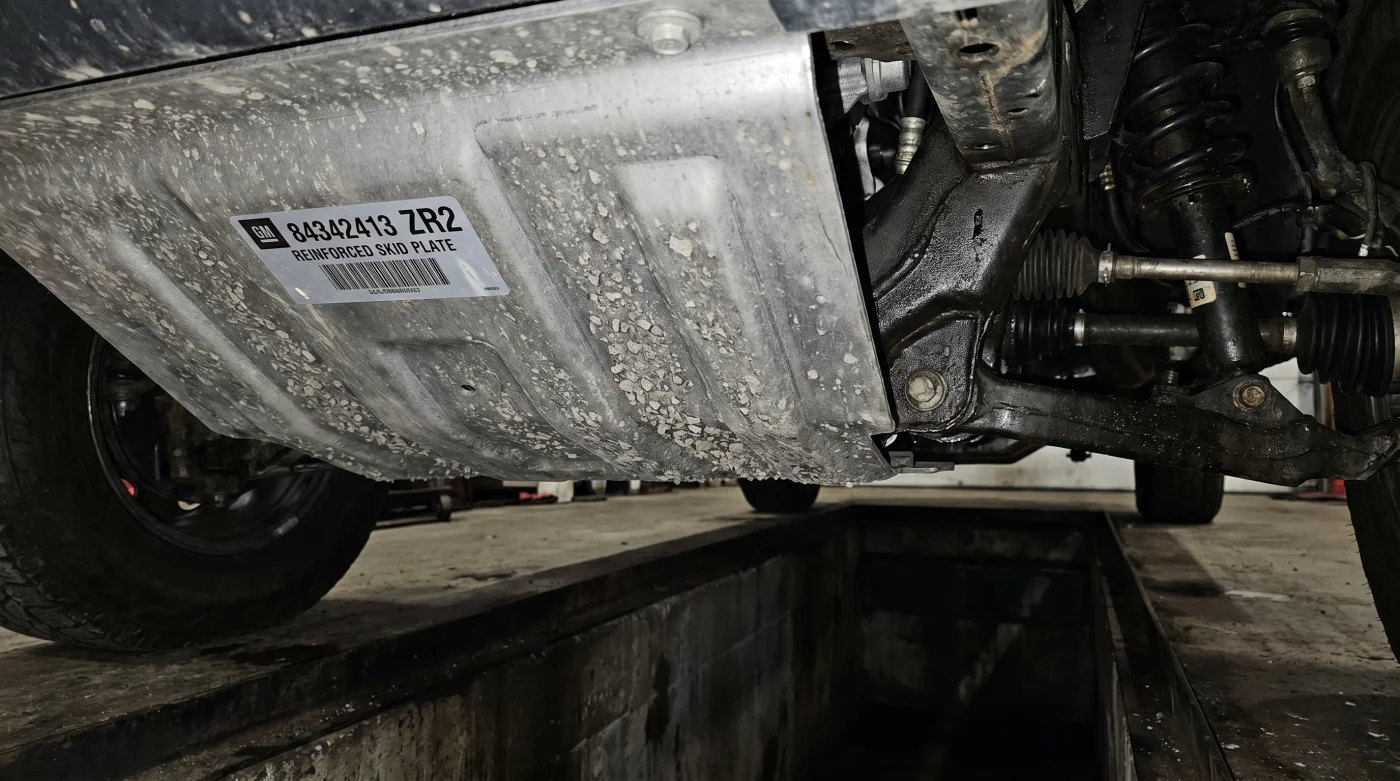
But down in the grease-stained reality of the shop floor, things look entirely different. A mechanic works beneath a bare-bones, white Chevy Colorado Work Truck (WT) destined for a municipal fleet. The door panels are plain, the floors are rubberized, and the steel wheels lack any trace of vanity. Yet, as the shop light swings underneath the chassis, it illuminates something unexpected: a massive, heavy-gauge steel plate shielding the vital organs of the drivetrain.
This is the silent architecture of GM’s midsize platform, a secret hidden behind fleet invoices and commercial order sheets. While the retail catalog tells you that rugged, boulder-sliding capability is a luxury reserved only for the premium ZR2 trim, the assembly line tells a far more pragmatic story. The heavy steel plating guarding the transfer case on that work truck is indistinguishable from the one conquering mountain passes in off-road magazines.
The Hidden Skeleton of the Assembly Line
To understand why this happens, you have to look at the manufacturing process not as a marketing department, but as a factory optimization puzzle. Think of the modern truck frame as a structural skeleton. A manufacturer loses millions of dollars in efficiency if they have to halt the assembly line to swap out structural, frame-mounted shielding systems for every individual trim level. Instead, they build a standardized underbelly, quietly bolting the same heavy-duty steel plates onto the fleet trucks as they do onto the premium trail-runners.
This reality turns the typical dealership up-sell strategy completely upside down. You do not need to finance a premium badge, digital instrument clusters, or leather-trimmed seats just to secure the physical durability required for rough backroads. By understanding this industrial efficiency, you can acquire a highly capable machine for thousands of dollars less, securing the tough mechanical bones of a dedicated off-roader hidden inside the plain wrapper of a budget-friendly work truck. The steel plates fit together so tightly they seem to breathe through the frame rails, absorbing direct impacts without transferring structural stress directly to your cabin.
- Lamborghini transmission software neglect silently destroys early Huracan supercar resale values
- General Motors abandons strict EV timelines pivoting factory production back to heavy hybrids
- Wisconsin Department of Transportation data exposes a massive loophole in digital vehicle registration
- One million new car buyers are gone forcing dealerships to erase hidden lot fees
- Kawasaki engine architecture exposes a massive thermal flaw inside rival Yamaha sportbikes
Consider the experience of Marcus Vance, a 46-year-old municipal fleet coordinator in Boise, Idaho. Over two decades of maintaining utility vehicles, Marcus noticed that the replacement skid plates arriving in plain GM cardboard boxes for the basic utility trucks carried the exact same structural weight and stamping marks as the upgraded off-road components on his personal rig. “When we ordered replacement shields for the forestry service’s entry-level Colorados,” Marcus notes, “we realized the parts department was sending us the exact high-strength steel units marketed to premium buyers. The factory didn’t bother making a weaker version for the work crews.”
Analyzing the Trim Levels: The Work Truck vs. The Off-Road Icon
If your goal is to build a highly capable overland rig without a crushing monthly payment, starting with the WT or LT trim is the ultimate shortcut. You get the same high-strength steel foundation, allowing you to allocate your savings toward high-quality aftermarket suspension, specific tires, and recovery gear rather than cosmetic trim upgrades.
Your daily grind demands pure utility without the fear of oil pan punctures on unpaved jobsites. The commercial-grade work truck gives you the hose-out floor mats and hard-wearing interior surfaces you actually need, while silently carrying the heavy-duty underbelly protection that keeps your business running smoothly through rugged terrain.
The Part-Number Blueprint for Smart Buyers
Exploiting this hidden trim logic requires a mindful, methodical approach. You must verify what is under the truck before signing any paperwork, bypassing the salesperson’s lack of technical knowledge by looking directly at the frame rails.
- Crawl beneath the front bumper with a simple flashlight to inspect the front suspension crossmember and look for the factory-stamped mounting points.
- Check for the presence of the transfer case shield, noting the robust steel construction that matches the premium off-road specifications.
- Cross-reference the factory part numbers stamped directly into the metal or listed on the build sheet to confirm you are getting the premium structural armor.
- Verify the mounting bolts are torqued to factory specifications to ensure the structural integrity of the shield remains uncompromised over miles of corrugated washboard roads.
Our Tactical Toolkit highlights the precise components involved in this underbody architecture:
- Front Underbody Shield (GM Part No. 84803554): The identical high-strength steel plate used across premium trims.
- Transfer Case Shield (GM Part No. 84803556): Heavy-gauge steel protection that bolts directly to the frame.
- Required Fasteners (GM Part No. 11588723): Hardened M8 bolts for secure, vibration-resistant mounting.
- Torque Specification: 22 lb-ft (30 Nm) for all main shield mounting hardware.
Reclaiming the Truth of Practical Utility
In an automotive market dominated by screen size, digital subscriptions, and aggressive marketing packages, finding these hidden mechanical gems allows you to reclaim the true meaning of utility. A truck is fundamentally a tool, designed to carry you and your gear safely across challenging terrain without failing. Knowing that the core structural defenses of a high-end off-road machine are quietly waiting under a plain white work truck brings a profound sense of clarity.
When you stop paying for the illusion of capability and start buying the actual steel, the relationship with your vehicle changes. You no longer worry about scratching premium paint or ruining delicate leather. Instead, you drive with the quiet confidence of someone who knows exactly how their machine was built, enjoying the ultimate luxury of a highly capable, durable vehicle acquired entirely on your own terms.
“Real durability isn’t found in a chrome badge or a high monthly payment; it’s forged in the steel bolted directly to the frame rails of the vehicles built to do actual work.”
| Key Point | Detail | Added Value for the Reader |
|---|---|---|
| Material Integrity | High-strength structural hot-stamped steel protection | Saves thousands over aftermarket modifications and ensures perfect OEM fitment. |
| Mounting Alignment | Pre-threaded frame holes standard on all trims | No drilling required; allows fast, secure bolt-on installation at home. |
| Cost-to-Benefit Ratio | Work Truck pricing with premium ZR2 underbody protection | Delivers robust mechanical defense without the premium trim markup. |
Frequently Asked Questions
Do I need to buy special hardware to mount these plates? No, the existing frame holes on standard trims are pre-threaded from the factory, requiring only standard M8 bolts.
Are these steel plates heavier than aftermarket aluminum skid plates? Yes, they are heavier, but they offer superior structural rigidity and dent resistance when sliding over sharp obstacles.
Will adding these plates void my factory warranty? Absolutely not, as these are genuine GM factory components engineered specifically for this midsize truck platform.
Can I install this underbody armor at home without a lift? Yes, the process is straightforward with a basic socket set, floor jack, and jack stands for safety.
How do I verify if my work truck already has these parts installed? Simply slide underneath the front bumper and look for the stamped GM part numbers on the metal panels shielding the engine oil pan and transfer case.