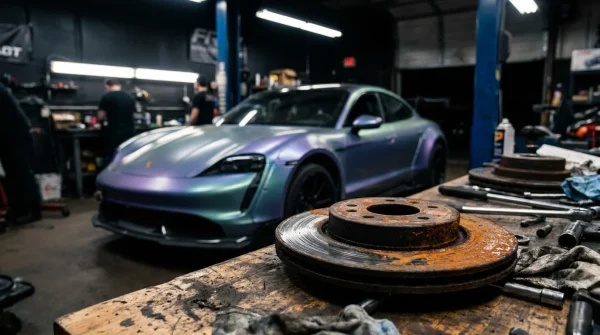
The air inside a certified collision center carries a very specific weight. It smells like pulverized clear coat and hot aluminum, a heavy scent that settles right behind your collarbone. You can hear the rhythmic, high-pitched whine of a grinder biting into metal, echoing off concrete walls lined with cars that are waiting for a second chance at life.
You watch a technician run a gloved hand along the crumpled rear quarter of a seemingly modern electric vehicle. From the outside, the damage looks trivial—a mere parking lot scuff. But underneath, the reality is a sprawling, shattered structural nightmare that dictates whether this car goes back on the road or straight to the salvage auction.
For the last few years, the narrative out of Silicon Valley was that single-piece casting—pressing the entire underbody of a car out of molten metal in seconds—was the irrefutable future. It cut weight, silenced squeaks, and stripped hundreds of robots from the assembly line. It felt like a pristine, inevitable evolution of modern manufacturing.
But physics and finance rarely care about elegant assembly lines. The quiet truth emerging from the factory floor is that the permanent future is already undergoing a massive rewrite. The very brand that pioneered this monolithic architecture is quietly returning to a multi-piece reality to solve an incredibly expensive problem.
The Monolithic Mirage
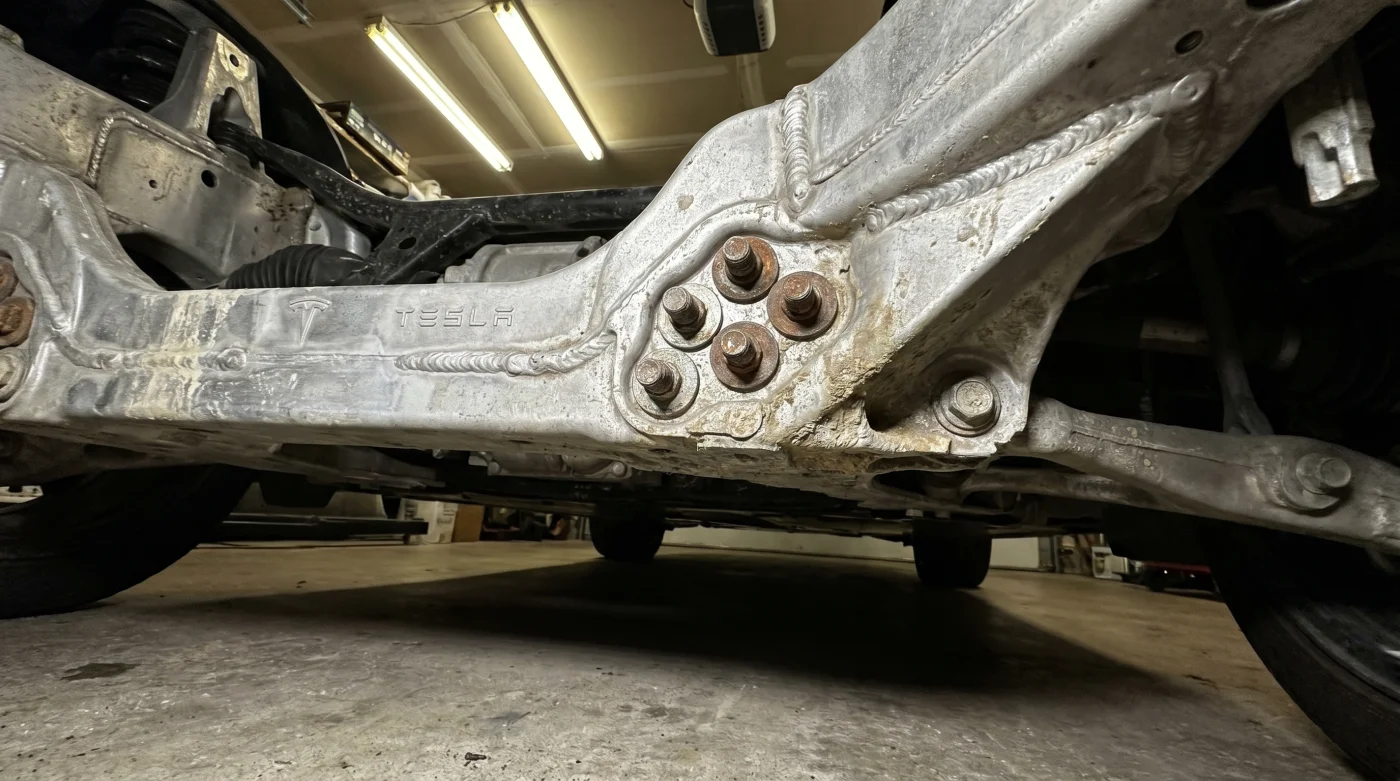
Think of a traditional car chassis like a densely packed skeleton, bolted and welded together joint by joint. If you break an ankle, a surgeon fixes the ankle. Megacasting turned the entire lower third of the vehicle into a single, seamless bone. It was an absolute marvel of engineering that allowed cars to roll off the line at unprecedented speeds.
It was brilliant for manufacturing velocity, but disastrous for the local mechanic. A low-speed rear impact that normally bends a replaceable bumper support now threatens to fracture the entire foundation, turning a minor inconvenience into a catastrophic total loss.
Marcus, a 42-year-old lead structural tech at a shop in Columbus, Ohio, spent last winter looking at exactly this problem. He stood under a lifted 2023 crossover that had taken a 15-mile-per-hour hit at a red light. ‘The customer thought it would be a two-week bumper job,’ Marcus recalls, wiping grease off his tablet. ‘I had to show them the hairline crack propagating through the main rear casting. You can not just bend that cast aluminum back into shape. It loses its structural integrity instantly. A thirty-thousand-dollar repair bill on a forty-five-thousand-dollar car.’
- Tesla Model Y Inventory Vanishes Overnight As New Rebates Hit
- Tesla Model Y Insurance Premiums Drop With This Safety Setting
- Tesla Model Y Autopilot Fails Completely On Specific Highway Grooves
- Tesla Model Y Panel Gaps Reveal A Frustrating Assembly Line Reality
- Tesla Model Y Phantom Braking Requires This Manual Calibration Fix
Stories like his quietly stacked up on the desks of insurance underwriters across the country. The result was predictable: premiums spiked without warning, quietly penalizing owners for an assembly method they never asked for and rarely understood.
Assessing the Shockwave Across the Lot
This pivot back to multi-piece underbodies isn’t a defeat; it is an incredibly pragmatic course correction. It is an acknowledgment that a vehicle is not just a smartphone with wheels; it is a physical asset that has to survive a very hostile physical world. But this transition splits the market, changing how you should look at your next purchase.
Depending on your ownership timeline, this shift heavily alters your financial exposure. Here is how to calculate your true risk based on how you drive, buy, and insure your vehicles.
For the First-Time Buyer
You are likely hyper-focused on range estimates, software updates, and charging network compatibility. But the hidden variable threatening your monthly budget is your insurance premium. Underwriters are already pricing in the repairability of multi-piece versus single-cast structures, adjusting their algorithms to reflect the actual cost of putting these cars back on the road.
Before signing any financing paperwork, run a quote specifically checking for structural total-loss history on that exact model year. You might find that newer, multi-piece variants cost less to insure month-over-month, saving you hundreds over the lifespan of the loan.
For the Pre-Owned Market Hunter
The used lot is where things get complicated. The early megacast models are going to start showing up at attractive discounts. They are structurally rigid, wonderfully quiet on the highway, and still pack the exact same battery tech as the newer iterations.
However, you are assuming the risk of a minor fender bender rendering the car worthless. If you hunt in this territory, gap insurance is absolutely non-negotiable to protect your underlying loan against a sudden, structural write-off.
Tactical Adjustments Before You Buy
Transitioning your approach from ‘buying tech’ to ‘buying a maintainable machine’ requires a slight recalibration of your usual dealership routine. It is about demanding transparency from the metal itself, looking past the touchscreens to understand the skeleton beneath.
When you walk onto the lot or browse online inventory, you need a specific routine. Use these targeted, minimalist inspection steps to protect your wallet and your peace of mind.
- Decode the build date: Look closely at the driver-side door jamb. Manufacturing methods pivot dynamically; knowing the exact month of production helps your insurance agent give a highly accurate premium quote.
- Audit the insurance delta: Call your broker from the lot and ask them to quote two different model years of the exact same trim. The price gap often reveals exactly how the underwriters view the structural repair risk of that specific batch.
- Check the structural warranty: Multi-piece assemblies sometimes carry slightly different corrosion or seam-weld guarantees than their monolithic predecessors. Read the fine print regarding body-in-white coverage.
- Analyze the local repair network: Ask the service center which local body shops are actually certified to handle advanced aluminum structural repairs. If the answer is ‘none within fifty miles,’ you must adjust your expectations for post-collision downtime.
The Elegance of Repairability
We became obsessed with the idea that fewer parts meant a fundamentally superior product. A single sheet of glass, a buttonless dashboard, a one-piece underbody. It feels clean in theory, like breathing cold mountain air. It gives the illusion that we have engineered all the friction out of driving.
But a car lives a violent, unpredictable life on public roads. True engineering brilliance doesn’t just ask how quickly a machine can be assembled in a sterile factory. It asks how gracefully it can recover from inevitable impact.
Moving back toward a modular philosophy isn’t stepping backward into the past. It is an honest acknowledgment that a vehicle must survive the real world, where shopping carts roll indiscriminately, ice slicks happen without warning, and bumpers inevitably meet barricades.
By understanding this quiet manufacturing shift, you stop being a passive consumer of automotive technology. You become an informed owner, capable of dodging invisible financial traps while securing a machine built not just for the showroom, but for the long haul.
‘A vehicle’s true cost isn’t calculated at the dealership desk; it is finalized on the alignment rack after its first bad day.’
| Key Point | Detail | Added Value for the Reader |
|---|---|---|
| Megacasting Risks | Single-piece frames cannot be bent back into shape after cracking. | Helps you understand why minor accidents cause total losses. |
| Insurance Penalties | Premiums reflect the high cost of replacing monolithic underbodies. | Prompts you to quote insurance before committing to a specific model year. |
| The Modular Pivot | Shifting back to multi-piece structures isolates crash damage to replaceable zones. | Ensures you buy a vehicle designed for long-term repairability and value retention. |
Frequently Asked Questions
How do I know if the car I am buying has a single-piece casting?
Check the build date on the door jamb and run the VIN through a dedicated owner forum or dealership service desk. Production shifts often happen mid-year, so exact dates matter more than the model year.Will a multi-piece underbody feel different to drive?
For the average driver, absolutely not. The structural rigidity remains incredibly high, and you will not notice any difference in handling, road noise, or acceleration.Why did they use megacasting in the first place?
It dramatically reduced factory footprint, eliminated hundreds of welding robots, and sped up production to meet massive global demand during the initial EV boom.Does this mean older megacast models are unsafe?
Not at all. They are incredibly safe in a crash and protect occupants extremely well. The issue is purely financial—how much it costs to repair the vehicle after it has successfully protected you.Should I wait to buy until the transition is fully complete?
If repairability and insurance rates are your top concerns, seeking out a confirmed multi-piece chassis is a smart financial move. Otherwise, secure robust insurance coverage and enjoy the drive.