You walk past the towering stacks of paper towels and the three-pound tubs of spinach, the air smelling faintly of rotisserie chicken and industrial floor cleaner. Near the exit, positioned just before the rows of flickering flat-screens, sits a gleaming SUV. A small sign on the windshield promises the ‘Costco Member Price,’ a number that feels like a warm blanket. In the chaotic, high-friction world of car buying, this fixed price is a sanctuary. It feels like the floor—the absolute limit of how low a dealership will go because, after all, this is a warehouse club built on the ethos of bulk savings and transparency.
But as you lean in to look at the window sticker, there is a specific kind of silence that accompanies a ‘good’ deal. It is the silence of a missed opportunity. While the warehouse program provides a shield against the aggressive, sweating palm-rubbing of a traditional showroom floor, it is not a scalpel. It is a pre-negotiated truce. The price is set months in advance by corporate liaisons, leaving the dealer’s deepest pockets—the ones filled with hidden rebates and back-end incentives—untouched and invisible to the casual member.
Outside this fluorescent ecosystem, a different game is being played. In quiet offices and through encrypted messaging apps, independent car brokers are working with a different set of tools. They aren’t looking at the member price sheet. They are looking at the dealer holdback, the quarterly volume bonuses, and the floorplan assistance that manufacturers pay dealers just to keep cars on the lot. To understand why a broker can often beat the warehouse price by thousands, you have to stop looking at the car as a product and start seeing it as a liability the dealer is desperate to move.
The Metaphor of the Safety Net vs. the Scalpel
Think of the Costco Auto Program as a safety net. It is designed to catch you before you fall into the trap of ‘market adjustments’ and high-pressure finance offices. It guarantees you won’t get ripped off, but a safety net is also a ceiling. Because the price is pre-negotiated, the dealer treats it like a fixed-cost transaction. They know exactly how much profit they are keeping, and they aren’t inclined to give up a penny more. You are buying a ‘set menu’ in a world where the ingredients are constantly changing in value.
- Ford F-150 frame rust inspections require checking this exact spot behind the rear axle
- Honda Civic Type R dealer markups expose a massive gap between MSRP and reality
- Toyota RAV4 Hybrid thermal efficiency proves why full EVs remain unnecessary for most drivers
- Aston Martin DB11 depreciates faster than a Porsche but offers superior V12 luxury
- Lexus TZ base models hide the exact suspension components found in premium trims
The independent broker, conversely, operates like a scalpel. They understand that a dealership’s financial health isn’t measured by a single sale, but by their standing with the manufacturer at the end of the month. If a dealer is one car away from a six-figure volume bonus, they will sell that car at a loss. A warehouse program price sheet cannot react to that moment. It is static. The broker, however, thrives in that volatility, slicing through the ‘fixed price’ to find the desperate margin underneath.
The Secret of Elias: A Fleet Manager’s Confession
Elias, a 54-year-old former fleet manager who now runs a boutique brokerage in New Jersey, once told me that the Costco program is ‘the dealer’s best friend disguised as the buyer’s.’ He explained that when a lead comes in through a warehouse portal, the dealer breathes a sigh of relief. The negotiation is already over. The profit is locked in. The dealer essentially pays a small fee to the program for a ‘ready-to-buy’ customer who won’t fight for the holdback.
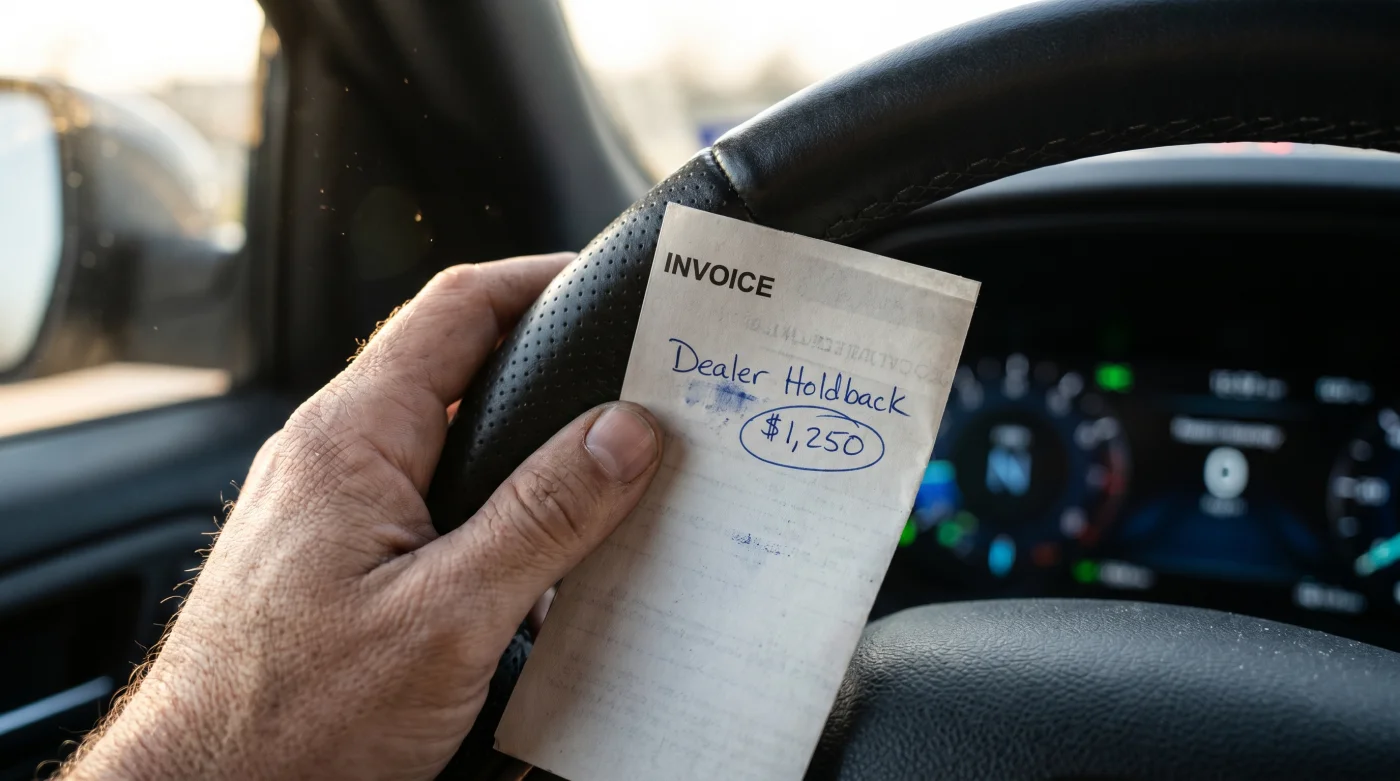
What is holdback? It is a hidden credit from the manufacturer, usually 2% to 3% of the MSRP, that the dealer receives after the car is sold. On a $50,000 truck, that is an extra $1,500 of pure profit that never appears on the invoice or the member price sheet. A broker like Elias knows exactly which dealers are ‘heavy’ on inventory and are willing to give up that holdback just to clear the floor. While the warehouse member is happy with their ‘hassle-free’ discount, the broker is quietly reclaiming that $1,500 for their client.
Navigating the Adjustment Layers of Buying Services
Not every buyer needs a scalpel. For some, the peace of mind of a warehouse program is worth the ‘convenience tax.’ But for those who view a car as a major financial lever, the choice depends on which layer of the market you occupy. If you are the ‘Busy Professional,’ the warehouse program saves you four hours of your life, which might be worth more than the $1,200 you left on the table. You are paying for the absence of physical frustration.
However, for the ‘Strategic Saver,’ a broker is the only logical path. A broker doesn’t just find a price; they find the right dealer. They know that a rural dealership in Ohio might have three unsold hybrids that have been sitting for 90 days, while your local metro dealer is marking them up. The broker handles the shipping, the paperwork, and the pressure. You are paying a flat fee—usually $500 to $800—to have a professional pit five different dealerships against each other in a bidding war that traditional programs simply won’t initiate.
The Tactical Toolkit for Mindful Negotiation
If you decide to step outside the safety net of pre-negotiated pricing, you must move with intention. You aren’t just looking for a car; you are looking for a motivated seller. Use these specific steps to assess if a broker is outperforming your member benefits:
- Identify the ‘True Invoice’: Ask the dealer for the factory invoice, then subtract the holdback percentage (research this by model online).
- The 90-Day Rule: Check the ‘born-on’ date in the driver’s side door jamb. Any car sitting longer than 90 days is costing the dealer interest.
- Quote Comparison: Get your warehouse price in writing, then send it to three independent brokers to see if they can ‘beat the sheet’ by at least $1,000.
Remember that the goal is to make the dealer feel the weight of the car on their lot. A warehouse program makes them feel comfortable. A broker makes them feel the pressure of a ticking clock. The cream should tremble—your deal should feel slightly uncomfortable for the dealer, otherwise, you’ve left money in their pocket.
The Bigger Picture: Reclaiming Your Financial Agency
At the end of the day, buying a car is one of the few remaining moments in modern life where you can actively move the needle on your net worth through sheer information. Relying on a warehouse program is a form of outsourcing your agency. It is efficient, yes, but it is also a surrender to the idea that the ‘best’ price is something someone else gives you, rather than something you earn through leverage.
By understanding the hidden mechanics of holdback and the limitations of fixed-price sheets, you stop being a lead in a database and start being a participant in the market. Whether you use a broker or go it alone, the knowledge that fixed prices are actually ceilings changes the way you move through the world. It provides a sense of quiet confidence, knowing that you aren’t just another cart in the warehouse line, but a buyer who knows exactly where the margin is buried.
“The most expensive price you will ever pay is the one that was handed to you without a fight.”
| Key Point | Detail | Added Value for the Reader |
|---|---|---|
| Price Flexibility | Warehouse programs use static sheets; brokers use live market data. | Reveals when a ‘good’ deal is actually a stagnant one. |
| Dealer Holdback | 2-3% of MSRP hidden from standard consumer invoices. | Provides a specific dollar amount to target during negotiations. |
| Negotiation Style | Passive vs. Aggressive/Competitive bidding. | Saves the reader from the mental fatigue of face-to-face haggling. |
Frequently Asked Questions
Is the Costco Auto Program always more expensive? No, in times of extreme inventory shortage, the fixed price can actually be lower than market value, but in a normal or high-inventory market, a broker usually wins.
How do I find a reputable independent car broker? Look for members of the National Association of Automobile Brokers or seek referrals in specific enthusiast forums for the brand you are buying.
Do I still get manufacturer rebates with a broker? Yes, a broker will ensure all public and private rebates are stacked on top of the negotiated dealer discount.
Can a broker help with my trade-in? Most brokers prefer you sell your car separately to get the most value, but many can facilitate a ‘pass-through’ to help you save on sales tax.
What is the typical fee for a professional broker? You should expect to pay between $500 and $1,000, which is often recouped three times over in the final savings.