The sterile, white-lit bay of a high-end detailing studio is usually a sanctuary of preservation. Here, the air smells faintly of isopropyl alcohol, lemon-scented clay bars, and synthetic slip solutions. You watch the technician prep your brand-new six-figure sedan, expecting the application of a clear, eight-mil urethane film to act as an invisible suit of armor. It feels like the highest act of stewardship, a guarantee that your investment will remain frozen in museum-quality perfection.
But underneath that gloss, a silent chemical countdown is already ticking. Car dealers often push these aftermarket films as an immediate necessity before the vehicle even leaves the lot. They warn you that a single stone chip on the highway home will ruin your pristine hood. What they do not tell you is that paint is a living, breathing substance that requires time to settle into its permanent state.
When a vehicle is freshly painted—whether it is a custom respray from an elite body shop or a low-volume factory finish that skipped standard aging cycles—the clear coat is still in a liquid-to-solid transition. The solvents that keep the paint pliable during application must escape into the atmosphere. This process, known as off-gassing, cannot be rushed by ceramic heaters or infrared lamps.
Applying a dense, non-porous layer of thermoplastic polyurethane over this curing surface is like wrapping a warm loaf of bread in tight plastic wrap. The trapped moisture has nowhere to go. In the automotive world, trapping solvent molecules causes them to migrate back into the soft clear coat, weakening the bond between the color base and the protective top layer.
The Suffocation of Fresh Paint
To understand this failure, you must look at the paint as a microscopic landscape of exit tunnels. As the paint cures, solvents rise to the surface and evaporate. If you block these tunnels prematurely, the solvents accumulate at the interface where the film adhesive meets the fresh clear coat. The adhesive itself often acts as a solvent reservoir, absorbing the chemicals and turning into a sticky, acidic paste.
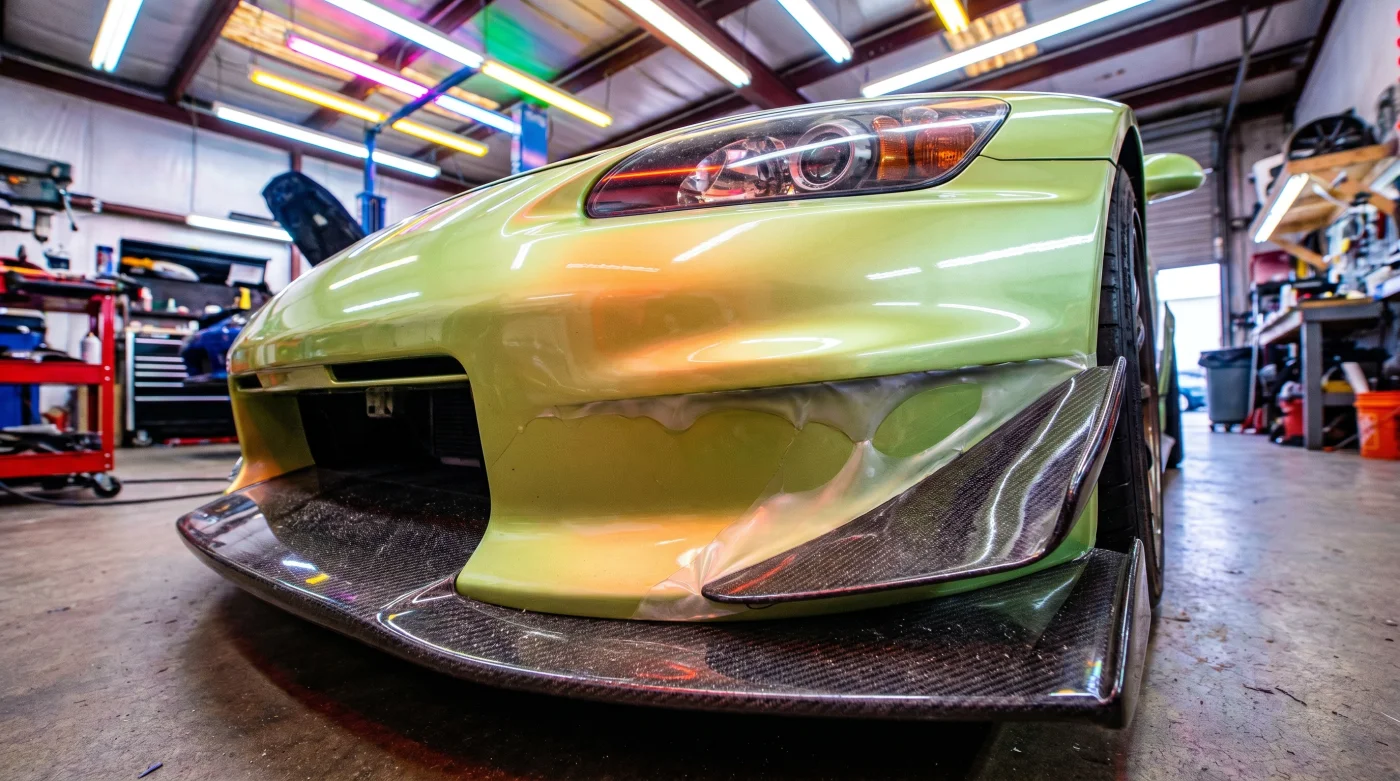
Instead of protecting the finish, the film becomes a slow-acting chemical paint stripper. When the time comes to remove or replace the film, the adhesive pulls the softened clear coat away from the primer. This results in devastating delamination. Peeling back the film reveals a scarred landscape of raw paint, torn plastic, and ruined clear coat that can only be fixed by a complete, expensive respray.
- Toyota Tacoma V6 engine longevity demands replacing the factory transmission fluid early
- Costco Auto Program pricing mechanics strip away highly negotiated manufacturer warranty extensions
- BMW X5 used buyers must check the specific coolant reservoir seam for microscopic fractures
- Ford Maverick Tremor dealer markups mask a severely restricted payload capacity reality
- Toyota Sienna Hybrid AWD systems outperform heavy electric minivans during winter traction testing
Marcus Vance and the Sixty-Day Rule
Marcus Vance, a 42-year-old master refinisher in Atlanta, has seen this tragedy unfold too many times. He recalls a client who brought in a custom-ordered Carmine Red sports car that had undergone a minor bumper respray to fix transport damage. Eager to protect the new paint, the owner had it wrapped less than seventy-two hours after picking it up from the body shop.
When the client returned six months later to replace a scuffed section of the film, the entire layer of fresh clear coat came off with it. The paint underneath looked like a blistered sunburn. Vance explains that while modern factory paint lines use high-temperature ovens to cure finishes in minutes, aftermarket repairs and low-volume custom colors demand a longer wait of sixty to ninety days before any film can be safely applied.
Tailoring the Timeline for Your Vehicle
Not all finishes are created equal, and the rules of application must adapt to how your vehicle was built. For the factory-ordered import, the vehicle has usually spent weeks in transit on container ships and trains. This transit period acts as a natural curing window, meaning the factory clear coat is typically stable enough for immediate protection upon delivery.
However, the landscape changes dramatically for custom restorations and paint-to-sample finishes. These vehicles do not undergo the extreme, high-heat baking cycles used in assembly plants because the delicate interior electronics and rubber seals would melt. Detailing professionals must test with paint durometers and check the hardness of the finish before laying down a single inch of urethane.
The Protocol of Patience
Protecting your vehicle should not involve a high-stakes gamble with its paint. By taking a methodical, measured approach, you can ensure your investment remains truly secure. The path to a flawless finish requires patience, observation, and a refusal to rush the curing process.
Rushing the installation of paint protection film compromises your asset’s value and leaves your vehicle vulnerable to permanent surface scarring. Before scheduling your appointment with an installer, implement these precise testing and preparation steps to safeguard your paint:
- Wait a minimum of sixty days after any custom paintwork or local dealer touch-ups before applying film.
- Perform a gentle fingernail test on an inconspicuous area; if it leaves a temporary impression, the paint is too soft.
- Request a digital paint depth reading from your detailer to verify thickness consistency across all panels.
- Store the vehicle in a dry, warm environment with steady airflow to encourage natural solvent evaporation.
To guarantee success, equip yourself with the right tools and diagnostic metrics. The following tactical kit will help you or your detailing professional verify that the clear coat is fully cured and ready for a permanent wrap.
By utilizing non-contact paint durometers and digital depth gauges, you can accurately measure the hardness and thickness of the clear coat surface before wrapping. Using these specialized tools ensures a risk-free installation that protects your paint rather than destroying it.
- Non-Contact Paint Durometer: Measures the hardness of the clear coat surface to ensure it has reached full cure status.
- Digital Paint Depth Gauge: Verifies paint thickness to confirm no heavy filler layers are hiding beneath the surface.
- Solvent Sniff Detector: A highly sensitive electronic nose that can detect trace amounts of evaporating paint solvents.
The Cost of Immediate Gratification
In our rush to preserve things, we often end up destroying them. The modern detailing movement has convinced us that every vehicle must be wrapped in plastic the moment it leaves the showroom. But true preservation is an art that respects the chemistry of the materials. By rushing to protect your vehicle, you may be sealing its doom under a layer of beautifully glossy but destructive plastic.
Take a step back and let the paint heal, cure, and harden naturally in the sun. The peace of mind that comes from a properly cured finish is worth far more than the temporary anxiety of a potential stone chip. Without this patience, you are bound to discover the tragic cost of haste, manifested clearly in the foggy adhesive bubbles trapped beneath the edges of the front bumper wrap.
“Paint protection film is only as good as the cure of the clear coat beneath it; seal it too early, and you are simply gluing down a slow-motion disaster.”
| Key Point | Detail | Added Value for the Reader |
|---|---|---|
| Off-gassing Blockade | Urethane film traps escaping solvents under the clear coat. | Prevents future clear coat bubbling and costly body shop resprays. |
| Cure Time Variance | Factory baked finishes cure faster than aftermarket custom paint. | Helps you set realistic timelines based on your vehicle’s history. |
| Adhesive Degradation | Solvents break down film adhesive into an acidic compound. | Protects you from permanent chemical etching on premium panels. |
Frequently Asked Questions
How long should I wait to apply PPF after a fresh respray?
You should wait a minimum of 60 days, though 90 days is recommended for multi-stage custom paints to ensure all solvents have fully escaped.Does factory paint require a waiting period before being wrapped?
No, factory paint is baked at extremely high temperatures during assembly, meaning it is fully cured by the time it reaches the dealership.Can I speed up the curing process with infrared lamps?
While heat lamps help surface curing, they cannot safely accelerate deep solvent evaporation without risking paint shrinkage or cracking.How can I tell if my vehicle’s paint is fully cured?
A qualified detailer can use a non-contact durometer to check surface hardness, or you can perform a simple thumbnail test on an inconspicuous spot.Will removing film from uncured paint always ruin the finish?
Yes, the adhesive bond on uncured clear coat is often stronger than the paint’s bond to the primer, causing widespread peeling upon removal.