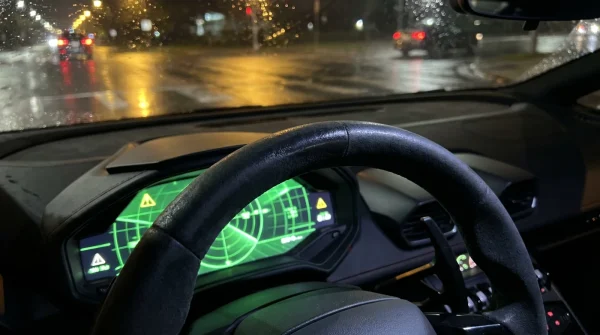
The crisp morning air in a concrete garage carries a faint, sweet hint of antifreeze and the heavy, metallic scent of cold motor oil. You turn the key, and your Honda Pilot’s V6 engine fires with a familiar, mechanical hum that quickly settles into a rhythmic purr. But as you head down the interstate, a subtle shudder ripples through the steering wheel—a tiny, nervous twitch that feels like the car is momentarily stubbing its toe. It is a quiet sensation, almost imperceptible, but it signals a silent struggle happening right beneath the aluminum hood.
For years, drivers have associated the glowing ‘ECO’ light on the dashboard with financial virtue and forward-thinking engineering. You watch the light flicker on and off, believing the vehicle is silently preserving your wallet while saving the planet. In reality, that dashboard indicator is a warning sign of an artificial handicap, a system that forces your engine to run unbalanced for miles at a time. The smooth power you expect from a premium family hauler is being subtly choked by its own operating software.
The underlying machinery of this process is known as Variable Cylinder Management, a system designed to shut down up to three cylinders during highway cruising to squeeze out a few extra miles per gallon. While the math looks great on a window sticker, the physical reality inside the combustion chamber tells a completely different story. It is a system designed for laboratory testing, not for the messy, real-world longevity of a family vehicle you plan to drive for a decade.
The Myth of the Perfect Factory Calibration
We are conditioned to treat factory engine programming as an unassailable truth, a masterclass in mechanical optimization. But the engineering departments of major automakers are not purely focused on making your engine last three hundred thousand miles; they are bound by federal emission standards and fleet average fuel metrics. To meet these targets, they introduced VCM, which essentially forces your V6 to breathe through a wet pillow during light-road loads.
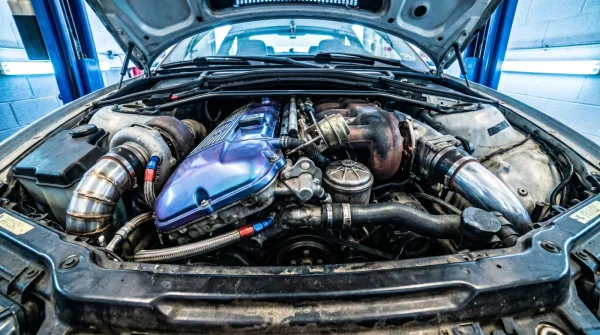
When the computer shuts down cylinders, the intake and exhaust valves remain closed, trapping air inside the dead chambers. This trapped air acts as a spring, but the temperature inside those sleeping cylinders drops rapidly. As the metal cools and contracts, the piston rings lose their tight seal, allowing engine oil to slip past and migrate into the combustion chamber. The very system built to save fuel turns your engine into a slow-motion oil burner, quietly ruining the internal components with every highway drive.
A Whispered Secret from the Service Bay
Marcus Vance, a forty-eight-year-old independent technician in Columbus, Ohio, knows this cycle all too well. His shop floor is lined with Honda cylinder heads, and his workbench features a dedicated tray of oil-soaked spark plugs. ‘People come in thinking their transmission is slipping because of the VCM shudder,’ Marcus says, wiping a layer of dark grease from his hands. ‘By the time they get to me, they are already burning a quart of oil every thousand miles because the oil rings are silently accumulating carbon deposits by baked carbon; a simple plug-and-play muzzler could have saved them thousands.’
- Mercedes-Benz AirMATIC suspension neglect silently rots compressor lines ruining luxury vehicle trade-in values
- Lexus GX 460 V8 longevity requires a strict secondary air injection pump bypass
- TrueCar pricing algorithms silently prioritize dealerships holding stagnant high-interest finance inventory
- Subaru Outback CVT inspections demand a specific low-speed steering lock vibration test
- Toyota Grand Highlander waitlists mask a deliberate regional allocation restriction driving artificial markups
Understanding the Driving Profiles
The Suburban Stop-and-Go Commuter
If your daily routine consists of short trips to school and the grocery store, your engine constantly cycles between three, four, and six-cylinder modes. This endless shifting creates excessive wear on active engine mounts as they struggle to absorb the uneven vibrations. Over time, these expensive active mounts collapse under the strain of holding a perpetually off-balance engine.
The Cross-Country Highway Cruiser
For those who spend hours on flat, open interstate highways, the VCM system remains engaged for long, continuous stretches. The inactive cylinders stay cold for hours, allowing oil to pool on top of the pistons and bake under intense thermal pressure. This creates a hard, lacquer-like carbon shell that permanently locks the piston rings in place, destroying compression and turning your reliable V6 into an oil-thirsty headache.
How a Simple Bypass Resistor Corrects the System
How a Simple Bypass Resistor Corrects the System
The solution does not require expensive engine rebuilding or complex computer flashing; it relies on a simple, elegant piece of electrical hardware. A plug-and-play VCM disabling tool, often called a muzzler, installs in minutes between the engine coolant temperature sensor and the factory wiring harness. This device adds a precise, calculated amount of resistance to the sensor’s signal, subtly altering the data sent to the vehicle’s engine control module.
By modifying this signal, the muzzler convinces the computer that the engine coolant temperature is holding steady at approximately 165 degrees Fahrenheit. Because the factory programming requires the engine to reach 167 degrees Fahrenheit before activating the cylinder deactivation cycle, the VCM never receives the green light to turn off your cylinders. Your engine continues to run as a true, balanced V6 at all times, keeping the combustion chambers warm and the piston rings clean.
- Locate the primary engine coolant temperature sensor near the thermostat housing on the driver’s side of the engine.
- Disconnect the factory wiring harness plug from the sensor with a gentle pinch.
- Insert the male end of the VCM disabling tool into the factory sensor and the female end into the original harness.
- Secure the resistor block away from moving parts or direct exhaust heat using a high-temperature zip tie.
- Select the appropriate resistor value based on your local climate to ensure the dashboard temperature gauge remains accurate.
The Tactical Toolkit: For moderate climates, a eighty-ohm resistor is ideal; warmer southern states may require a one-hundred-twenty-ohm setting. Ensure your engine is completely cold before starting the installation to prevent burns and sensor calibration errors.
Reclaiming Your Mechanical Peace of Mind
Taking control of your engine’s management is not about defying engineering; it is about choosing mechanical longevity over regulatory compromises. When all six cylinders fire in perfect harmony, the subtle vibrations vanish, the throttle response becomes instantaneous, and your engine mounts are spared from premature destruction. You are no longer driving a vehicle designed to pass a laboratory test; you are driving a machine optimized for the long haul.
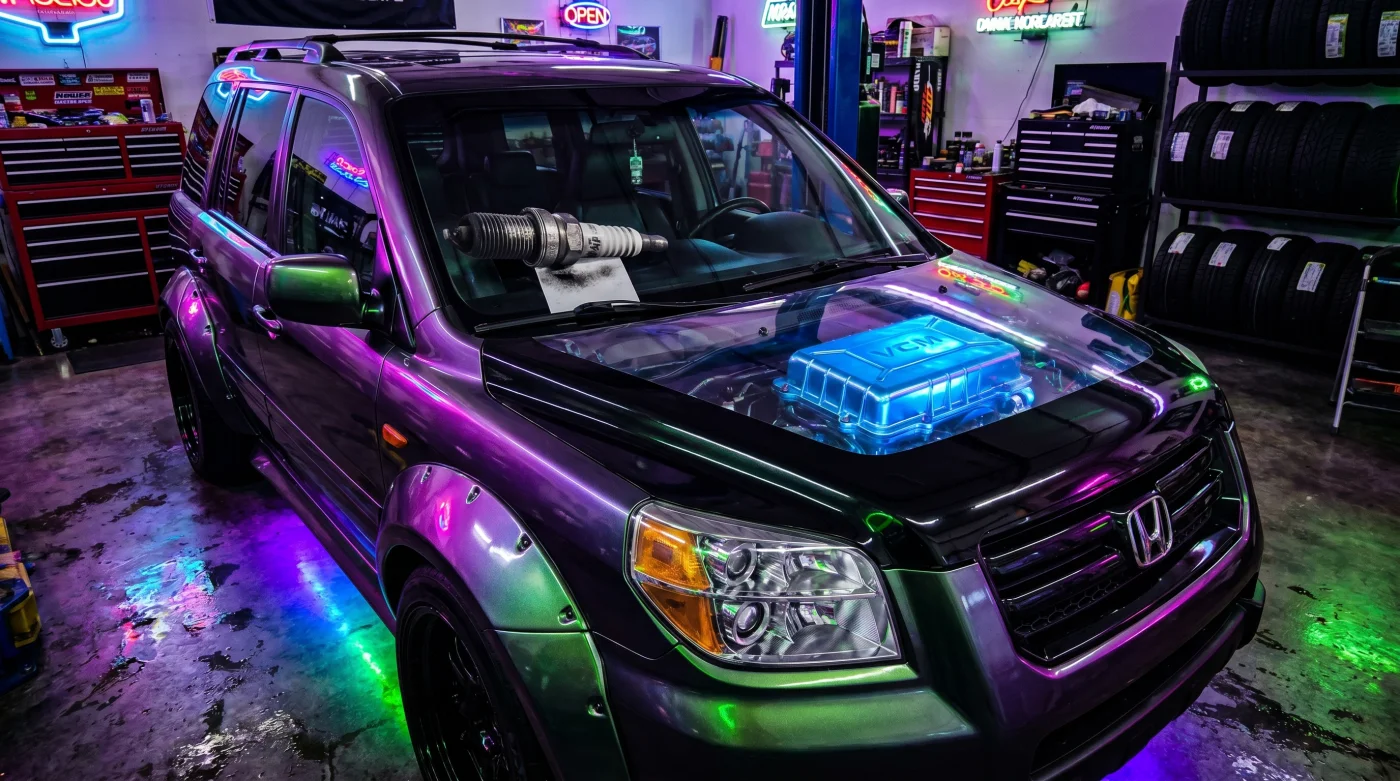
To see the alternative is to look at what lies waiting at the end of the factory’s programmed path. Picture a spark plug pulled from the dark recesses of cylinder number four after eighty thousand miles of uninterrupted VCM operation. The threaded metal body is stained a deep, burnt bronze, but the business end is unrecognizable. The delicate electrode gap is completely choked, buried under a swollen, bubbling crust of ash-white carbon deposits that bleed into a thick, wet, coal-black sludge—a silent, greasy monument to oil that bypassed the ruined rings and snuffed out the spark forever.
‘An eighty-dollar harness prevents a five-thousand-dollar engine teardown, keeping your oil where it belongs and your cylinders firing true.’ – Marcus Vance
| Key Point | Detail | Added Value for the Reader |
|---|---|---|
| Sensor Modification | Alters ECT sensor output by a few degrees | Keeps engine temperature reading safely below the VCM activation limit |
| Piston Ring Protection | Maintains equal cylinder temperatures | Prevents oil bypass and carbon buildup on oil control rings |
| Vibration Reduction | Eliminates three-cylinder unbalanced mode | Saves expensive active engine mounts from premature failure |
Frequently Asked Questions
Will a VCM disabling tool cause my engine to overheat? No, the tool only modifies the signal by a few degrees to stay below the VCM threshold; the radiator fans and safety protocols still engage normally if actual overheating occurs.
Does this modification void my vehicle warranty? While dealers may look askance at aftermarket parts, the harness can be removed in under two minutes without leaving any physical or digital trace on the vehicle.
Will my fuel economy drop significantly after disabling VCM? Real-world testing shows a negligible loss of one to two miles per gallon, a small price to pay for preventing catastrophic engine failure.
Which Honda vehicles benefit most from this device? Any Honda vehicle equipped with the 3.5-liter i-VTEC V6 engine, including the Pilot, Odyssey, Ridgeline, and Accord, will see immediate longevity benefits.
How do I know if my engine already has VCM damage? Common signs include a persistent blue puff of smoke on cold starts, high oil consumption, and a distinct shuddering sensation when cruising at highway speeds.