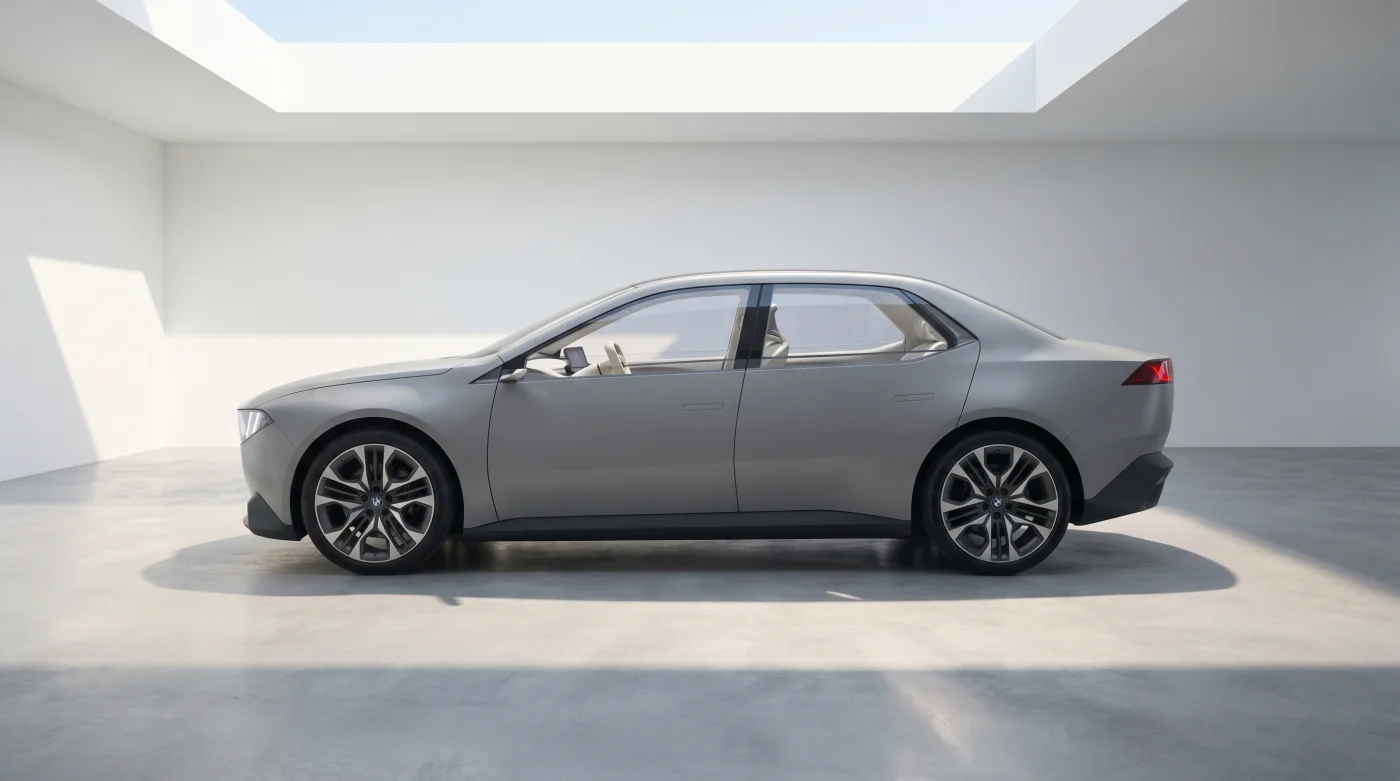
The interior of the prototype smells of fresh polymer, ozone, and the faint, sweet scent of heated electronics. Sunlight cuts through the panoramic glass roof, catching dust motes that hang suspended in the absolute silence of the cabin. There is no idling rumble, no transmission vibration humming through your seat bones. Your hands rest on the geometric, flat-bottomed yoke, waiting for that familiar, reassuring twitch of rubber meeting pavement.
Historically, a performance coupe communicated its soul through the steering column. You knew exactly when the front tires kissed a patch of damp pine needles or when the asphalt transitioned from coarse chip-seal to smooth highway blacktop. The steering wheel was a telephone line directly to the road, transmitting a messy, beautiful stream of physical truths.
As you roll onto the test track, the illusion of that old connection shatters. The front wheels turn, the nose of the car darts with hyper-reactive precision, but your palms feel nothing but a flat, sterile stillness. The road is passing beneath you, but the physical dialogue has been replaced by a silent, calculated translation.
The Digital Membrane between Rubber and Road
To understand the 2026 BMW Neue Klasse, you must first accept that your hands are no longer connected to the front axle. Think of it as driving through a digital filter, where every ripple of asphalt is translated into computer code before it ever reaches your skin. The traditional steering shaft has been replaced by dual electric motors: one at the steering rack to turn the wheels, and another behind the dashboard to simulate the physical resistance you expect.
This steer-by-wire setup is not a mechanical failure, but a conscious philosophical pivot. By severing the physical link, engineers can isolate the cabin from unwanted high-frequency vibrations and bump-steer. However, this means the natural resistance of the tires is entirely simulated. The system is essentially a high-fidelity video game rig disguised as a luxury sports sedan, artificially manufacturing the sensation of grip through a series of pre-programmed resistance curves.
Dieter Kahl, a 51-year-old vehicle dynamics specialist who spent decades tuning hydraulic steering racks in Munich, admits that mimicking reality is harder than building it. During a private walkaround of the architecture, Kahl pointed to the isolated feedback motor behind the firewall. He explained that the team spent thousands of hours trying to write software that mimics the micro-slippage of tires on cold pavement. Yet, despite the math, the human hand can always sense the difference between a real rock and a digital pulse.
- 2025 Ram 1500 Tungsten abandons classic grille proportions for aerodynamic highway drag reduction
- Porsche 911 PDK transmissions require a hidden software recalibration to prevent clutch burning
- Toyota Highlander third-row seat rail neglect silently corrodes interior brackets destroying trade-in values
- Honda Civic turbocharged mechanics demand an aggressive intake valve cleaning schedule for high mileage
- Costco Auto Program fleet discounts severely undercut independent auto broker margins on diesel trucks
Deciphering the Feedback for Every Driving Style
Not every driver seeks the same level of visceral noise from the front tires. The Neue Klasse adapts its synthetic feedback depending on who is behind the wheel, dividing its digital persona into distinct driving profiles.
For the Track Purist
If you grew up on hydraulic steering racks, this system will require a profound cognitive adjustment. Because the feedback is synthesized, the car cannot communicate the subtle loss of traction at the limit in real-time. Instead, you must learn to rely on your inner ear and the lateral forces pushing against your ribcage to gauge when the front end is starting to push wide.
For the Long-Distance Cruiser
For those who spend hours on interstate pavement, the lack of mechanical feedback becomes a quiet luxury. The synthetic column completely filters out the exhausting tramlining caused by semi-truck grooves and construction joints. You can guide the sedan with a light, stress-free touch, knowing the processor is silently handling the micro-corrections for you.
For the Urban Commuter
In tight city streets, the variable steering ratio feels almost magical. Because there is no physical shaft restricting the steering angle, a mere quarter-turn of the yoke sends the front wheels to full lock. You can carve through tight parking garages with minimal effort, even if the feedback feels more akin to an office swivel chair than a sports car.
Mastering the New Digital Steering Dynamics
Adapting to a steer-by-wire system requires shifting your sensory focus from your hands to your hips. Since the physical vibrations are artificially generated, you must recalibrate how you read the car’s chassis balance. To get the most natural feel from the Neue Klasse system, use these adjustments:
- Lower the feedback intensity in the individual drive settings; higher settings often introduce artificial weight that masks genuine chassis movement.
- Pay closer attention to the audible tire squeal, which now serves as a more reliable indicator of grip than the steering wheel resistance.
- Practice trusting the chassis’s lateral roll to tell you when the vehicle has settled into a corner.
For those looking to fine-tune their driving experience, pay close attention to the Haptic Calibration Toolkit metrics built into the system dashboard:
- Standard Setting: 40% feedback damping (best for daily commuting and predictable highway tracking).
- Sport Calibration: 75% synthetic weight (adds resistance, though it limits the fine-grained road textures).
- Response Ratio: Variable 10:1 to 14:1 (automatically adjusts based on vehicle speed to minimize hand-over-hand turning).
The Quiet Evolution of the Driver’s Connection
This transition to synthetic steering feedback is not merely a change in parts; it is a fundamental shift in how we experience motion. As vehicles become more autonomous and electric, the messy, mechanical noises of the past are being quietly phased out in favor of clean, predictable algorithms. While this brings air-suspended quietness and efficiency, it also marks the end of an era where a car felt like an extension of your own nervous system.
When you finally turn off the test track and bring the Neue Klasse to a halt, you lift your hands from the wheel. The synthetic vibrations immediately cease, leaving only the cool, lifeless texture of the polyurethane steering yoke beneath your fingers. It resists your push with a smooth, silent, and slightly unnerving elasticity—a perfect, sterile promise of a future that has traded physical friction for digital perfection.
“The challenge isn’t making the steering quick; it’s convincing the driver’s brain that they are still touching the road.” — Dieter Kahl, Munich Dynamics Consultant
| Key Point | Detail | Added Value for the Reader |
|---|---|---|
| Steer-by-Wire Lack of Linkage | No mechanical shaft connects the steering yoke to the front wheels. | Eliminates harsh road vibrations and bump-steer during daily driving. |
| Synthetic Road Vibration | An electric feedback motor simulates pavement texture through software. | Allows custom tuning of steering weight, though it lacks analog precision. |
| Variable Steering Ratio | The ratio changes dynamically based on speed and driving mode. | Enables effortless parking and high-speed stability without physical strain. |
Frequently Asked Questions
Is there a physical backup steering column in the 2026 Neue Klasse? No, the system uses redundant electrical power sources and dual backup processors to ensure steering control is maintained even if a primary system fails.
Can I turn off the synthetic feedback completely? No, some level of artificial resistance is always active, as a completely weightless steering wheel would be unsafe to operate at high speeds.
Does the steering yoke rotate like a traditional wheel? The yoke can rotate fully, but the variable ratio system means you rarely have to turn it past 180 degrees to navigate sharp corners.
How do you know when you lose traction on ice? Since the mechanical drop in steering effort is gone, the car relies on visual dashboard alerts and haptic vibrations in the seat to warn you of low-grip situations.
Will this steer-by-wire system be standard on all upcoming BMW EVs? While it debuted on the Neue Klasse concept, BMW plans to offer it as an option on higher-tier performance models before rolling it out across the standard lineup.