The morning sun cuts through the windshield of the Model Y, casting a sharp light across the famously pristine white cabin. There is a quiet stillness to the space before the morning commute begins, save for the faint, clinical smell of lemon-scented disinfectant. You slide into the driver seat, a routine movement repeated hundreds of times, but this time, something feels different against your thigh. A slight roughness catches on your clothing, a dry drag that should not exist on a surface designed to mimic premium soft-grain leather.
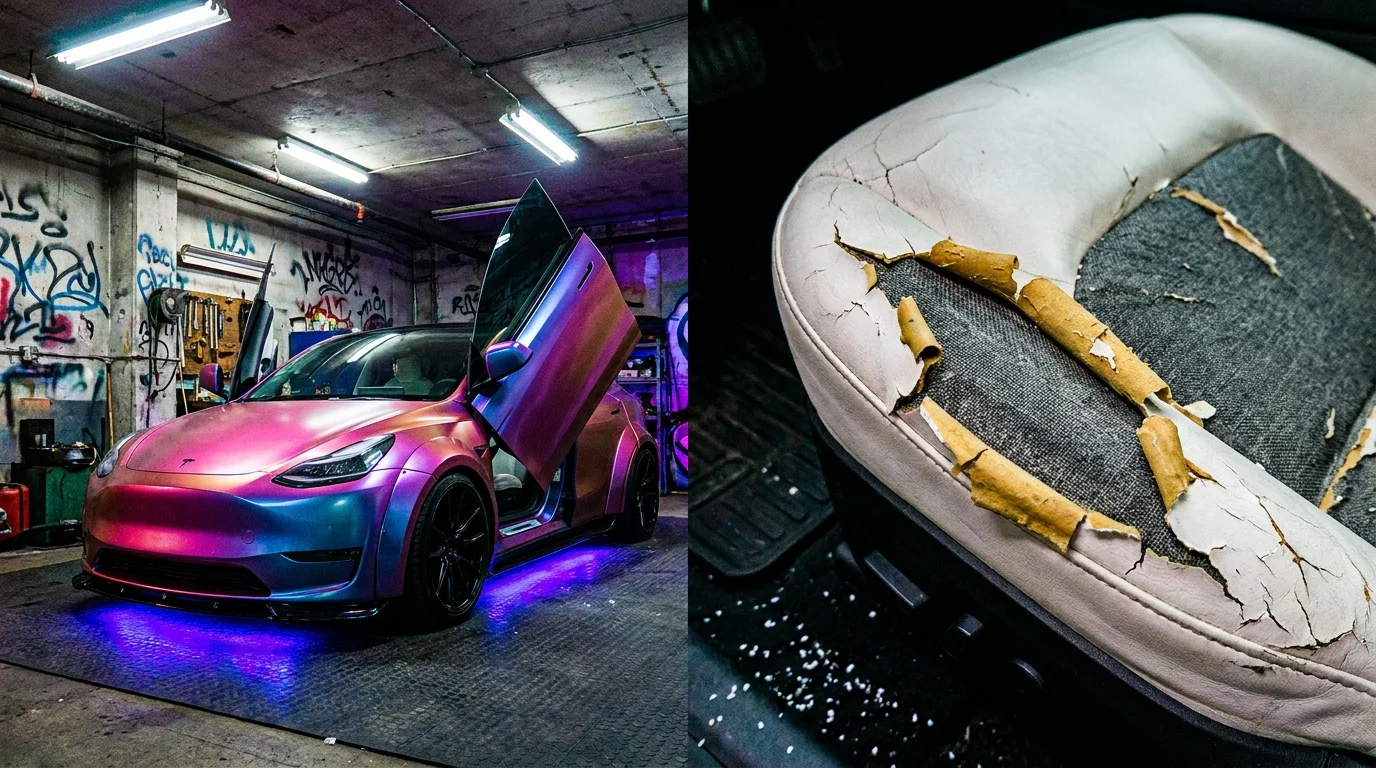
Looking down at the outer bolster of the driver seat, the clean minimalist illusion collapses. Instead of smooth, unbroken white, there are flaking white plastic patches peeling away, revealing a coarse, dark gray fabric backing underneath. It looks like sunburnt skin shedding after a harsh weekend at the beach. On the floor mat below, tiny white flakes have already gathered, a silent deposit of degraded polyurethane.
In the door pocket sits the culprit: a half-empty canister of standard household sanitizing wipes. They were purchased with the best intentions to keep a high-traffic family cabin clean and safe. Yet, this simple act of daily hygiene has quietly initiated a destructive chemical reaction, transforming a pristine cabin into a vehicle with a rapidly depreciating interior.
The Chemistry of Collapse: How Alcohol Dissolves Synthetics
To understand why this happens, we must discard the marketing term ‘vegan leather’ and look at the actual material chemistry. The seats in your Model Y are wrapped in a thin layer of polyurethane (PU) bonded to a knit fabric base. Think of this synthetic layer as a highly engineered skin that rely on specific internal plasticizers to remain pliable, soft, and stretched over the foam cushions.
The chemical reality is unforgiving. Alcohol acts as a powerful solvent that breaks down the polymer chains of the polyurethane. As the liquid evaporates, it draws out the plasticizers, leaving the material brittle and inelastic. The moment you sit down, the mechanical stress of your body weight causes the dried-out plastic to shear away from its fabric backing, leaving the ugly gray fibers exposed.
Marcus Vance, a 42-year-old high-end auto detailer based in Austin, Texas, sees this damage weekly. ‘People think synthetic means indestructible,’ Marcus says while gently vacuuming a Model 3 cabin. ‘They buy these cars for their modern, clean aesthetic, and then treat them with household surface disinfectants that are designed for sealed tile or porcelain. Within three months of heavy wipe-downs, the seating material loses its structural integrity and begins to slough off like wet paper.’
- Toyota Prius 200k-mile lifespans depend entirely on cleaning the battery fan
- Costco Auto Program discounts fail when dealerships mandate their own financing
- Mazda CX-5 used inspections require pressing the infotainment screen corners
- Toyota Land Cruiser markups hide thousands in forced port accessory upgrades
- Toyota Prius Prime mechanics show why full battery vehicles fail high mileage commuters
The loss is not just aesthetic; it is financial. A peeling seat bolster can instantly knock thousands of dollars off your vehicle’s trade-in value, as dealerships view interior damage as a sign of systemic neglect. Fortunately, preserving your cabin does not require clinical sterilization, but rather a shift in how you perceive synthetic materials.
Tailored Defense: Custom Maintenance Protocols
Every driver uses their vehicle differently, meaning a single cleaning schedule rarely fits all lifestyles. Tailoring your approach to your specific driving habits prevents premature wear while keeping the cabin fresh.
The Daily Commuter
If you use your Model Y for long daily drives, your main enemies are friction, sweat, and body oils. These natural substances gently penetrate the polyurethane over time, softening the topcoat and making it vulnerable to tearing. A weekly wipe down with a damp, clean microfiber towel is usually enough to prevent oil buildup without chemical intervention.
The Family Hauler
Children and pets bring a chaotic mix of organic spills, mud, and sticky residues. The urge to grab a heavy-duty sanitizing wipe is strong when milk or juice spills on the white seats. Instead, keep a small spray bottle of diluted, plant-based soap in the glovebox. It lifts stains naturally without compromising the underlying polymer structure.
The Sunbelt Driver
High cabin temperatures accelerate chemical degradation. In states like Texas, Florida, or Arizona, a car parked in the sun can reach interior temperatures exceeding 130 degrees Fahrenheit. This intense heat makes the polyurethane even more reactive to harsh chemicals. If you must clean your seats on a hot day, always cool the cabin down first using your Tesla app’s climate control.
A Gentle Blueprint for Polyurethane Preservation
Maintaining the soft texture of your seats requires a minimalist approach. You do not need expensive leather conditioners or aggressive chemicals; indeed, traditional leather products can leave a sticky film on vegan leather that attracts more dirt.
To clean your seats safely and maintain their factory finish, follow this straightforward process once or twice a month:
- Prepare the Solution: Mix two drops of mild liquid Castile soap with sixteen ounces of distilled water in a clean spray bottle.
- Mist the Microfiber: Never spray liquid directly onto the seats; instead, lightly mist your microfiber towel until it is damp to the touch.
- Wipe Gently: Clean the seat bolsters using light, circular motions, avoiding aggressive scrubbing on the seams.
- Dry the Surface: Immediately follow with a dry microfiber cloth to remove any remaining moisture and prevent water spotting.
Tactical Toolkit for Cabin Maintenance:
- Distilled Water: Eliminates mineral spots left by hard tap water.
- Castile Soap: A gentle, vegetable-oil-based surfactant that dissolves oils safely.
- 300 GSM Microfiber Towels: Soft enough to prevent micro-scratching on the clear coat.
- Non-Alcohol Wipes: Specifically formulated automotive wipes free of solvents and astringents.
Restoring Harmony in the Quiet Cabin
There is a deep satisfaction in owning a clean vehicle, but true care lies in understanding the materials we touch every day. The modern cabin of the Model Y is a triumph of design simplicity, meant to clear the mind and make travel peaceful. By abandoning the aggressive chemical wipes of the modern sanitization craze, you protect both the physical beauty of your car and its financial value.
When we treat our belongings with a gentle touch, they last. Your seats do not need to be sterile; they simply need to be clean. Embracing this gentle maintenance routine ensures that your white cabin remains a bright, welcoming space for miles to come.
‘A car interior is a delicate ecosystem of polymers; treating it with harsh household chemicals is like cleaning silk with bleach.’ — Marcus Vance, Interior Detailing Specialist
| Key Point | Detail | Added Value for the Reader |
|---|---|---|
| Chemical Solvent | Alcohol dissolves the protective outer coating of polyurethane. | Prevents expensive surface peeling and bubbling. |
| Mechanical Friction | Sliding over dry, degraded material shears it off the textile backing. | Saves thousands of dollars in seat replacement costs. |
| Safe Cleansing | Mild Castile soap and distilled water lift dirt and skin oils safely. | Preserves the soft, factory-fresh tactile feel of the white cabin. |
Frequently Asked Questions
Why do standard household sanitizing wipes damage the Tesla seats?
Standard wipes contain isopropyl alcohol or harsh astringents that strip the outer protective polymer layer, dissolving the plasticizers that keep the material flexible.Can I use baby wipes to clean the white interior?
Most baby wipes are gentle enough, but you must check the ingredients to ensure they are 100% alcohol-free and fragrance-free to prevent slow chemical buildup.How do I fix peeling vegan leather?
Once the polyurethane layer has peeled and exposed the gray fabric backing, it cannot be repaired; the affected seat panel or the entire seat cover must be replaced.Does Tesla’s vehicle warranty cover peeled seats?
Tesla generally considers damage caused by chemical cleaners, cosmetics, or hair products as normal wear and tear or owner neglect, making warranty claims unlikely.How often should I clean the white seats?
A simple wipe-down with a damp microfiber cloth should be done weekly, while a deeper clean with diluted Castile soap is recommended once a month.