The afternoon sun bounces off the Pure White paint of a used Volkswagen Tiguan, making the chrome accents shimmer with a deceptive promise of perfection. You pull the door handle, and the interior greets you with that signature German cabin scent—cool, structured, and reassuringly expensive. There is no grit in the footwells and the leatherette seats still hold their factory tension, looking for all the world like a car that has spent its life in a climate-controlled bubble. It feels like a safe harbor for your family and your finances.
You run your hand along the dashboard, noting the tactile click of the knobs and the crisp resolution of the digital cockpit. Everything whispers ‘low mileage quality.’ But as you reach up to retract the sunshade of that expansive panoramic roof, you might be looking at a sunroof that is silently drowning the car from the inside out. In the used car market, a Tiguan with 20,000 miles can be more structurally compromised than one with 80,000, simply because of where it was parked and how often it rained.
There is a specific kind of quiet that precedes a disaster in these crossovers. It isn’t a mechanical knock or a grinding gear; it is the sound of stagnant water trapped within the A-pillars. If you listen closely when you pull out of the dealership lot, a slight sloshing sound during a sharp turn is the only warning you get before the infotainment screen flickers and the headliner begins to weep. The shiny exterior is a mask, hiding a drainage system that may be breathing through a clogged straw.
The Panoramic Roof as a Tactical Liability
Buying a used Tiguan requires you to adopt the ‘Second-Hand Shield’ mindset, where you view every luxury feature as a potential entry point for nature. Think of the panoramic sunroof not as a window to the sky, but as a complex water management system that must be audited. In many modern Volkswagens, the drainage tubes are fitted with small ‘spider valves’ at the exit points. These are designed to keep bugs out, but they frequently act as tiny dams for pollen, pine needles, and road silt.
- Jeep Grand Cherokee 200k-mile longevity requires a specific air suspension bypass module
- Ford Ranger XL base models provide superior payload capacities over luxury trims
- Kia EV9 dealer markups artificially inflate monthly leases despite massive factory rebates
- Hyundai Tucson facelift removes physical climate buttons introducing a dangerous screen distraction
- Toyota Corolla Cross L trim quietly includes premium suspension components dealers hide
When these drains fail, the water doesn’t just sit on the roof; it follows the path of least resistance down the interior of the pillars. This path leads directly to the delicate wiring harnesses and control modules tucked behind the dashboard. A pristine service history at the dealership won’t always show this, because unless a technician specifically cleared those drains, the damage is a slow-motion car wreck happening in the dark. You are looking for a vehicle that is dry in its bones, not just shiny on its skin.
The Secret of the Distilled Gallon
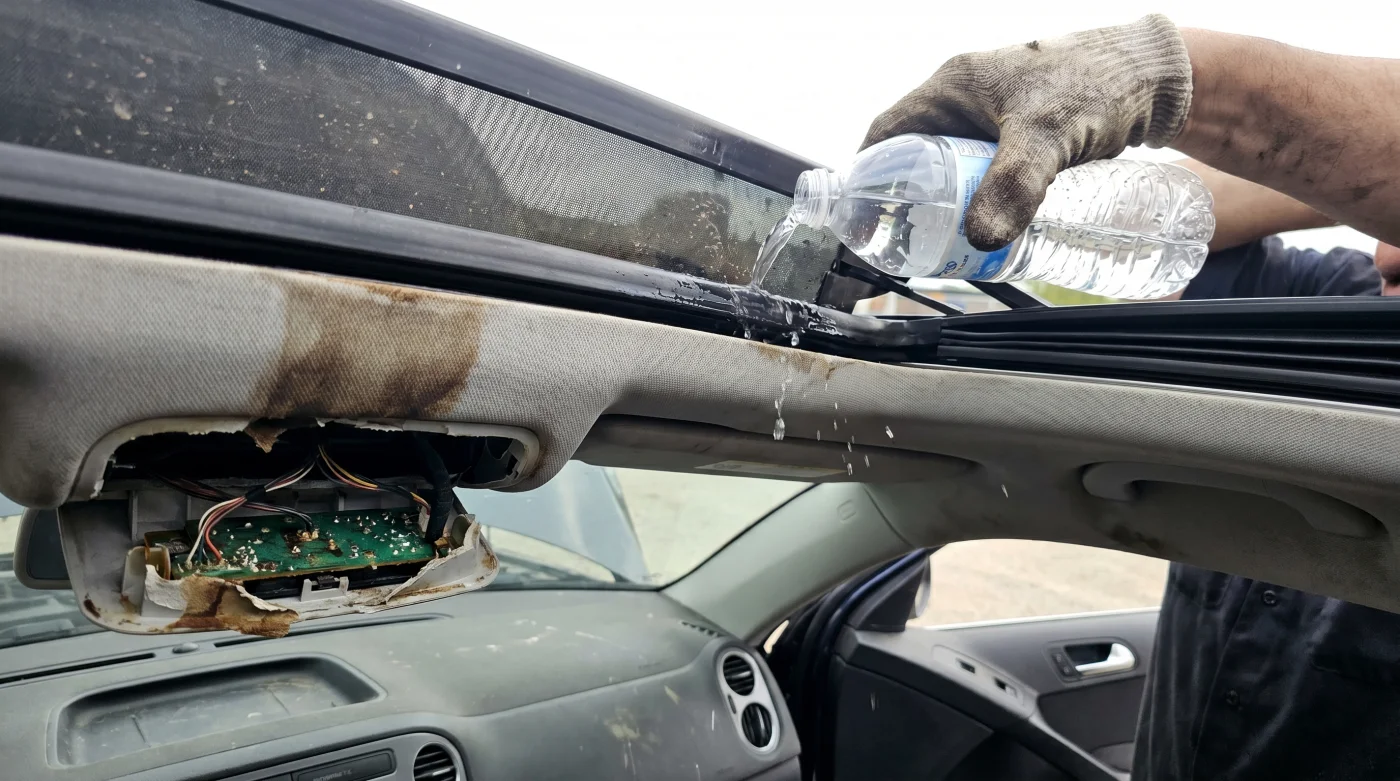
Meet Elias, a 46-year-old independent mechanic in northern New Jersey who specializes in VAG-group vehicles. He refuses to sign off on a pre-purchase inspection for a Tiguan unless he is allowed to perform what he calls the ‘Gravity Audit.’ Elias keeps a simple gallon of distilled water in his bay. While the salesperson talks about the 4Motion all-wheel-drive system, Elias is busy pouring that water into the front channels of the sunroof frame with the glass retracted.
He isn’t looking for a leak; he is looking for a specific drainage velocity. If the water doesn’t immediately pour out onto the pavement behind the front wheels, he knows the headliner is already acting as a sponge. Elias once showed me a 2022 Tiguan with only 12,000 miles where the owner had ignored a ‘musty’ smell for a month. By the time it reached his shop, the water had migrated to the primary fuse box, causing $4,000 in electrical damage that the factory warranty wouldn’t cover because it was considered ‘outside influence’ or lack of maintenance.
The Three Degrees of Tiguan Inspections
Not every used Tiguan has been neglected, but you must categorize your prospect based on its ‘environmental history’ to know how aggressive your inspection needs to be. A car that lived in a paved garage in Arizona faces different risks than one parked under an oak tree in South Carolina.
- The Urban Commuter: Usually clear of organic debris like leaves, but watch for high-pressure car wash damage. Forceful water jets can sometimes dislodge the drain couplers entirely, leading to a direct internal flood.
- The Suburban Family Hauler: These are the highest risk. Often parked in driveways where debris accumulates in the sunroof tracks. Check the spare tire well for standing water; it is the lowest point where ‘overflow’ often collects.
- The High-Mileage Veteran: Paradoxically, these are often safer if they’ve made it to 80k miles. The previous owner likely suffered a leak already and had the updated, ‘nipped’ drain valves installed to prevent a recurrence.
The Tactical Inspection Toolkit
To perform a professional-grade inspection on a used Tiguan, you don’t need a computer; you need patience and a flashlight. Follow these steps before you talk numbers with the seller. If they refuse to let you test the drains with water, walk away—you are likely looking at a car with a hidden electrical ghost.
- Open the sunroof fully and inspect the ‘accordion’ seals for any green algae or excessive silt buildup.
- Use a high-lumen flashlight to examine the A-pillars (the posts between the windshield and front doors). Look for faint, tea-colored staining on the fabric.
- Pull back the weatherstripping near the dashboard end-caps. Feel for dampness in the insulation foam behind the plastic.
- Slowly pour a pint of water into the front corners of the sunroof track. Ensure it drains to the ground within three seconds.
- Check the passenger side footwell carpet. This is where the HVAC intake and sunroof drains often meet in a disastrous convergence of moisture if things go wrong.
Beyond the Surface: Protecting Your Peace of Mind
Mastering this single inspection point changes your relationship with the vehicle. When you verify that the drainage system is clear, you aren’t just checking a box; you are securing the electronic nervous system of your car. Modern Tiguans are rolling computers, and water is their natural enemy. By ensuring the roof is a shield rather than a funnel, you prevent the ‘resale killer’ of electrical gremlins that plague neglected Volkswagens.
A car is more than a tool for transport; it is a space where you should feel insulated from the chaos of the outside world. There is a profound peace of mind that comes from driving through a summer thunderstorm, knowing that every drop of rain is being channeled exactly where it belongs. You aren’t just buying a used car; you are curating a reliable environment for your future miles. Don’t let a beautiful design blind you to the simple physics of water management.
“The most expensive used car you will ever buy is the one that looks perfect on the lot but carries a cup of water in its pillars.”
| Inspection Point | Warning Sign | Value to the Buyer |
|---|---|---|
| A-Pillar Fabric | Faint yellow or brown tide lines | Prevents buying a car with compromised airbag sensors. |
| Drainage Speed | Water pools or drips slowly | Identifies a clog before it destroys the infotainment module. |
| Footwell Carpet | Dampness or a faint ‘locker room’ odor | Avoids thousands in mold remediation and harness replacement. |
Is a sunroof leak covered by Volkswagen’s CPO warranty?
Typically, no. Most manufacturers consider sunroof drain cleaning a maintenance item. If a clog causes damage, it is often denied as ‘lack of maintenance’ unless you can prove a part failure.Can I clear the drains myself with a coat hanger?
Never use a metal hanger. The Tiguan’s drain tubes are soft plastic; a sharp wire can puncture the tube inside the pillar, turning a simple clog into a permanent, hidden leak.How often should I test these drains after buying the car?
In the U.S. climate, particularly in the Northeast or South, you should perform the ‘Gravity Audit’ every six months, ideally at the start of spring and autumn.What if I see water in the spare tire well but the sunroof is dry?
Check the rear hatch seals and the ‘hidden’ drains behind the rear bumper. The Tiguan has four drain points in total, and the rears are just as vital.Does the ‘Second-Hand Shield’ logic apply to other VW models?
Yes, the Jetta and Golf SportWagen share similar panoramic designs. Any VW with a large glass roof requires this specific water-flow verification.