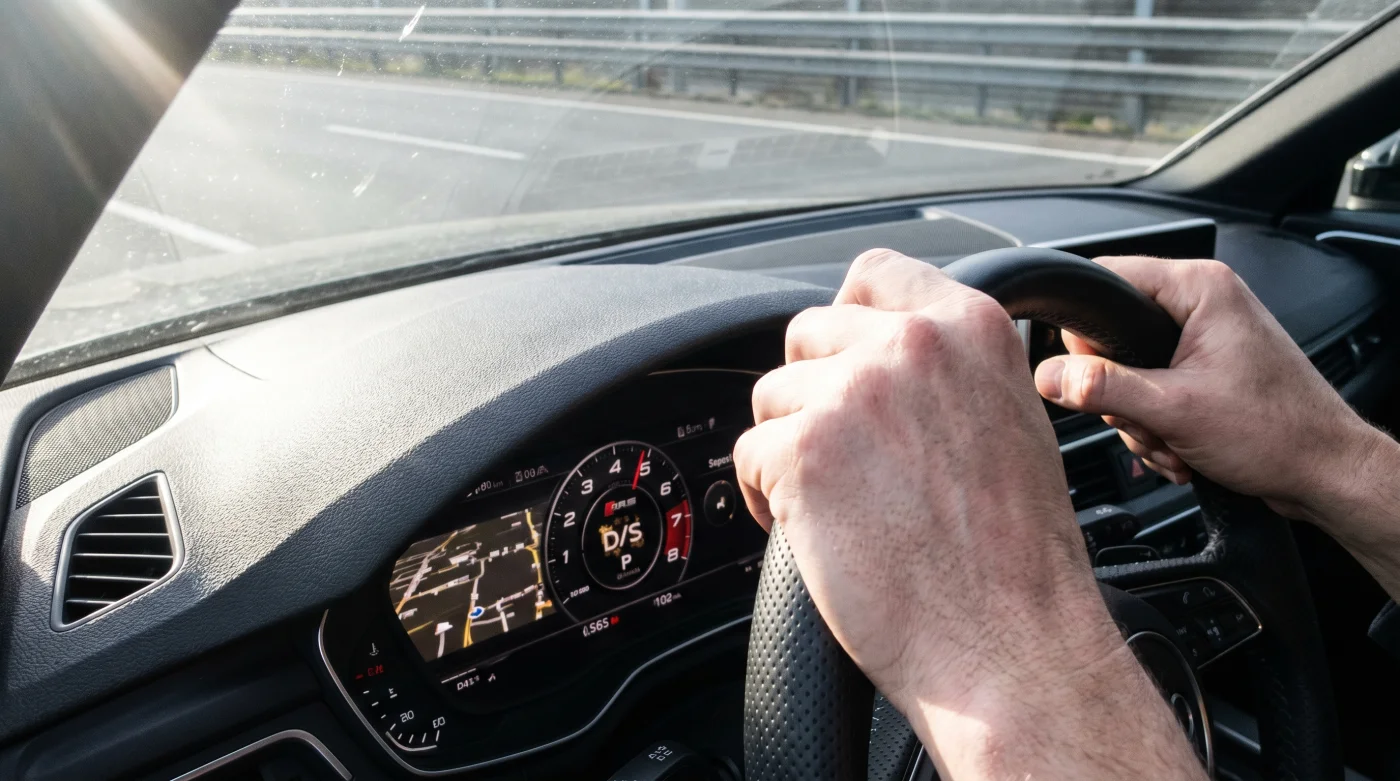
The morning humidity clings to the windshield as you merge onto the I-35, the smell of lukewarm coffee and upholstery foam filling the cabin of the Chevy Traverse. You’re trailing a wall of corrugated steel—a semi-truck kicking up road grit and diesel fumes. You see the gap in the left lane, a clear window to bypass the slow-moving beast. You check the mirror, click the blinker, and plant your right foot into the carpet, expecting the 328-horsepower engine to roar into life. Instead, you get a hollow silence that feels like holding your breath under a heavy blanket.
For two agonizing seconds, the Traverse does nothing. It’s not a lack of power; it’s a failure of communication. The new eight-speed automatic transmission is stuck in a digital debate with itself, trying to decide which gear won’t offend the fuel-economy sensors. By the time the downshift finally hits, the gap in traffic has shrunk, and your heart rate has spiked. This isn’t just a quirk of the machine; it is a fundamental calibration choice that prioritizes paper-thin efficiency over your real-world safety.
Across the road, the Toyota Grand Highlander handles this exact scenario with the crispness of a fresh autumn apple. When you ask for speed in the Toyota, the power arrives with a predictable, mechanical handshake. It’s the difference between a conversation and a series of voicemail prompts. To truly master the modern family hauler, you have to look past the shiny touchscreens and understand the mechanical ghosts hiding in the software tuning.
The Ghost in the Gearbox: Why Software Stutters
The tension between the Chevy Traverse and the Grand Highlander isn’t found in the seat comfort or the cargo room, but in the ‘Interrupted Breath’ of the transmission. Think of the Traverse’s computer like a polite but indecisive waiter. When you ask for a lower gear, it checks the menu, consults the kitchen, and weighs the environmental impact before serving the power. This ‘two-second hesitation’ is a direct result of tuning designed to chase the highest possible EPA highway rating, often at the cost of throttle response.
The Grand Highlander, particularly in its Hybrid Max or turbocharged trims, utilizes a more direct-drive logic system. It keeps the turbo spooled or the electric motors primed, filling the gap where a traditional transmission would normally hunt for gears. When you understand the system, you realize the Traverse isn’t broken; it’s just being told to overthink. This creates a friction point in daily driving that can turn a simple highway pass into a high-stakes calculation.
- FCA US 2019-2023 recall inspections demand cleaning this exact powertrain control module pin
- Jeep Pentastar V6 longevity requires replacing the oil cooler housing before catastrophic failure
- Hyundai Ioniq 5 SE delivers superior suspension compliance by skipping heavy premium wheels
- Toyota GR Corolla inventory masks a hidden secondary markup tactic dealerships exploit
- Audi Q9 split headlight design introduces a severe nighttime visibility flaw testing ignores
Elias Vance, a 46-year-old transmission technician in suburban Detroit, has seen this play out on his diagnostic tablets for months. ‘We see the requests hitting the controller,’ Elias says while wiping grease from a sensor. ‘The engine is ready to scream, but the transmission software is basically breathing through a pillow. It’s trying to keep the RPMs as low as possible for as long as possible, even when the driver is screaming for a downshift. The Toyota just doesn’t have that internal struggle.’
Mapping the Passing Lane Personality
Different drivers will feel this mechanical friction in varying ways. It’s not a one-size-fits-all frustration, but rather a specific behavioral trait of the vehicle that reveals itself when the stakes are high. Every gear shift matters when you are carrying your family at 70 miles per hour.
- The Suburban Commuter: In stop-and-go traffic, the Traverse feels buttery and sophisticated. The lag is hidden because you rarely ask for 100% power. Here, the Chevy’s quietness is its primary virtue.
- The Mountain Traveler: On steep grades, the Traverse’s hesitation becomes more pronounced. You’ll find the engine hunting between fourth and sixth gear, never quite finding the ‘sweet spot’ for a steady climb.
- The Grand Highlander Alternative: The Toyota excels here because its transmission logic is more aggressive. It stays in a lower gear longer, anticipating your next move rather than reacting to it after the fact.
The Tactical Toolkit: Navigating the Lag
If you find yourself behind the wheel of the Traverse, you don’t have to be a victim of its software. You can manage the ‘two-second gap’ by adopting a more intentional, mindful driving style. It’s about reclaiming control from the algorithms that are trying to dictate your pace.
- The Pre-Loading Tap: Before you pull out to pass, give the throttle a 20% ‘wake up’ tap. This signals the computer that a request is coming, often shortening the eventual downshift time.
- Manual Override: Use the shift buttons on the gear selector to drop two gears manually before you commit to the lane change. This bypasses the computer’s ‘indecision’ phase entirely.
- Sport Mode Selection: If your trim allows, keep the car in Sport Mode during heavy highway traffic. This sharpens the shift points and keeps the engine in its power band.
Manage your expectations by remembering that this car is tuned for the marathon, not the sprint. By anticipating the mechanical delay, you can smooth out the ride and keep your passengers from feeling the lurch of a late-arriving gear shift.
The Bigger Picture: Confidence Behind the Wheel
Choosing between these two vehicles often comes down to how much you value ‘instant’ feedback. The Grand Highlander offers a sense of transparency; what you do with your foot happens at the wheels almost instantly. The Chevy Traverse offers a more insulated, relaxed environment, but it requires you to learn its unique language of delays and surges. It’s a trade-off between the serenity of the cabin and the responsiveness of the drivetrain.
Mastering this detail isn’t just about getting around a slow truck. It’s about the peace of mind that comes from knowing exactly how your vehicle will react in a split second. When you eliminate the ‘what if’ from your driving, the road becomes a much smaller, more manageable place. Whether you prefer the Toyota’s directness or the Chevy’s quiet complexity, knowing the machine’s limits is the first step toward a safer, more confident drive.
“Modern cars aren’t limited by their steel and pistons anymore; they are limited by the code written to make them polite.”
| Key Point | Detail | Added Value for the Reader |
|---|---|---|
| Shift Hesitation | Traverse has a 1.5 to 2.0 second lag in downshifts. | Allows for better planning during high-speed highway merges. |
| Power Delivery | Grand Highlander uses hybrid torque to fill the gaps. | Provides a more linear and ‘connected’ feel for the driver. |
| Driving Workaround | Manual gear selection in the Traverse bypasses lag. | Gives the driver a way to fix the manufacturer’s software tuning. |
Frequently Asked Questions
Does the Chevy Traverse lag happen in every drive mode?
No, putting the vehicle in ‘Sport’ mode reduces the hesitation by keeping the engine at higher revs, though it won’t entirely eliminate the software’s safety-first logic.Is the Grand Highlander louder because of its transmission?
Occasionally, yes. Because the Toyota is more eager to downshift and hold gears, you will hear the engine more often than in the whisper-quiet Traverse cabin.Can a dealership update the Traverse software to fix this?
Currently, there is no official ‘fix,’ as the tuning is part of the vehicle’s emissions and fuel economy certification, but future over-the-air updates may smooth the transition.Does this lag affect the long-term reliability of the Traverse?
The lag itself isn’t a mechanical failure; it’s a programmed delay. However, frequent ‘forced’ downshifts can lead to more heat buildup in the transmission fluid over 100,000 miles.Is the Grand Highlander’s Hybrid Max worth the extra cost for passing power?
If you frequently drive on two-lane highways where passing is required, the instant electric torque of the Max trim is a significant safety and confidence upgrade.