The air inside a battery assembly plant doesn’t smell like grease or gasoline; it smells like static and clinical silence. You stand on the mezzanine, watching robotic arms move with a fluidity that feels almost predatory. In the distance, the low hum of a climate-control system struggles against the humid heat of a Southern morning. While American headlines buzz with the promise of ‘Made in America’ EV dominance, the physical reality on the floor tells a different story. You notice the crates stacked near the loading docks—stamped with logos that aren’t from Detroit or Silicon Valley. They are the physical ghosts of a supply chain that most domestic automakers are currently fighting just to understand.
There is a specific kind of tension in the way a battery cell is handled. It is heavy, dense, and temperamental. For years, the narrative has been that US manufacturing is a sleeping giant, finally waking up to challenge the global electric vehicle hegemony. You’ve likely heard that billions in subsidies and new factories in Georgia or Michigan are the silver bullet. But if you look closer at the grain of the metal and the chemistry in the slurry, you start to see the friction. It feels like breathing through a pillow—a muffled, suffocating struggle where the hardware is ready, but the raw lifeblood of the machine is stuck in a bottleneck thousands of miles away.
The discrepancy isn’t about who can build the sleekest car or the fastest 0-60 sprint. It’s about who owns the dirt. As you watch the assembly line, the realization hits: while Western brands are busy designing better ‘kitchens,’ companies like BYD have spent the last decade buying up the farms. They aren’t just assembling parts; they are manipulating the very molecules of the earth before a single bolt is turned. It is a quiet, industrial pivot that has left the domestic market exposed in a way that marketing campaigns can no longer hide.
The Greenhouse vs. The Supermarket
To understand why the US is lagging, you have to stop thinking about car manufacturing as a series of assembled parts and start seeing it as a biological process. Imagine you are trying to bake a loaf of bread. A traditional American automaker is like a shopper at a high-end supermarket. They pick the best flour, the finest yeast, and the most expensive salt. But if the store runs out of flour, the oven stays cold. BYD, however, operates like a master baker who owns the wheat fields and the mill. They don’t wait for a delivery; they dictate the harvest. This vertical integration isn’t just a business strategy; it is a defensive fortification against global instability.
This ‘Greenhouse’ logic allows them to bypass the middleman markups and geopolitical chokepoints that currently plague domestic brands. When a shortage of processed lithium carbonate hits the global market, the American factory floor goes quiet, and prices at the dealership spike. Meanwhile, the BYD line keeps moving because their ‘flour’ was never for sale to the public in the first place. They have internalized the refinement friction that everyone else is still trying to outsource, turning a logistical nightmare into a proprietary advantage.
- Hertz Shelby Mustang Mach-E fleet liquidations force local dealers to slash new inventory prices
- Car accident attorney consultations spike as autonomous dashcams expose hidden liability loopholes
- Chevy Traverse transmission tuning exposes a massive highway passing flaw the Grand Highlander avoids
- FCA US 2019-2023 recall inspections demand cleaning this exact powertrain control module pin
- Jeep Pentastar V6 longevity requires replacing the oil cooler housing before catastrophic failure
Elias Thorne, a 54-year-old logistics consultant who spent three decades tracking shipping lanes for the Big Three, recently shared a sobering observation over a lukewarm coffee. ‘We spent thirty years learning how to lean out our inventory,’ he said, tracing the condensation on his cup. ‘But we forgot that you can’t lean out chemistry. BYD didn’t just build a factory; they built a closed-loop system where the raw ore enters one end and a finished car rolls out the other. They stopped renting their own survival, and that’s a secret Detroit hasn’t quite swallowed yet.’
The Refinement Fortress: For the Skeptic and the Strategist
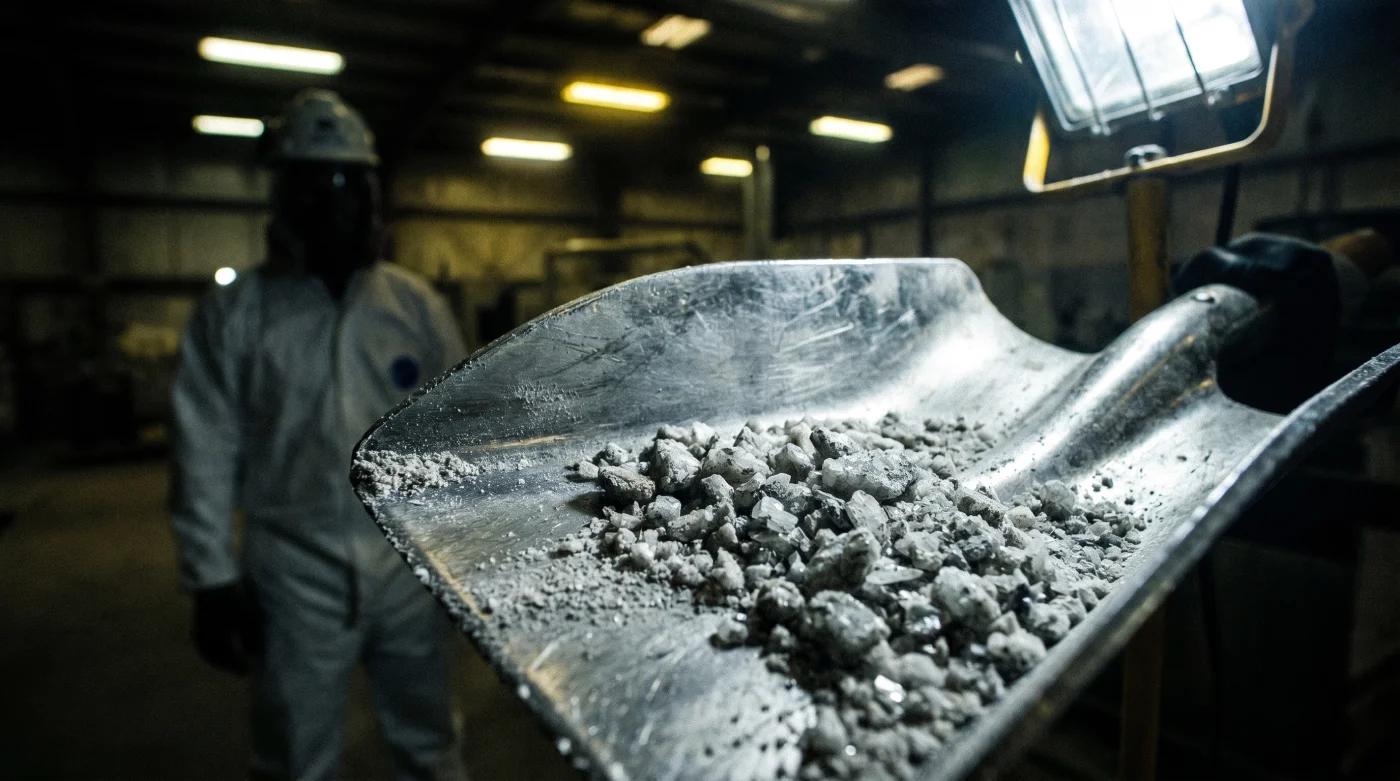
The core of this manufacturing pivot lies in a process most people find incredibly boring: the direct conversion of spodumene concentrate into battery-grade lithium hydroxide. While US firms wait for independent refineries to process raw materials—a step that adds months to the timeline and 30% to the cost—BYD has moved this refinement inside their gates. They’ve perfected a proprietary thermal leaching method that allows them to use lower-grade ores that others discard, effectively creating their own supply from ‘waste’ material.
For the budget-conscious buyer, this means a car that costs thousands less because the manufacturer isn’t paying a ‘refinement tax’ to a third party. For the performance enthusiast, it means a more stable battery chemistry. By controlling the purity of the lithium at the atomic level, they can pack more energy density into their Blade Battery cells without the volatility that leads to thermal runaway. It is a win-win that stems from a willingness to do the dirty, industrial work that Western boardrooms deemed ‘too low-margin’ for their portfolios.
The Tactical Toolkit: How the Supply Chain Shifts
Navigating the new EV landscape requires you to look past the dashboard and into the chemistry. If you are looking to understand why certain models are suddenly more available—or why prices are dipping—you need to monitor the ‘Refinement Signal.’ Here is how the internalized process actually works on a granular level:
- Molecular Seeding: BYD uses a closed-loop precipitation method that recycles 90% of the water used during lithium extraction.
- Thermal Stacking: The Blade Battery design eliminates the ‘module’ phase, meaning the cells themselves act as structural beams, saving 50% more space.
- Direct Hydroxide Feed: By converting ore directly into hydroxide near the assembly site, they eliminate the need for moisture-controlled shipping of unstable carbonates.
- Anode Autonomy: They have shifted toward synthetic graphite production, reducing reliance on natural mines that are prone to labor disputes.
The result is a production cadence that feels mechanical and inevitable. You aren’t just buying a vehicle; you are buying the output of a perfectly calibrated chemical engine. To verify this, keep a tool kit of data points: check the ‘Battery-to-MSRP ratio’ of your next car. If the battery accounts for more than 40% of the total cost, that automaker is still shopping at the ‘supermarket’ rather than owning the ‘farm.’
The Peace of Sovereign Energy
Mastering the supply chain is about more than just profit margins or beating a rival in a sales chart. It is about the quiet peace of mind that comes from knowing your mobility isn’t a hostage to a distant port or a volatile trade agreement. When you see a manufacturer pivot toward this level of self-sufficiency, you are seeing a shift toward industrial sovereignty. It changes the way you interact with your vehicle; it is no longer a fragile miracle of global cooperation, but a robust product of intentional engineering.
As you walk back to your own car, the morning sun finally burning through the haze, the lesson is clear. The ‘gap’ between American and international EV production isn’t a matter of willpower or design talent. It is a matter of accepting the grit. Until the domestic industry is willing to get its hands dirty in the refineries and the chemical pits, it will always be at the mercy of those who did. Real innovation doesn’t happen on a screen; it happens in the slurry, in the heat, and in the refusal to let a middleman hold the keys to the future.
“True industrial power isn’t measured by what you can assemble, but by what you no longer have to ask permission to build.”
| Key Point | BYD Pivot Detail | Added Value for You |
|---|---|---|
| Lithium Sourcing | Internalized Direct Refinement | Lower MSRP due to zero middleman markups. |
| Battery Architecture | Cell-to-Pack ‘Blade’ Tech | Increased safety and significantly longer vehicle lifespan. |
| Supply Stability | Closed-Loop Processing | Consistent parts availability and predictable resale values. |
Is the ‘Blade Battery’ actually safer than traditional US-made cells?
Yes, because the internalized refinement allows for a more stable LFP chemistry that resists puncturing and extreme heat better than standard nickel-cobalt mixes.Why don’t American companies just build their own refineries?
It requires a massive upfront capital investment and a decade of environmental permitting, which most US boards avoid in favor of short-term quarterly gains.Does this mean BYD cars will last longer?
The 200,000-mile mark is much more achievable when the battery chemistry is refined to a proprietary purity level that prevents early degradation.Will this supply chain flaw lead to higher EV prices in the US?
Likely, yes. As long as US brands rely on external refiners, they are vulnerable to the 20-30% price swings of the global lithium market.Can the US ever catch up?
Only by shifting focus from ‘car design’ to ‘material science,’ essentially rebuilding the chemical infrastructure from the ground up.