You know the sound. It is that soft, rhythmic ticking of a cooling engine in a dealership parking lot while you wait inside. The air conditioning in the lobby is dialed too low, smelling vaguely of industrial citrus and old floor wax. You are holding a manila folder with your service records, confident that your Honda has held its value like a gold bar. Then the salesman walks back from the manager’s glass-walled office, his face a neutral mask, and hands you a printout with a trade-in offer that feels like a physical blow to the stomach. It is thousands lower than the blue-book value you researched over coffee this morning.
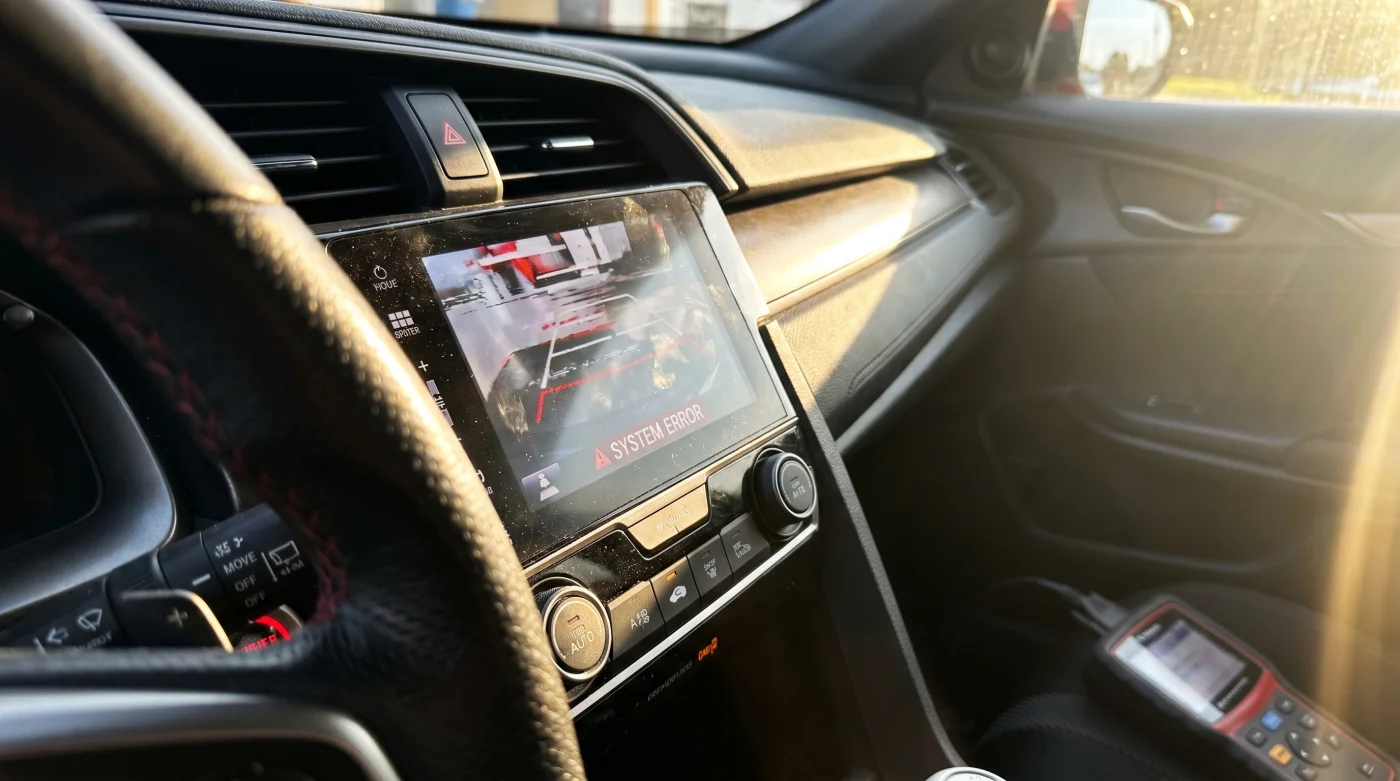
You ask why, and he points to a small red exclamation point on his screen. It is the NHTSA rearview camera recall. You might have seen the postcard in the mail months ago and tucked it under a refrigerator magnet, thinking you would get to it when you had a free Saturday. To you, it is a minor electronic glitch—a screen that occasionally flickers when you shift into reverse. To the dealership’s valuation algorithm, however, it is a digital scarlet letter that signals a vehicle unfit for the frontline. It is a liability risk that forces them to move your car from the ‘Certified Pre-Owned’ pile to the ‘Wholesale Auction’ bin.
The reality of the modern car market is that your vehicle is no longer just metal and rubber; it is a mobile data point. When a safety recall regarding the Most-Bus communication system or the rearview camera coaxial cable remains ‘Open,’ the software used by dealers to price trades—programs with names like vAuto or Black Book—automatically triggers a steep reconditioning deduction. They aren’t just deducting the cost of the repair, which is technically free to them; they are deducting the projected loss of sitting on a car they cannot legally sell for weeks while waiting for parts that are often on backorder.
The Algorithmic Sinkhole: Why Software Hates Your Open Recall
Imagine your car is a house you are trying to sell. A flickering rearview camera isn’t just a loose floorboard; in the eyes of a dealer, it is a foundation crack. The metaphor holds because of how federal law interacts with dealership profits. Dealers are legally prohibited from delivering a new vehicle with an open recall, and while the laws for used cars vary by state, the liability of selling a ‘safety-compromised’ vehicle is a weight no floor manager wants to carry. They view your unpatched Honda as a ticking clock of litigation.
- Diesel fuel injection systems require this exact maintenance additive cycle to survive
- Carvana instant cash offers mask a predatory algorithm completely undervaluing specific premium suspension packages
- Cybertruck Wade Mode used inspections demand checking the battery pressure seal for failure
- Cybertruck Foundation Series secondary market prices collapse as reservation flippers flood dealership networks
- Ford F-150 PowerBoost hybrid mechanics completely eliminate the massive payload penalty EVs suffer
Elias Thorne, a 52-year-old service manager at a high-volume Honda franchise in Ohio, sees this play out every Tuesday during the weekly trade-in cycles. ‘People think they are being savvy by hiding the flicker,’ Elias says, leaning over a desk cluttered with printouts. ‘But the moment we run the VIN, the computer slashes the offer by three to five thousand dollars. We can’t put a car with a safety flag on our lot. It has to go to auction, and auction prices are bottom-barrel. You’re essentially paying a massive tax for ten minutes of procrastination.’
The Profile of Risk: Who Loses the Most
For the Daily Commuter in a Civic or Accord, the loss is a painful dent in the down payment for their next vehicle. You’ve maintained the oil, rotated the tires, and kept the interior smelling like fresh rain, yet the market ignores your effort because of a coaxial cable issue. The algorithm doesn’t see your clean upholstery; it only sees a non-compliant safety system that requires a technician’s labor hours—hours the dealer would rather spend on high-margin repairs.
For the Busy Parent in an Odyssey or Pilot, the stakes are even higher. These vehicles are the workhorses of the American suburb, and their resale value is usually ironclad. However, the rearview camera recall hits these models particularly hard because they are marketed on safety. A family-hauler with a ‘Safety Risk’ label is toxic on a retail lot. If you haven’t had the cable harness inspected or the software updated, you are effectively letting the dealership’s software ‘buy’ your car at a salvage rate while they reap the eventual profit after a quick fix.
Mindful Restoration: Taking Back Your Vehicle’s Worth
Protecting your equity requires a shift from passive ownership to active management of your vehicle’s digital resume. You must treat the recall not as a chore, but as a mandatory financial audit. The process is minimalist but requires precision in how you communicate with the service department. Don’t wait for the dealership to call you; they are overwhelmed with inventory. You must be the one to bridge the gap.
- Locate your 17-digit VIN on the driver’s side dashboard and enter it into the NHTSA’s official lookup tool to confirm the specific recall code.
- Call your local dealer and specifically ask for the ‘Recall Coordinator’ rather than a general service advisor.
- Request a ‘Loaner Reservation’ if the part is on backorder; this creates a paper trail of intent that you can show a buyer or a different dealer.
- Ensure you receive a ‘Recall Completion Certificate’ in physical form. Digital records can lag behind by weeks in the national database.
Keep this certificate in your glovebox like it is a thousand-dollar bill—because, in the context of a trade-in negotiation, it is. When the salesman tries to low-ball your trade based on the ‘Open Status’ of the camera, you slide that paper across the desk. You have just neutralized their biggest leverage point.
The Bigger Picture: Equity as Peace of Mind
Mastering the details of your car’s recalls is about more than just a camera that works when you’re backing out of a tight spot at the grocery store. It is about maintaining the integrity of your second-largest financial asset. In an era where car prices are volatile and interest rates are high, you cannot afford to leak thousands of dollars in equity due to a clerical oversight or a missed service appointment. Taking the time to clear that red exclamation point from your vehicle’s history is a quiet act of financial self-defense.
Ultimately, a well-maintained car is a reflection of a well-ordered life. When you sit in the driver’s seat and shift into reverse, seeing a crisp, clear image of the world behind you, it isn’t just about safety. It is the satisfaction of knowing that your vehicle is whole, its value is protected, and you are not at the mercy of an unfeeling algorithm in a glass-walled office.
“The most expensive repair is the one you didn’t do before you tried to sell the car.”
| Key Factor | Dealer Impact | Value to You |
|---|---|---|
| Open NHTSA Recall | Automatic Wholesale Flag | $2,000 – $5,000 Equity Protection |
| Coaxial Cable Fix | Reduces ‘Recon’ Costs | Restores Safety Confidence |
| Completion Certificate | Clears Legal Liability | Negotiation Leverage Power |
Is the rearview camera recall really a safety issue? Yes, the NHTSA classifies it as such because the loss of the image increases the risk of ‘backover’ accidents involving pedestrians. Will the dealer charge me for the repair? No, by law, all safety recalls must be performed free of charge by an authorized dealer. Why does the trade-in value drop so much? Because dealers cannot sell a car with an open safety recall to a retail customer, forcing them to sell it at lower-priced wholesale auctions. How long does the repair take? Most software updates take less than an hour, though hardware replacements for cables may take a half-day. Can I sell my car privately with an open recall? You can, but a savvy buyer will use it as a major price-haggling tool against you.