A cold morning in Maranello used to begin with a physical jolt. The air in the workshop would smell of unburned high-octane fuel, warm lubricating grease, and the faint, bitter scent of fresh brake pads. When the ignition button was pressed, the starter motor would whine for a brief fraction of a second before the V12 engine caught, sending a physical shockwave through the concrete floor and rattling the metal storage cabinets against the wall.
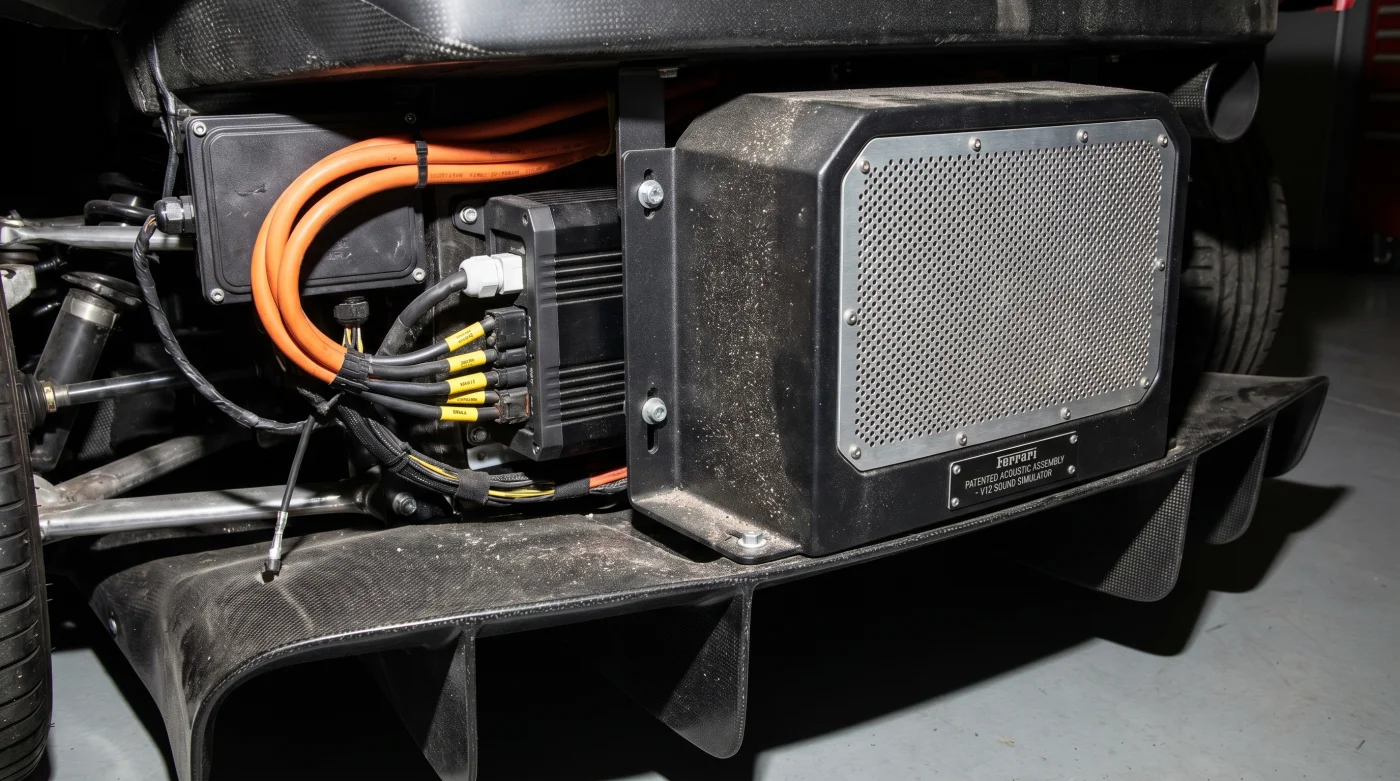
Now, a different kind of morning is taking shape. The technician presses the starter button of the latest electric prototype, and the room remains perfectly still. There is no violent combustion, no raw physical shaking, and no smell of spent fuel. Instead, a low, computed vibration begins to emanate from the rear of the car, **vibrating through a hidden** external speaker assembly that is designed to convince your ears that a mechanical heart is still beating under the carbon-fiber bodywork.
This digital transition has split the supercar world down the middle. For decades, the sound of an exotic engine was not an accessory; it was the primary product, a natural consequence of air, fuel, and fire escaping through tuned metal pipes. By replacing this organic mechanical opera with a highly engineered software script, the modern supercar faces a unique crisis of identity.
To many collectors, the introduction of this synthetic soundtrack means the **visceral connection is broken** forever. It exposes the uncomfortable truth that the modern electric supercar must resort to theater to justify its existence, turning what was once a raw mechanical triumph into a simulated amusement park ride.
The Illusion of the Digital Resonator
To understand the depth of this shift, we must look at how sound is created. In a traditional combustion car, the exhaust note is a physical signature of the engine’s work. It is the sound of valves opening, pistons reciprocating, and exhaust gases pulsing through tuned metal runners. It is a live performance, imperfect and bound by the laws of thermodynamics.
The synthetic exhaust system changes this dynamic entirely. Instead of managing actual physical pressure waves from an engine block, engineers are now **shifting from mechanical poetry** to software algorithms. The car no longer speaks to you through its exhaust valves; it broadcasts a synthesized version of speed to the outside world, turning the vehicle into a rolling speaker box that attempts to mimic the physical feedback of a bygone era.
- Ford V8 AC Cobra Coupe archives reveal a terrifying aerodynamic high speed lift flaw
- Newest electric cars suffer a dangerous touchscreen layout trend hiding basic controls
- Tesla Model 3 tire pressure settings expose a harsh factory calibration error
- Toyota Tundra recall notices trigger automatic insurance rate hikes unless contested directly
- AC Cobra coupe revival uses active aerodynamic panels hidden beneath carbon bodywork
Gianluca Rossi, a fifty-two-year-old acoustic calibration engineer based near Modena, has spent his life tuning the physical intake tracts of naturally aspirated engines. He views this transition with a mix of technical admiration and professional grief. “We are no longer tuning the metal,” Rossi explains. “We are tuning the software to convince the driver’s brain of a physical lie. It is like listening to a high-fidelity recording of a concert instead of sitting in the front row. The notes are correct, but the air does not move the same way.”
Mapping the Tribal Divide
The reaction to this technology has created a distinct **clash of automotive values** among those who buy these ultra-rare machines. The market is splitting into two clear factions, each defining performance and prestige through a completely different set of values.
For the analog purist, the synthetic exhaust is an unforgivable compromise. They believe that a supercar must be authentic, and that simulated sound is a form of automotive dishonesty. If a car is silent, it should remain silent, rather than projecting a digital caricature of a V12 engine to the pedestrians it passes.
Conversely, the modern collector embraces this digital theater as a necessary step forward. They view the vehicle as a platform for sensory experiences where the **theater of physical combustion** can be replicated, enhanced, and customized. To this group, the sound is not a lie, but a modern interface design that helps them feel connected to the insane acceleration of an electric motor.
Decoding Ferrari’s Synthetic Sound Patent
The hardware behind this system is far more complex than a simple speaker stuffed into a bumper. Ferrari’s patented acoustic system is designed to transmit physical vibrations directly into the chassis so the driver can feel the sound in their spine, not just hear it with their ears.
The system relies on a network of sensors and physical actuators to create an **exact mechanical frequency match** based on real-time driving dynamics.
- Acoustic Actuators: Electromagnetic drivers mounted directly to the rear subframe, using the car’s structural elements as a natural sounding board.
- Resonator Pipes: Hollow structural chambers designed to amplify specific low-frequency hums, preventing the sound from feeling thin or digital.
- Dynamic Tuning Software: Algorithms that monitor electric motor speed, throttle load, and cornering forces to continuously adjust the pitch and volume of the synthetic note.
By mapping these variables, the system ensures that the sound scales naturally with speed. When you press the accelerator, the digital signal processor calculates the exact harmonic frequency that a traditional engine would produce under that specific load, sending the physical vibrations through the seats and the steering wheel so they are **calibrated to match load** perfectly.
The Price of Silent Speed
Ultimately, this technological shift forces us to re-evaluate what makes a supercar special. If extreme performance is now a commodity that can be achieved by any mass-market electric vehicle, the soul of an exotic car must reside in its ability to move our emotions through our senses.
As we move into an era dominated by software and silent electric motors, the mechanical imperfections of the past are becoming the ultimate luxury. The simulated exhaust is a brave attempt to bridge this gap, but for many, the true magic of Maranello will always be found in the raw, unscripted roar of a physical engine breathing through metal pipes, untamed by digital intervention. We must decide if we are willing to accept the beautiful illusion, or if we will cling to the **sensory weight of tradition** as it slowly fades away.
“The sound of an engine is not something you can replicate with code; it is the physical voice of the machine’s struggle against friction and gravity.” — Gianluca Rossi
| Key Point | Detail | Added Value for the Reader |
|---|---|---|
| Acoustic Patents | Chassis-mounted electromagnetic actuators that vibrate the structural frame. | Helps you understand how Ferrari makes you physically feel the sound rather than just hearing it. |
| Collector Divide | Analog purists reject the simulation, while tech-forward buyers welcome the customization. | Clarifies how this cultural shift is affecting the resale market and long-term collector interest. |
| Dynamic Tuning | Software reads motor RPM and pedal position to calculate synthetic engine notes in real time. | Reveals the immense computing power required to keep the digital sound from feeling fake or delayed. |
Frequently Asked Questions
Why can’t Ferrari just make their electric cars completely silent?
Supercars rely on sensory drama and emotional engagement to justify their premium prices; absolute silence removes the visceral excitement that defines the brand’s identity.Are these synthetic exhaust sounds mandatory for safety reasons?
While low-speed pedestrian alert systems are legally required, Ferrari’s high-speed performance acoustics are purely designed for driver engagement and emotional theater.Can the driver turn off the synthetic exhaust sound entirely?
Yes, the system is designed to be highly customizable, allowing drivers to choose between silent electric running and various levels of simulated acoustic feedback.Does the sound system affect the overall range of the electric vehicle?
The power draw from the amplifiers and actuators is negligible compared to the massive energy consumed by the vehicle’s primary propulsion motors.Will these synthetic systems ever sound exactly like a real V12 engine?
While they can mimic the frequencies and rhythms, they lack the chaotic mechanical imperfections and physical air pressure waves created by actual combustion.